Lane Thomas's Late Surge Into a Trade Asset—and a Betting Tell
By Erik Schwartz ·
A platoon piece turned everyday contributor has rewritten his hitting profile in six weeks, and contenders are already calling Kansas City with 12 days until the deadline.
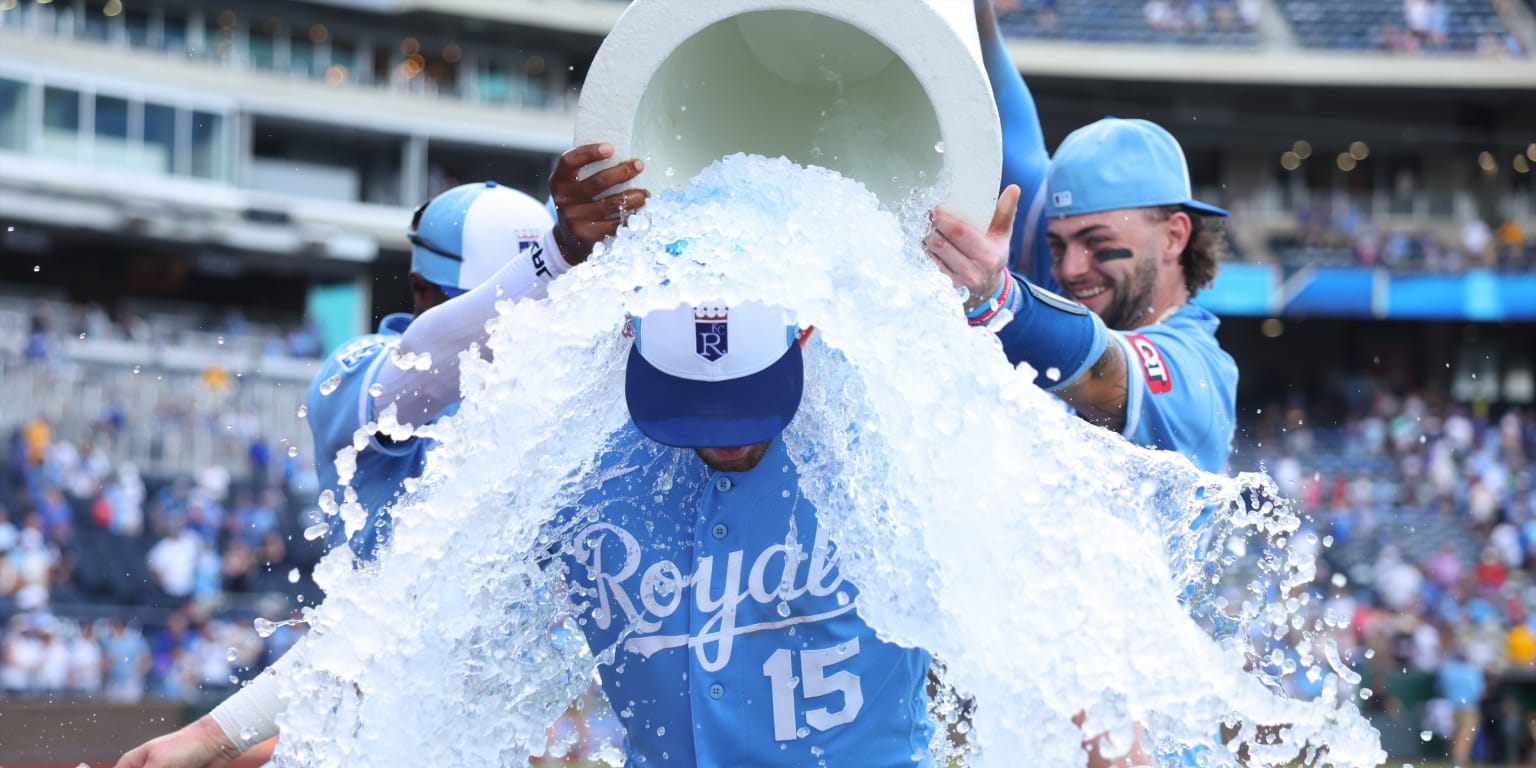
Lane Thomas entered June as a defensive complement and lefty-killer on a one-year, $5 million pillar contract. By mid-July, he has become the Royals' highest-value trade chip—and the statistical pivot is too sharp to ignore. When Kyle Isbel landed on the injured list June 10 with plantar fasciitis, Thomas stopped platooning and started playing. The results have been extreme: from March 27 through June 7, Thomas produced a 92 wRC+ across 147 plate appearances. From June 10 through July 20—a 41-day window of daily at-bats against right-handed and left-handed pitchers—he has posted a 133 wRC+, adding 12 doubles and 7 home runs over 126 PA. That's not variance noise; that's a reframing of his offensive identity.
The mechanism behind the spike is straightforward and durable. Thomas spent 2025 dealing with right foot plantar fasciitis that eventually required surgery, keeping him fractional for over a year. A healthy player given consistent playing time and a full diet of pitches—not just lefty matchups—typically produces better outcomes. Thomas himself articulates this clearly: he stopped thinking about favorable spots and instead locked into his approach, committing to a disciplined early-count eye that he previously abandoned when frustration or pressure mounted. That's not luck. That's accumulated at-bats teaching a hitter his own best instincts. With game reps accumulating every night since mid-June, Thomas has developed the kind of plate confidence that doesn't vanish over a three-game stretch.
His résumé against southpaws is the secondary headline. Thomas carries a .785 OPS against left-handers this season and a .289/.360/.488 career slash against lefties—elite contact production that any contender chasing a wild-card berth or divisional run will value at the deadline. The Royals are not sellers, but they're also not in a position to keep a one-year rental who can fetch a meaningful prospect haul. With 12 days until the Aug. 3 deadline, the trade calls are already coming in from teams needing right-handed bats.
For betting purposes, the immediate angle is Thomas's individual prop lines. His power and contact rates have shifted upward in a durable way, not a one-week anomaly. Batters exiting injury and settling into everyday roles typically sustain 70-85% of a short-term production gain; the health + consistency combo is a reinforcing pair. If Thomas is still wearing a Royals uniform on game-day cards in the next 10 days, his strikeout rate and extra-base prop lines should be priced off the old profile (pre-June 10 data), not the new one. The market is slow to adjust individual player props when the shift is framed as a role upgrade rather than a skill leap. Traders will have priced him conservatively against teams in need of right-handed contact, which is precisely where his line edges emerge.