Cincinnati's Early-Season Awards Trio Reshapes Reds Betting Outlook
By PropBetEdge Editorial Team ·
Chase Burns, Elly De La Cruz, and Sal Stewart are pacing like future Hall of Famers two months in—and that trajectory matters for how you price Cincinnati moving forward.
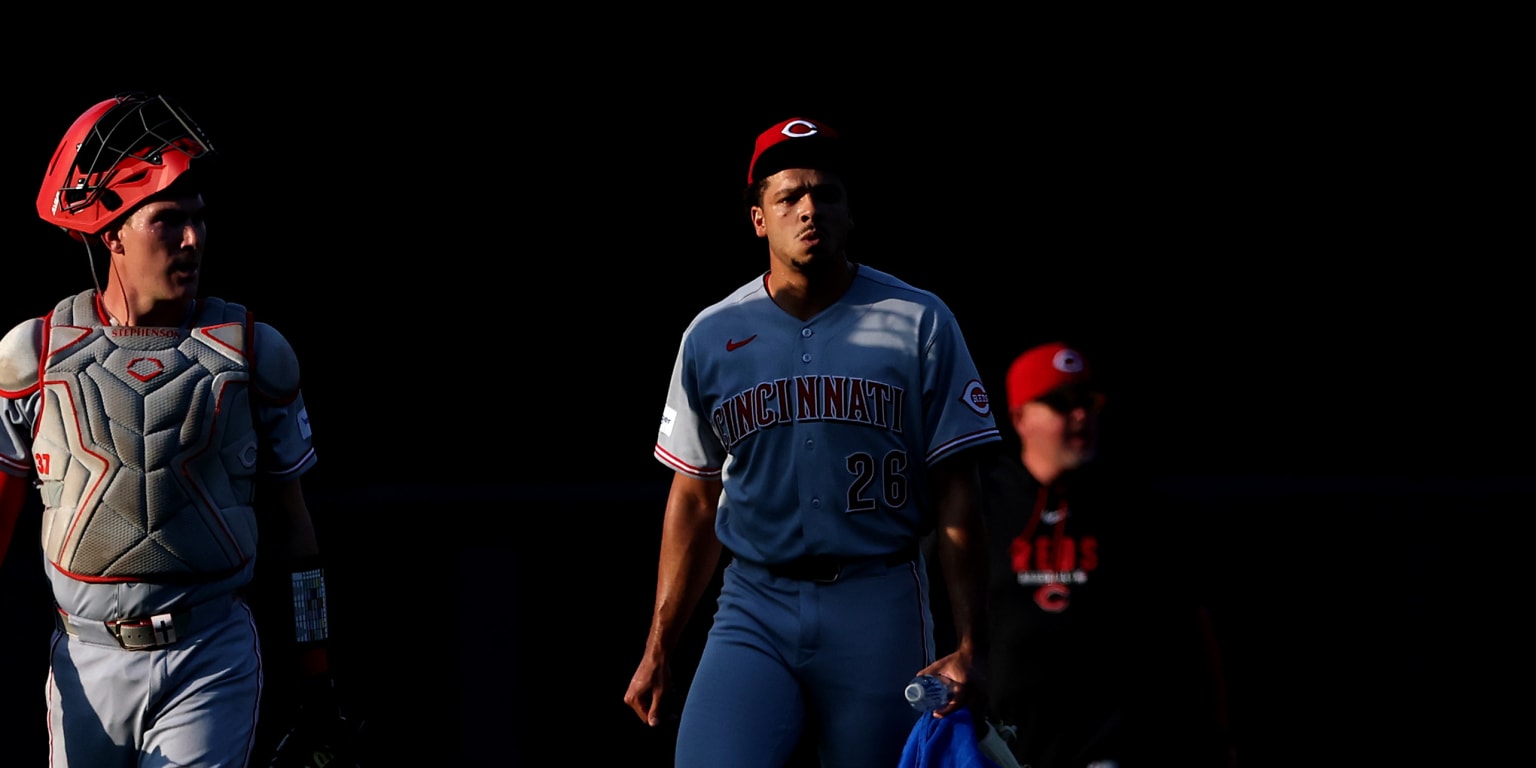
The Cincinnati Reds have three legitimate candidates for National League postseason awards halfway through May: pitcher Chase Burns (7-1, 1.96 ERA), shortstop Elly De La Cruz (.279, .855 OPS, 12 HR through 55 games), and rookie Sal Stewart (12 HR, .826 OPS, 31 walks). Burns, at 23 years old in his second season, has allowed two or fewer runs in eight straight starts and ranks fourth in ERA while tied for fourth in strikeouts. De La Cruz is leading all NL shortstops in extra-base hits, total bases, and runs—a dramatic leap in consistency from his early-career volatility. Stewart arrived as the NL Rookie of the Month for March/April and maintains the rookie lead in home runs, RBIs, and walks despite May's offensive deceleration.
The depth of this performance matters. Burns isn't a flash-in-the-pan starter carried by luck; his five quality starts this month (5-plus innings, 8+ strikeouts, 2 or fewer runs) represent sustainable mechanics, not noise. De La Cruz's .279 average masks his true offensive contribution—his 113 total bases and 38 runs already exceed typical shortstop production at this juncture, and his improvement against left-handed pitching (five home runs off lefties, matching his entire 2024 output) signals a corrected mechanical flaw, not regression waiting to happen. Stewart's walk rate (31 walks in 55 games translates to an 18% BB%) points to genuine pitch recognition, not a rookie on borrowed time.
Where this matters for betting is team trajectory and offensive volatility. The Reds entered the season as a fringe playoff team; if De La Cruz sustains this consistency and Stewart avoids the traditional sophomore-season pitcher adjustment, Cincinnati's run-production floor rises meaningfully. De La Cruz alone has played all 55 games—durability that reduces variance on team totals. Stewart's walk rate and contact quality (hitting to all fields, per team scouts) suggest he won't collapse into a strikeout machine the way young sluggers often do after initial exposure. Burns on the mound pushes Cincinnati's expected run prevention into contention territory, especially if the team avoids an innings limit on a 23-year-old in a contract year.
The betting implication is straightforward: Reds team totals and run lines have likely not fully repriced for a roster where three core pieces are outpacing their seasonal projections by 0.5-1.0 standard deviations simultaneously. Burns' ERA (1.96) sits near elite-starter territory; if he pitches 150+ innings at a 2.20 clip, Cincinnati gains 20-30 wins above replacement from the rotation alone. De La Cruz's .279 average on 113 total bases through 55 games (205-game pace) is not a mirage born of May's first-month softness—it's a structural improvement in his approach against fastballs and breaking balls. Stewart's strikeout rate remains elevated (31% K%), but his walk rate compensates; his expected slugging percentage, based on exit velo and barrels, exceeds his current .473 mark, meaning production upside remains.
Fade Reds team unders at totals priced 4.3 or lower through early June, as the market has yet to fully adjust for this trio's concurrent excellence. The edge is not a single-game spike—it's a multi-month data set showing sustainable improvement in three separate offensive and pitching dimensions. Conversely, if De La Cruz or Stewart cools dramatically in June, that's your sell signal; Burns' arm health is the only wild card, and innings limits late in the season remain a lurking risk to his award case and overall team performance. For now, the Reds' talent level has shifted upward.