Detmers' Breakout Rotation Year Opens Trade Window—and K Props Worth Chasing
By PropBetEdge Editorial Team ·
Reid Detmers has transformed from bullpen afterthought into a top-10 strikeout pitcher; Angels' asking price and his expanded role reshape leverage calculations before August's deadline.
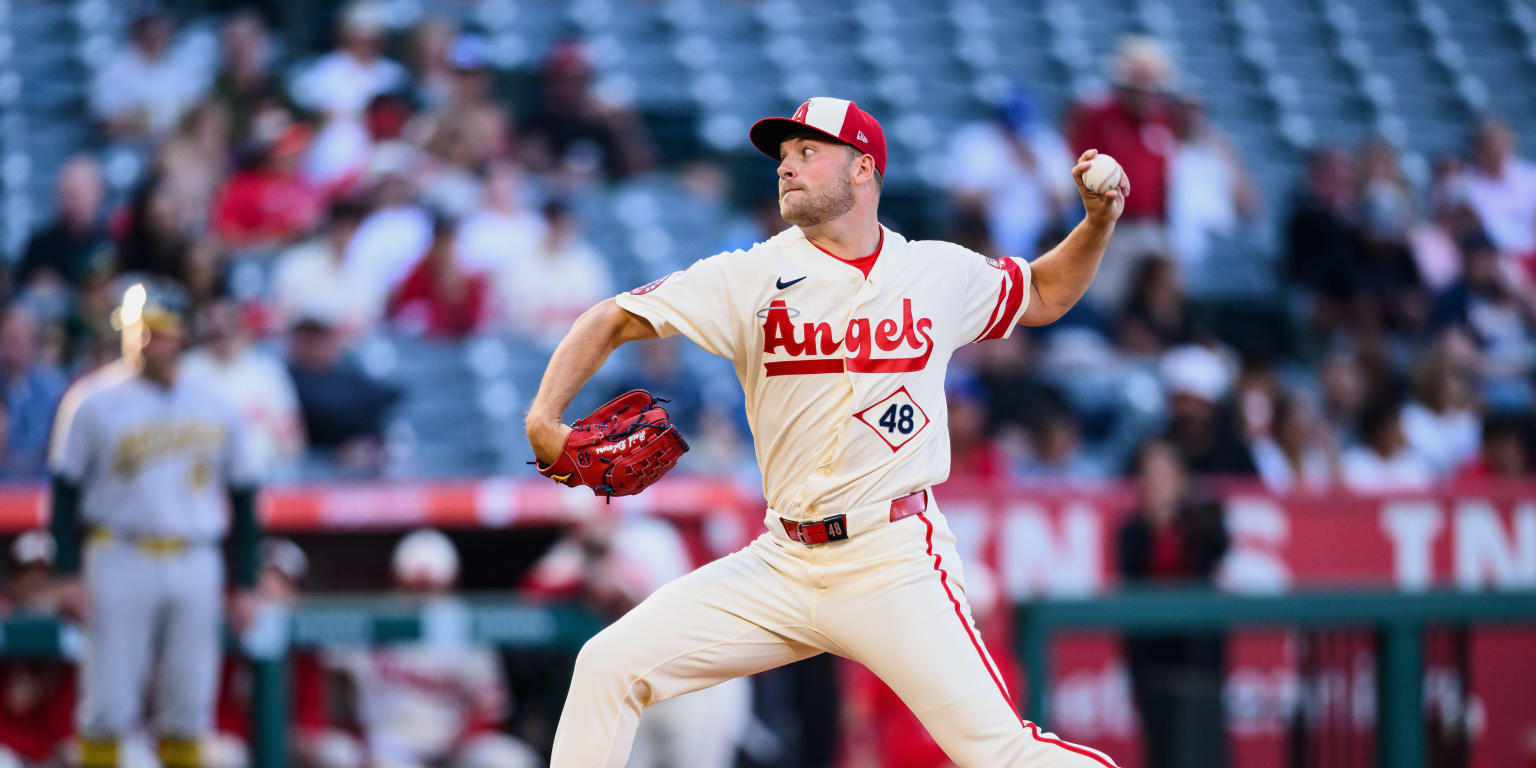
Reid Detmers takes the ball against Houston on Wednesday night as something he wasn't a year ago: a legitimate rotation anchor with trade juice. After spending 2025 exclusively in the Angels bullpen, the 26-year-old left-hander has reestablished himself as a starter with numbers that cut deeper than his 4.26 ERA suggests. A 2.92 xERA ranks sixth among qualified starters; his 2.91 FIP sits seventh. Those underlying metrics reflect a pitcher manufacturing swing-and-miss at an elite clip—28.5 percent strikeout rate (eighth-best), 29.7 percent whiff rate (80th percentile)—and finally executing the command-and-stuff toolkit scouts have long seen in him.
The mechanics of Detmers' resurrection trace through two specific improvements. His walk rate has compressed to a career-low 7.8 percent, indicating the bullpen year clarified his release point and pitch sequencing. Simultaneously, he's stopped bleeding hard contact; his slider (now generating 40 strikeouts this season) pairs with a four-seamer averaging 94.1 mph to form a dual-threat whiff engine. The May 24 outing against Texas (14 strikeouts) wasn't a career spike—it was validation that his stuff translates across four-plus innings of heavy usage. Teams circling the August 3 deadline will see three postseason runs of control remaining, plus two additional arbitration years. That durability window, combined with demonstrable upside realization, elevates Detmers into the conversation behind Tarik Skubal as the most moveable starting pitcher at the deadline.
What shifted for Detmers differs from the usual change-of-scenery narrative. He didn't need a new organization; he needed a role reset. The Angels themselves—a team without obvious October geometry this season—may become rational sellers, and Detmers becomes a chip that doesn't require the prospect capital Skubal's name commands. Detroit will ask for a near-equivalent to what they extracted for Skubal; contenders punching below that ceiling will look west. The Astros seeing him Wednesday night, the Rangers who watched that 14-strikeout performance, and any team needing rotation depth into October will file reports. Detmers' strikeout profile scales with matchup. Against teams with strikeout rates above league average (Houston sits at 22.1 percent K-rate, slightly elevated), his fastball-slider diet plays to extreme contact rates. Against fringe-contact teams, the whiff rate compression softens his ceiling. The next 8-10 starts become a showcase window; any explosive outings telescope upward into the trade market's valuation, and sportsbooks will respond by tightening K-props accordingly.
For bettors, Detmers' strikeout prop sits in a narrow-window efficiency zone. At current market prices (likely 7.5–8.5 range against average opponents), his 28.5 percent K-rate and mid-80s pitch volume create expected value on the over if opponents feature elevated strikeout susceptibility. However, this edge exists on a countdown timer. The closer we move to the deadline (roughly 54 days away), the more the market internalizes his breakout and reprices upward. The strongest angle lives in the next 3–5 starts before institutional ownership of his profile hardens the lines. Teams moving to acquire him will also begin stress-testing his durability; if those starts reveal fatigue or command slippage, the over collapses. Take overs on Detmers strikeout props in the near term against contact-prone opponents, but monitor start-to-start variance—a single poor outing in this window significantly alters both his trade value and the prop market's equilibrium.