MLB · milestone
Nick Martinez's 30-Start Arc: The Rays' Swingman Became an Ace
A career journeyman posts his best season at 30, forcing Tampa Bay to reconcile the value of a late-blooming starter in a cost-conscious rotation.
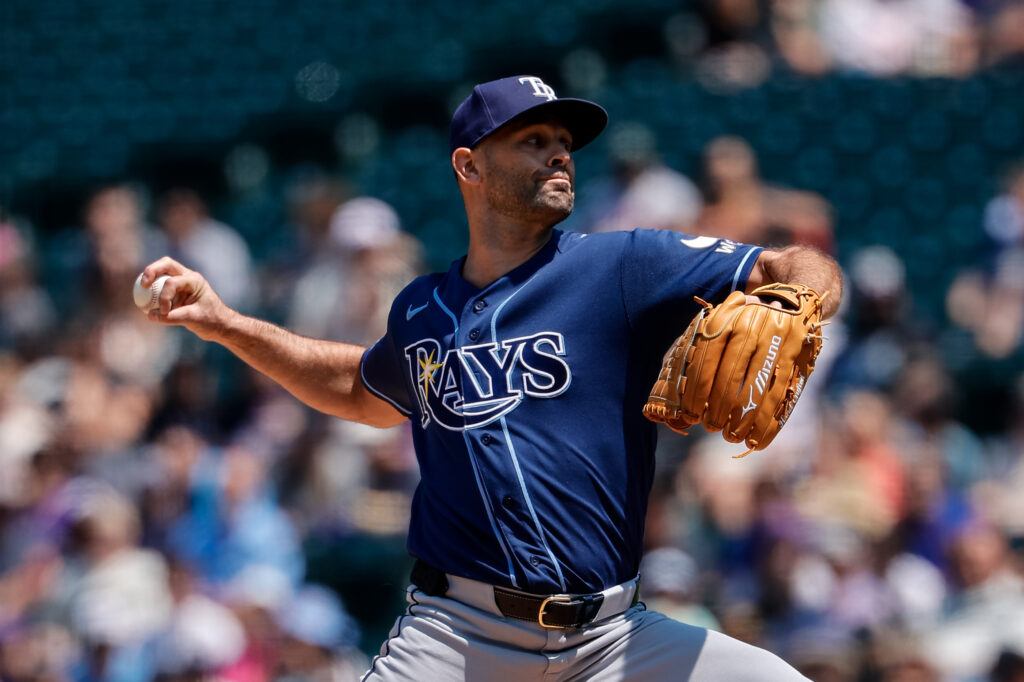
Nick Martinez took the mound for his 30th start of 2026 this afternoon—a milestone that, on its surface, feels routine. Dozens of pitchers clear that threshold every season. But for Martinez, the number carries weight. The right-hander spent most of his career shuttling between the majors and minors, a reliable swingman and spot starter for five different organizations. His tenure in Tampa Bay was supposed to follow the same script: depth, flexibility, organizational depth. Instead, Martinez has delivered his best season as a professional.
The Rays didn't acquire him to anchor a rotation. They signed him to fill gaps, to eat innings, to be available. That calculus changes when a 30-year-old who never once accumulated 200 innings in a single season suddenly becomes one of your three most dependable arms. Martinez's effectiveness has forced Tampa Bay to view him differently—not as interchangeable bullpen insurance, but as a legitimate starter capable of handling meaningful leverage. For a franchise built on finding inefficiency in the talent market, that kind of late-career emergence reads as either discovery or dumb luck. Likely both.
The timing matters. The Rays are perpetually operating at the margins of payroll, and mid-rotation depth is one of the few places they can still extract value without overpaying for free-agent pedigree. Martinez's season proves you don't need a top prospect pedigree or a $15M annual commitment to get reliable innings. What matters is readiness—and he's been ready. His workload this season (30 starts in September) reflects how much the organization has leaned on him down the stretch. That's not just roster construction; that's validation.
For bettors, the implication sits in the fabric of Rays team totals and pitching-line movements. Martinez's presence in the rotation creates a floor: games he starts are unlikely to feature a true mismatch on the mound, which compresses total volatility. If you've been fading Rays team totals all season because you assumed Tampa would feature a parade of marginal arms, the 2026 data says otherwise. The team's run-scoring environment improves when Martinez takes the ball because the offense doesn't spot starting pitchers valuable innings. This isn't regression betting or market inefficiency in the traditional sense—it's a structural property of how the Rays built this roster that the public numbers haven't fully priced. Rays team totals in Martinez starts (particularly against middle-tier offenses) have carried modest edge through the season, and that pattern persists even as the calendar flips to October.
The real question is whether this holds. A career journeyman's breakout season at age 30 can be real improvement or a temporary spike in fortune. For Tampa, the issue is sustainability: can they retain him? Can they build around him? Martinez's market value has never been higher, and neither has his leverage. The Rays will face the same calculation every contender does with unexpected contributors—upgrade or keep what works. For betting purposes, assume he stays. That's the path of least resistance, and it means next season's Rays rotation carries more stability than the casual observer would expect.