Phillies Face Deadline Crunch as Lineup Deteriorates: Reinforcements or Realism
By Ty Whitney ·
Philadelphia's offense has cratered since the All-Star break, forcing the front office to chase impact talent before Monday's deadline—but internal performance is collapsing faster than any trade can fix.
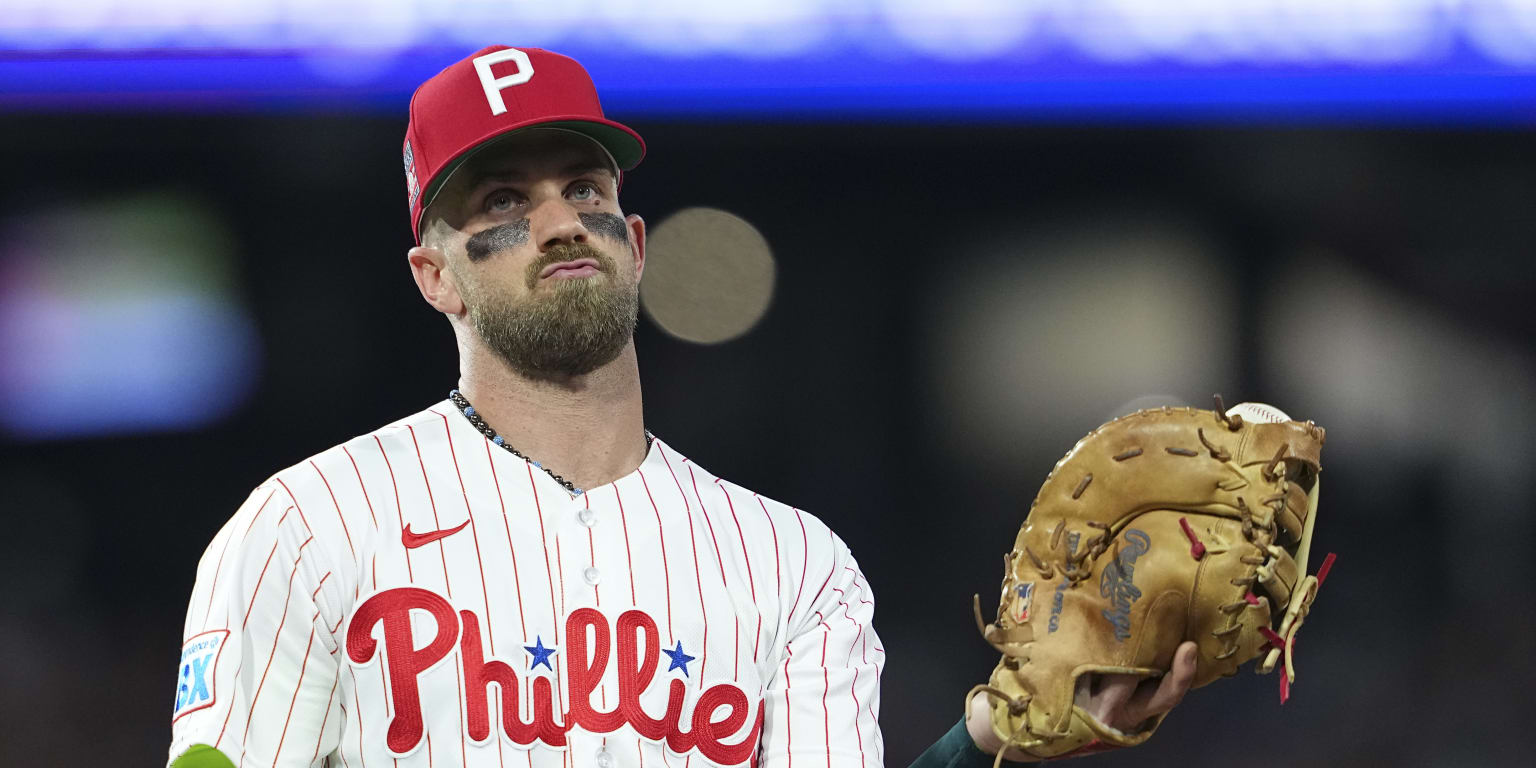
The Phillies' decision-makers are hunting across the league with five days remaining until the August 3 Trade Deadline, aware that incremental help won't solve what has become a structural offensive failure. Since the All-Star break, the team has lost nine of twelve games, a skid that reflects not bad luck but measurable individual decline across the roster. Bryce Harper, Kyle Schwarber, and Brandon Marsh—three anchors of the lineup—have all hit a wall simultaneously, a timing that begs scrutiny.
Harper's own assessment is damning. The superstar acknowledged last week that he "haven't done my job to the best of my ability" over the past month, a concession that carries weight because it's honest. Schwarber offers a murkier picture: a .747 OPS in July before Wednesday's homer, with a GI issue that has cost him multiple games and remains unclear heading into Friday. Marsh presents perhaps the most alarming case. He was hitting .338 on June 7 but has collapsed to .138 with a .417 OPS over his last 24 games. He's acknowledged a possible mechanical issue—chasing pitches out of the zone at elevated rates—but the diagnosis doesn't yet translate to correction.
Interim manager Don Mattingly's response reveals the team's true vulnerability. While endorsing the trade deadline push, he deflected on the core issue: the players currently in uniform are underperforming their talent level. Mattingly framed the pursuit of external help as routine—the Dodgers do it too—but that rhetorical move sidesteps the real problem. The Phillies cannot trade their way out of a month where their best player has regressed and three of their top offensive producers have simultaneously underperformed their season norms by meaningful margins. Trea Turner's seven errors in eleven games at shortstop adds defensive volatility on top of the offensive scatter.
For prop bettors, this creates a directional hazard on Phillies team totals and individual hit/RBI props over the next week. The market may price in the assumption that trade deadline reinforcements signal stabilization, but the underlying issue is player-specific underperformance, not a roster construction gap. Harper at his current production rate is not the player who powers deep October runs. Schwarber's availability and health trajectory is uncertain. Marsh's plate discipline deterioration isn't a one-week blip—it's a compounding trend. Until these three produce at closer to their season baseline, any deadline acquisition is supplemental noise. Betting against Phillies totals assumes the decline is real and not about to snap on Monday when a deal is announced; betting for them assumes a trade immediately reverses a month-long mechanical and confidence collapse across the core lineup. The burden of evidence—recent games, player admissions, health flags—tilts toward fade territory.
Mattingly's closing line is telling: "Now's the time that we're going to find out what we're made of." That's coach-speak for acknowledging the team hasn't solved this internally yet. The deadline provides cover for front office activity, but the scoreboard will be written by whether Harper, Schwarber, and Marsh start hitting again in the next five days, before or after any acquisition bells ring.