Washington's Surprise Surge Changes the Deadline Calculus for Abrams
By PropBetEdge Editorial Team ·
The Nationals are 35-34 in mid-June under new leadership, forcing a harder choice on whether to trade a shortstop who's posting the best OPS at his position.
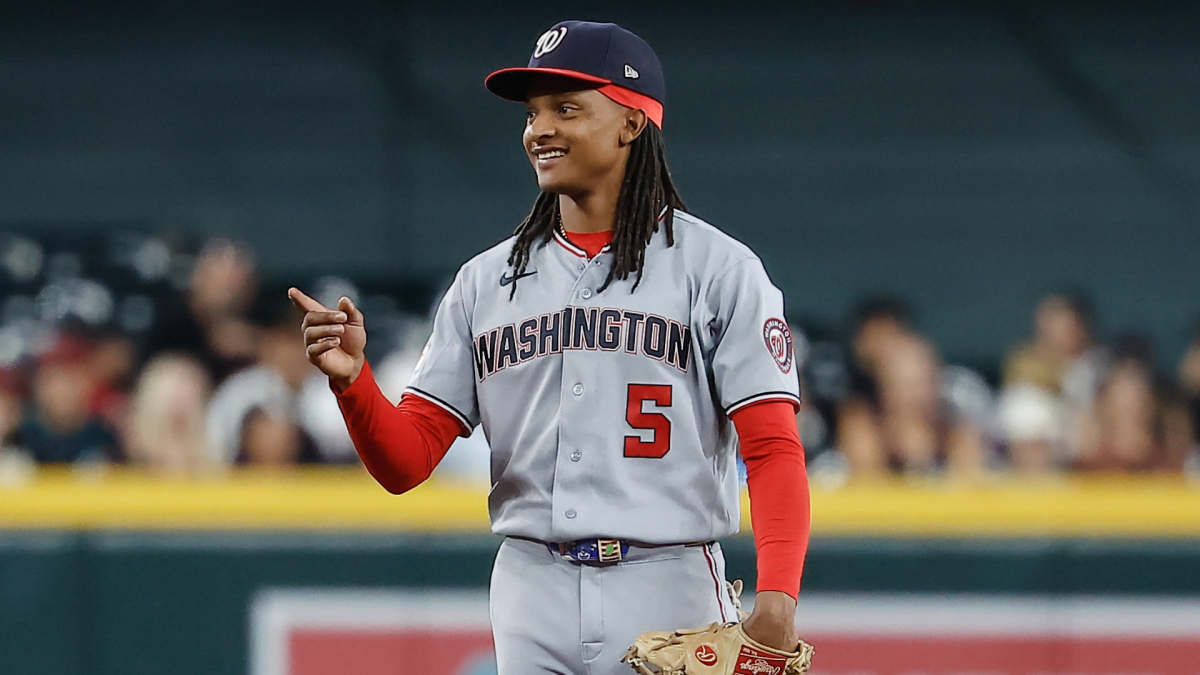
The Nationals reached 35 wins by mid-June on Friday—nearly a month ahead of last year's pace. That acceleration matters. Paul Toboni, the first-year president of baseball operations, inherited an organization in full rebuild mode but has watched a promising young core crystallize around shortstop CJ Abrams and outfielder James Wood. Washington is above .500, in contention, and suddenly the calculus on a potential trade deadline sale shifts from obvious to complicated.
Abrams is the player drawing external interest. At 24, he's slashing .287/.378/.526 with a .905 OPS—best in baseball among shortstops—and has controlled the zone with the kind of clarity that translates to consistent counting stats. His defense remains problematic, and his contract status (arbitration-eligible through 2028) makes him technically movable. The Yankees and Cardinals have been mentioned as landing spots. But Wood, at 23 with a .941 OPS, 18 home runs in 69 games, and elite plate discipline (56 walks, 87th percentile in chase rate), reads as generational. Toboni's statement to CBS Sports makes clear which player gets the "no" label: Wood is anchoring the franchise for the next decade. Abrams, by contrast, is more gettable—though "gettable" doesn't mean the Nationals are motivated to move him.
That's where the season record becomes operative. If Washington stays competitive through July, dealing Abrams makes organizational sense only if the return is transformational. And recent deadline history suggests those deals almost never materialize. Young, controllable stars command asking prices that blow past what contending clubs will spend. Toboni arrived with a vision for building long-term; a hot June doesn't erase that mandate, but it does change the urgency. Staying above .500 and keeping Abrams for a playoff push—or offseason trade—becomes the path of least regret.
For prop bettors, Abrams' continued presence in Washington means sustained production at the shortstop position. His plate discipline and power stroke are real, not a mirage. Over his next 60-80 games, expect his OPS to remain in the .880–.920 range, with walk rates holding above 10% and strikeout rates below 18%. The Nationals' offensive ceiling is capped without Wood, but Abrams will remain the most productive hitter at his position. That consistency—rooted in his zone management, not a hot streak—is durable across lineup cards and pitcher matchups. If the market had priced Abrams' props on the assumption of a mid-summer departure or a sharp decline in usage, the recent surge in team wins removes that variance. He's playing in more meaningful games against deeper competition, and his production is holding or climbing. That's the edge: his underlying mechanics haven't changed, but the expectation of distraction or diminished opportunity has.