Greene Returns to a Reds Rotation That's Already Failed Without Him
By Erik Schwartz ·
Cincinnati's ace makes his 2026 debut Saturday after three months sidelined, but the math on a playoff push from 13.5 games back suggests his arrival alone won't reverse the damage.
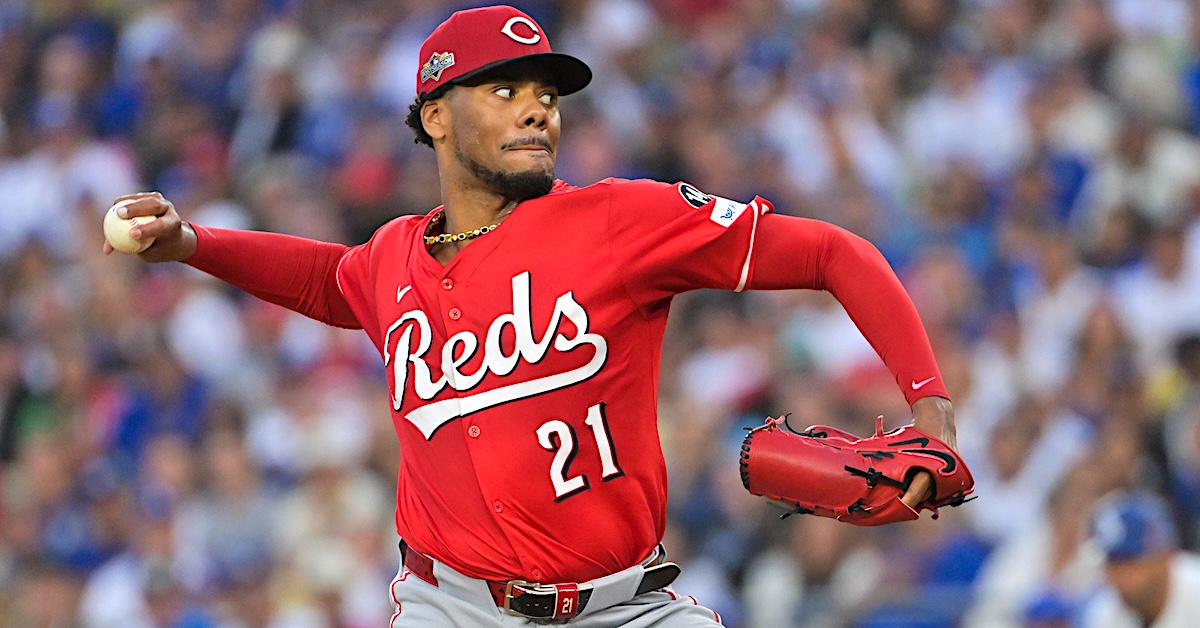
Hunter Greene takes the mound Saturday against Baltimore in what amounts to a last-ditch salvage operation for the Cincinnati Reds. The team's projected ace has spent the entire first two months of the season recovering from elbow surgery to remove bone chips—a procedure that sidelined him after a single spring appearance. With Greene finally available, Cincinnati sits in last place in the NL Central, 13.5 games behind the leader and six games out of the final wild card spot. The rotation's collapse without him has been staggering.
Cincinnati's starting pitchers rank 17th in ERA, 27th in FIP, and 23rd in WAR across the full season. Chase Burns has delivered a breakout campaign worthy of All-Star consideration, and Andrew Abbott has held his own, but the remaining rotation members—Nick Lodolo watching his strikeout rate erode for a second straight year, Brady Singer stuck with two ineffective pitches, Rhett Lowder proving hittable—have been unable to shoulder any burden. The staff was supposed to be the team's competitive advantage given an offense that ranks near the bottom of the league in wRC+ and hasn't posted a figure at or above 100 since 2010. Instead, even with a strong-armed starter in Burns, the rotation without Greene has cratered. The Reds need Greene to function like a true ace: sub-3.50 ERA, 200+ innings, the kind of innings-eating stability that lets a weak offense remain mathematically alive.
The problem is operational, not just personnel. Greene's return solves the talent deficit at the top of the rotation but cannot repair the broader arithmetic problem. ZiPS projects the Reds as most likely to enter the playoff death zone in July—a state defined by a 1% or lower probability of postseason qualification. Leapfrogging four teams in a loaded division is a near-impossible ask at this juncture. A wild card path exists in theory, but it requires sustained excellence from a lineup that has underperformed relative to payroll and expectation for consecutive seasons.
For betting purposes, Greene's return carries limited leverage on playoff-related props (division winner, pennant odds) because the Reds' structural deficiency predates his injury. Where Greene directly matters: starting pitcher strikeout lines and ERA props in his individual starts. His 2024 campaign (2.75 ERA, 9.7 K/9) and 2025 strikeout-per-nine rate (10.1) represent a command-and-stuff baseline the rest of the rotation hasn't approached all season. If Greene posts a 7.5 or 8.5 strikeout line in his Saturday debut, that may carry value on the under if the market prices him as a full-strength version without accounting for three months of downtime and the specific mechanics of bone chip removal. Conversely, his first few starts will test whether the injury has degraded velocity or movement; if either shows material decline, the strikeout totals should be faded. The angle is timing—Greene's opening lines may overshoot or undershoot his true capability depending on how much the injury has taxed his stuff.