Giants Face Hard Choices on Expensive Contracts—And Jung Hoo Lee Might Be the Best Asset to Move
By PropBetEdge Editorial Team ·
San Francisco is preparing a mid-season reset, but trading away star talent on long deals may be less appealing than selling high on a young outfielder before his value peaks.
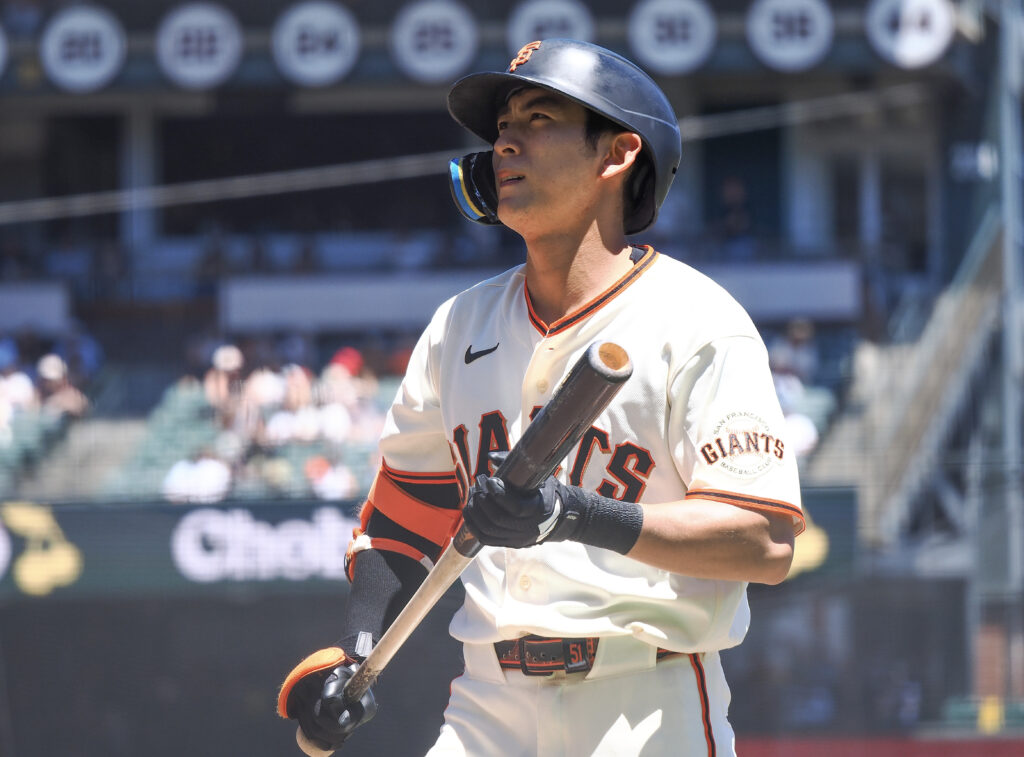
The Giants are operating in seller's territory. Sitting above only the Rockies in the National League, San Francisco has begun the familiar calculus of a deadline teardown—and early targets include Luis Arraez and Robbie Ray, two impending free agents whose contracts expire after this season. But the more revealing signal is management's openness to absorbing the dead weight of Willy Adames, Rafael Devers, and Matt Chapman: three cornerstone-caliber hitters locked into multi-year deals with full no-trade clauses or near-unmovable contracts. The team is clearly wrestling with how much pain it's willing to absorb to reset the payroll.
Here's the problem: those big contracts aren't actually the problem. Devers and Adames are elite bats on market-rate deals. Chapman, while entering a decline phase, remains a functional lineup piece. Trying to trade them at a discount would require San Francisco to eat salary, which only makes sense if the team is in full firesale mode—and the Giants aren't there yet. The real inefficiency on the roster is Jung Hoo Lee. The 24-year-old outfielder has emerged as the franchise's brightest offensive prospect in years, hitting .288 with an on-base percentage above .360 while posting exit velocities that rank in the 85th percentile league-wide. He's on a cost-controlled deal (signed long-term before arriving from the KBO) with no arbitration issues looming, which means his contract is one of baseball's best bargains. Contenders will line up for a player of his age, talent, and affordability.
The Giants' decision to keep or sell Lee is a statement about timeline. If they trade him, they're committing to a multi-year rebuild and accepting that Devers, Adames, and Chapman won't be playing meaningful October baseball together. If they hold him, they're betting on one more push around those veteran bats—a higher-risk proposition with this current record. The market will pay premium prospects for Lee because he represents a rare combination: star-level talent on a team-friendly contract with five-plus years of control remaining. Selling him now, while his bat is hot and evaluators are most confident in his ceiling, maximizes return.
From a wagering lens, Lee's individual prop lines become sensitive to deadline movement. If the Giants signal they're selling, expect Lee to land in a contender's lineup, which typically elevates hit totals and RBI props by moving him into a deeper order and more consistent scoring position. Lee currently bats lower in the San Francisco lineup—a structural headwind on run-production props. A trade to a playoff team could shift his daily range significantly. Right now, bettors overweighting Lee's recent performance without accounting for the possibility of a mid-season move are taking on hidden variance. His hit totals, runs, and RBI props all carry embedded risk that resolves either up (if traded to a contender) or flat-to-down (if the Giants hold and the team continues losing).
The sell-high case on Lee isn't about his talent—it's about capturing maximum value before a move that benefits him athletically but scrambles the betting projections. San Francisco should recognize that holding three expensive veterans while rebuilding around a young star is organizational paralysis. Moving Lee solves that tension cleanly.