Brewers Have Seized the Central—and the Market Still Underprices Them
By PropBetEdge Editorial Team ·
Milwaukee's five-and-a-half-game swing into first place wasn't luck; it was a franchise executing at an elite level against elite competition, and the betting markets haven't fully caught up.
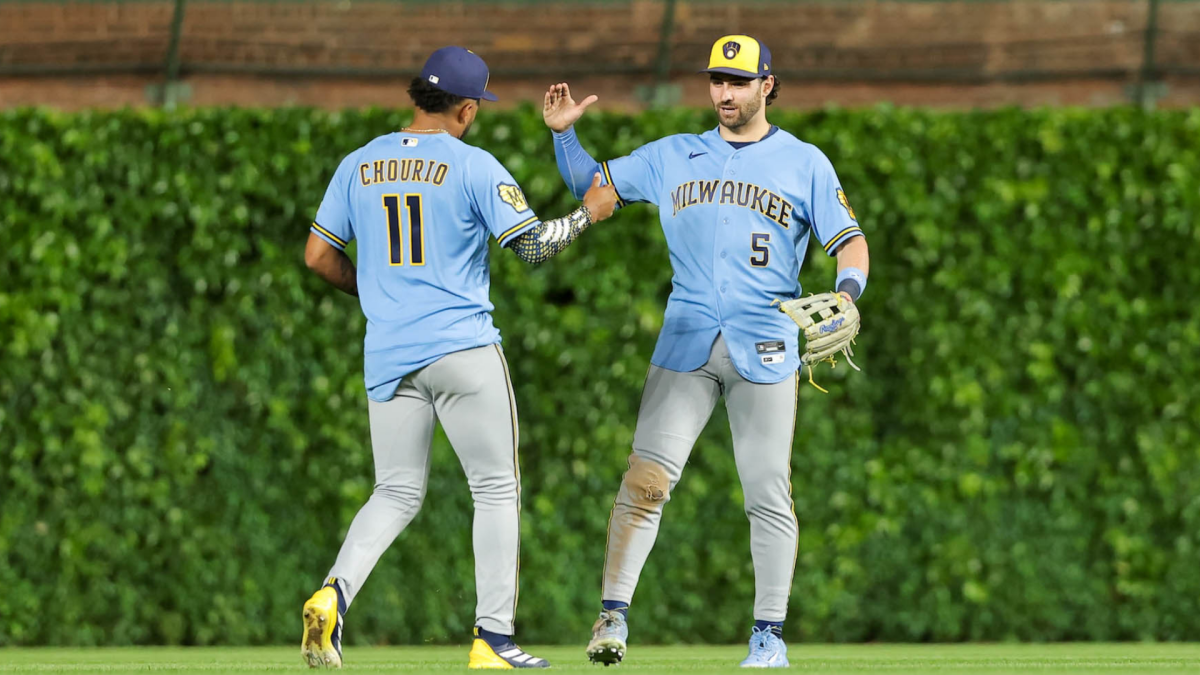
The Milwaukee Brewers erased a 5½-game deficit in the National League Central by sweeping the Cubs at Wrigoe Field while simultaneously dismantling the Yankees, taking series from the Padres and Twins, and positioning themselves to face the Dodgers in an NLCS rematch. This wasn't a run of fortune against weakened rosters. The Cubs entered that sweep 18-5 at home; the Yankees were 26-12; the Padres sat at 24-16. The Brewers aren't beneficiaries of schedule cupcakes—they're a franchise that has exposed weaknesses in quality opponents and executed with precision.
What separates this Brewers team from the perpetual underdog narrative their manager keeps pushing is structural dominance across every channel. Offensively, they rank sixth in batting average and fifth in on-base percentage while sitting second in stolen bases—a profile that doesn't require home-run dependency to score runs efficiently. Defensively and on the mound, they're third in team ERA and third in strikeouts, anchored by a rotation of Jacob Misiorowski and Kyle Harrison, both throwing ace-caliber stuff. Harrison struck out 11 in seven scoreless innings against Chicago on one hit; Misiorowski generated eight strikeouts in six innings with three hits allowed. These aren't blips. Harrison owns a 1.77 ERA and was once a consensus top-30 prospect. The Brewers have constructed a machine—championship pedigree evident in their 97-65 record last season (best in baseball), +172 run differential, and seven playoff appearances in eight years.
The injury absences of Christian Yelich, Jackson Chourio, and Andrew Vaughn during much of the season have actually masked how potent this lineup will be when whole. Against a Cubs rotation in Chicago this week, the Brewers attacked first-pitch offerings from Shota Imanaga in game one and pivoted to hunt breaking pitches from Ben Brown in game two—evidence of scouting rigor that extends to pitch-sequencing adjustments between games. That organizational precision compounds over a season and translates directly to betting edges.
For prop bettors, the Brewers' current positioning creates a persistent mismatch between perception and performance. The rotation's strikeout rates (Harrison, Misiorowski, and Brandon Woodruff when healthy) remain underpriced relative to their command metrics and opponent quality. The team total sits artificially low because the market continues to treat Milwaukee as a scrappy overperformer rather than what they are: a 97-win franchise in the midst of another elite campaign. Their hitters' prop lines—particularly strikeout props—benefit from the gap between narrative (underdog scrappiness) and reality (disciplined, coach-heavy offense that avoids contact). The Cubs collapse in Wrigoe revealed no hidden flaw in Milwaukee; it exposed how the Brewers' systematic preparation and arm talent operate at a tier most divisional opponents can't match.
The manager's insistence on the underdog label is, at this point, a distraction from what's plainly visible: a franchise that has won the division three straight seasons and four of the last five, that operates with a +172 run differential, that hasn't posted a losing season since 2016. The underdog schtick may protect against complacency in the clubhouse, but for bettors, it's a gift—it means the public continues to misprice a team that's already seized control of its division and is improving as injuries heal.