Seigler's Sudden Emergence Reframes Red Sox Depth and Lineup Ceiling
By PropBetEdge Editorial Team ·
A call-up utility bat from Triple-A Worcester has evolved into Boston's offensive ignition point—and the mechanics of his role carry measurable implications for team total direction.
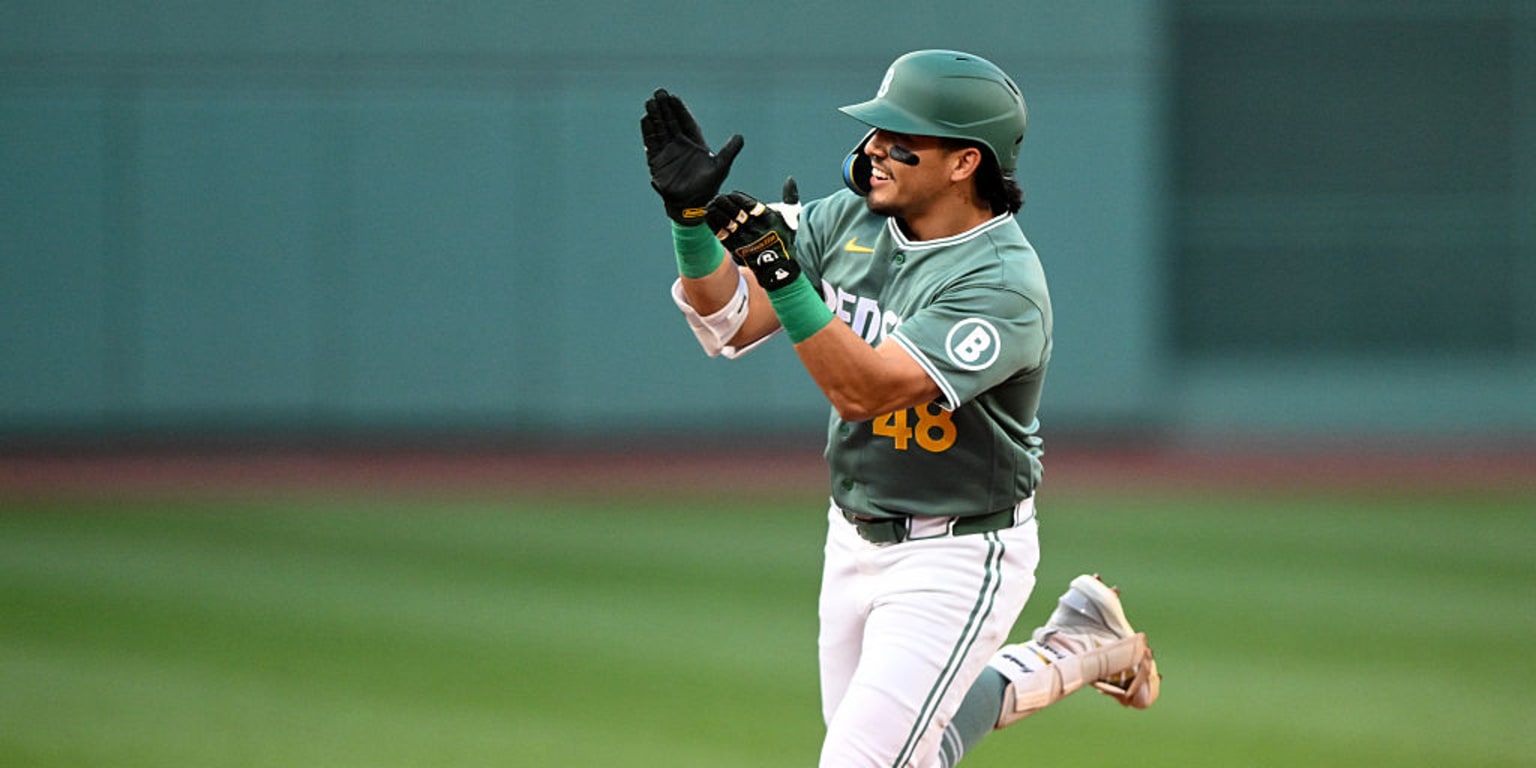
Anthony Seigler went 4-for-5 with a leadoff homer Friday night as the Red Sox defeated Toronto 6-4, extending their record to 20-3 since June 25. The performance itself—a career night that included a homer, an insurance RBI double, and a near-cycle—matters less for betting than what it represents: the calcification of an unexpected lineup stabilizer who arrived from Triple-A Worcester in June and has become interim manager Chad Tracy's primary second baseman and leadoff option during a stretch that coincides directly with Boston's 24-6 start to the season.
Seigler's path to relevance was born of necessity. Trevor Story, Marcelo Mayer, and Isiah Kiner-Falefa landed on the injured list simultaneously, opening the second base position. The Red Sox had already dealt with Roman Anthony's absence and Jarren Duran's offensive struggles; Seigler, acquired from Milwaukee alongside Caleb Durbin and Andruw Monasterio in a pre-spring-training deal, slid into the vacancy on June 20. He'd missed April and May with left knee patellar tendinopathy, making his June callup a low-expectation proposition. Instead, he's become the fulcrum of what pitcher Patrick Sandoval now calls the "spark plug"—the emotional and operational catalyst that has fueled Boston's recent surge.
What matters for lineup modeling is the durability question. Seigler has "scuffled a little bit here recently," per Tracy, before Friday's outburst. This is the hallmark of a depth bat whose value accrues through accumulated at-bat quality rather than sustained elite output. He's a switch-hitter who plays with visible edge, clapping and pointing after productive moments. His leadoff role isn't because he's a base-stealer or a premium on-base threat—he's there because Boston's better options are injured or underperforming. When Story, Mayer, or Kiner-Falefa return, the equilibrium shifts. Seigler's at-bat volume and positional consistency both reset.
For team total bettors, this distinction matters acutely. Boston's 20-3 record since late June is real; it's also been underwritten by a lineup configuration built on injury substitution. If we abstract Seigler's nightly appearance as a permanent feature, we're pricing an offensive ceiling that depends on four players remaining simultaneously unavailable. The market has likely incorporated the recent win-rate into Friday's live numbers without fully discounting the fragility of the roster logic that created it. Seigler's 4-hit game is an outlier variance spike—the kind of single-game eruption that will be cited to justify staying aggressive on Red Sox overs in weekend spots—but it doesn't alter the underlying staffing risk. His role is contingent. His upside is real. His consistency is still unproven at the major-league level.
Team totals at Fenway this weekend will reflect Friday's momentum and Boston's recent record. The bookmakers aren't blind to context; the line will price some of the 20-3 run. But the degree to which that pricing assumes Seigler remains productive versus returning to replacement-level depth production is the fault line. A 4-for-5 night doesn't reverse a process that brought him to the majors because three better players were hurt. When those players trickle back, so does Seigler's leverage over team total direction.