Josh Smith's Viral Meningitis Recovery Clouds Rangers Infield Timeline
By Erik Schwartz ·
Texas' second baseman returned to uniform Thursday after a week-plus hospitalization but faces an uncertain path back to game action, reshaping the Rangers' middle-infield depth picture mid-season.
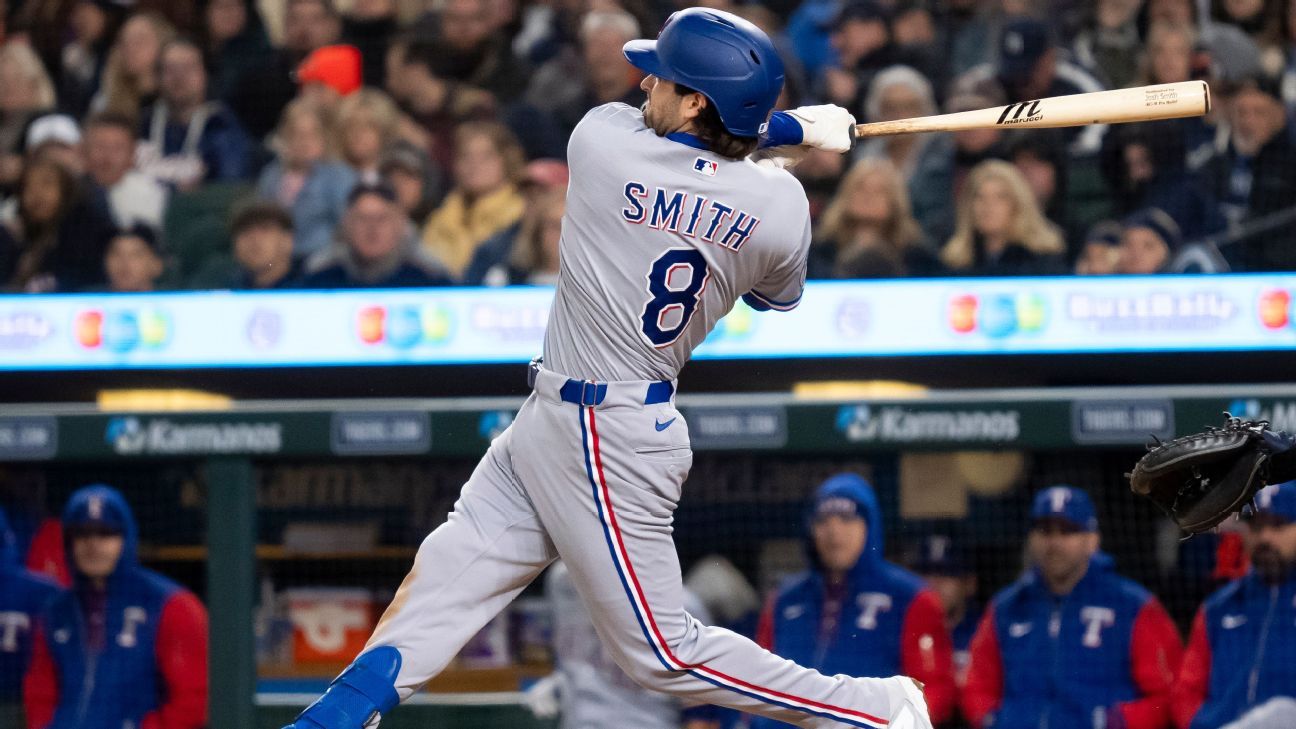
Josh Smith was back in a Rangers uniform Thursday for the first time since his mid-May hospitalization with viral meningitis, but the team and player are operating without a firm return date. Smith, who hasn't played since May 3, spent more than a week in the hospital after initially hesitating to seek medical attention—a decision he now credits to his father and head trainer Matt Lucero for pushing him to get checked. The illness followed a glute strain that landed him on the injured list; a subsequent left wrist inflammation arose during rehab, though he reports no current pain from either injury.
Smith's immediate activities Thursday were minimal: light jogging, no batting work. He's regained the weight he lost during hospitalization and says he feels good, but the real question is functional baseball readiness rather than pure health metrics. "I wouldn't say I need to get to 100% to be ready to go back to play," Smith told reporters. "I just need to get able to where I can help us win a baseball game." That measured language matters—it signals a player and organization being cautious about a condition that carries legitimate cardiovascular and neurological considerations, not rushing someone back from a serious infection.
The timing complicates Texas' roster math. Smith was elevated to regular second base after the Marcus Semien trade to the Mets, positioning him as the primary option at the position. His pre-hospitalization line reads .217 with six RBIs across 31 games—a pedestrian start to the season—but his absence forces the Rangers to lean on available depth or shuffle their lineup construction. A protracted recovery window (anything beyond one more week) means Texas is effectively playing the rest of May and into June without a confirmed second baseman, a gap that influences both offensive production and team-total forecasting.
From a betting lens, Smith's ambiguous recovery timeline undermines any confidence in Texas' offensive output projections for the next 7-10 days. The Rangers' team total and run-line pricing incorporate assumptions about lineup consistency; a 26-year-old regular suddenly unavailable—and unable to commit to a return—introduces variance the sportsbooks may not have fully baked in at the close. If Smith remains sidelined through early June, Texas' run-per-game expectations should contract modestly. More directly, any futures or weekly-prop positions betting on Rangers second-baseman production (hits, RBIs, plate appearances) face degradation until Smith provides a clearer timeline or officially resumes action.