Hernández Walk-Off Ends Dodgers' Clutch Drought—And Signals a September Reset
By PropBetEdge Editorial Team ·
After two months of offensive mediocrity, Teoscar Hernández's go-ahead double broke a 24-at-bat stretch of silence in scoring position, marking the kind of late-inning execution the Dodgers will need for a title run.
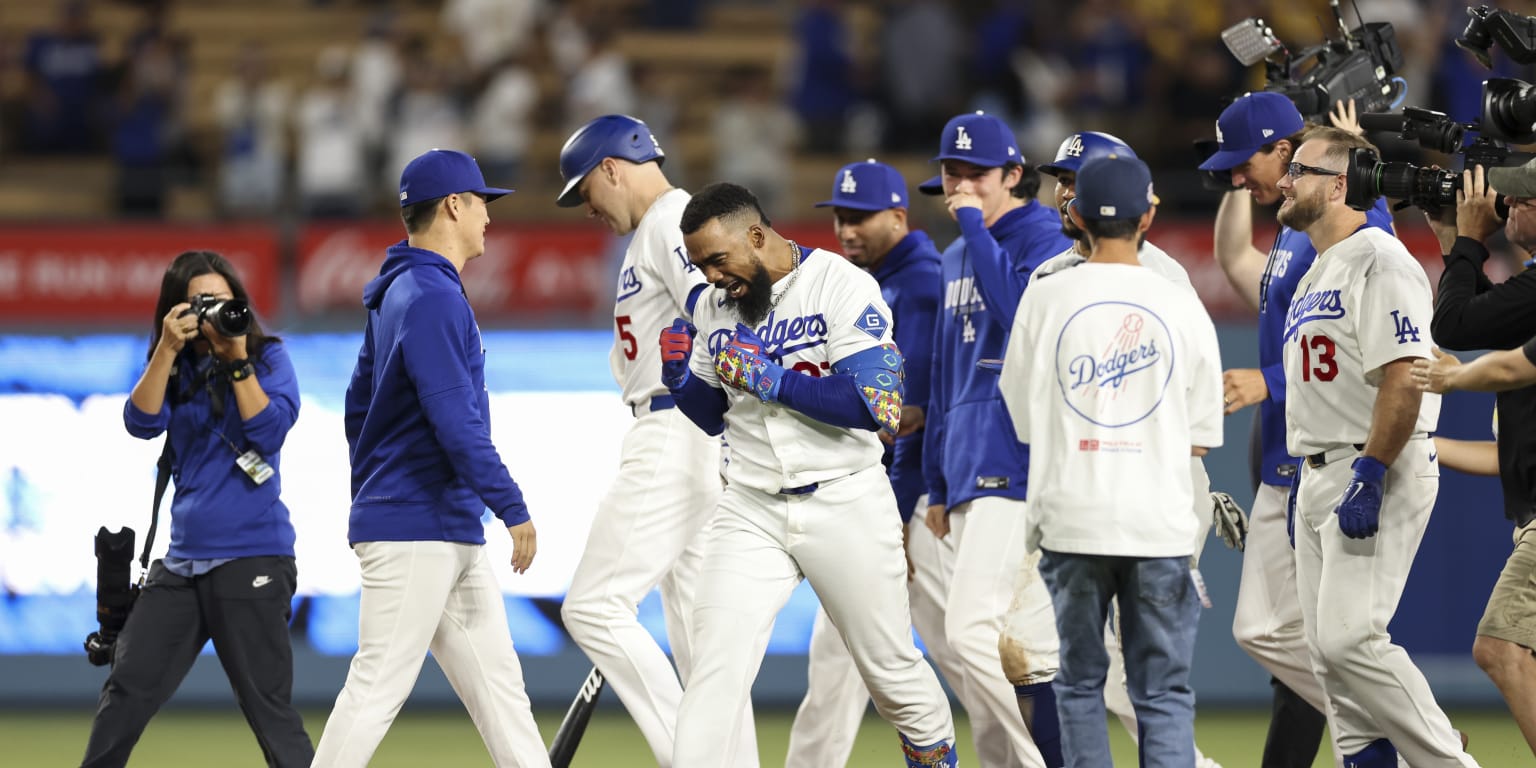
The Dodgers' two-run double off St. Louis closer Riley O'Brien in the bottom of the ninth on Thursday night was not just a walk-off. It was a release valve. Teoscar Hernández's full-count double to left-center, with runners on first and second, ended a 24-at-bat drought with runners in scoring position spanning Wednesday and most of Thursday—a stretch so barren that manager Dave Roberts didn't need to reference it by the numbers alone. He called it what it was: pressing.
Hernández's return timeline matters here. He came back from a left hamstring strain at the end of June—now over two months prior—and limped through 47 games hitting .210 with a .592 OPS. The Dodgers seriously considered platooning him once rosters expanded on September 1, a tacit acknowledgment that their mid-season acquisition (acquired in July 2024, roughly 14 months earlier) had become a liability. But Roberts and the front office chose patience. Hernández responded in Detroit with a go-ahead homer, then turned the three-game Cardinals series into a referendum on his clutch availability: three straight hits, four reaches in Thursday alone.
What's happening is not a dramatic swing in underlying ability—it's alignment. Hernández himself identified the marker: "When I start hitting the ball hard to right field, center field, left field, and use the whole field, that's when I know my swing is on point." His walk-off came on contact to the gap, the kind of all-field approach that signals he's stopped over-committing and started flowing. The Cardinals series was a small sample, but in September baseball—especially for a defending champion clinging to a 9.5-game division lead while sitting 27-27 since July 1—small samples that arrive in high-leverage spots get extrapolated fast.
For bettors tracking Dodgers postseason odds and September-stretch team totals, Hernández's reversal carries real weight. The team's offensive profile has been split: elite when rolling (early season), catatonic in stretches (August-early September). A left fielder who can hit with runners in scoring position, who can generate go-ahead and walk-off power, materially shifts team-total modeling. The Dodgers have been undervalued in spots because the market priced in 47-game Hernández. If September Hernández is the one who shows up, team totals at 4.0-4.2 runs that priced out the offensive risk will have misparsed the variance. He won't hit .210 forever; the floor isn't there. But the ceiling—the guy who manufactures gaps and doesn't press in the ninth—is the player the Dodgers need.
Roberts' postgame comment is the data point: "I've always said that we're better when he's in the lineup, but performance certainly matters." That's a manager signaling that he's made a decision. Hernández is staying in, and if his swing holds, the Dodgers' team totals and playoff odds both shift up.