Hernández's Grand Slam Caps Dodgers' Second Straight Comeback; Timing Matters for Series Pricing
By Erik Schwartz ·
Teoscar Hernández's go-ahead grand slam in the seventh inning gives Los Angeles its second consecutive comeback win over San Diego, but the prop market should separate yesterday's clutch performance from his sustainable hitting profile.
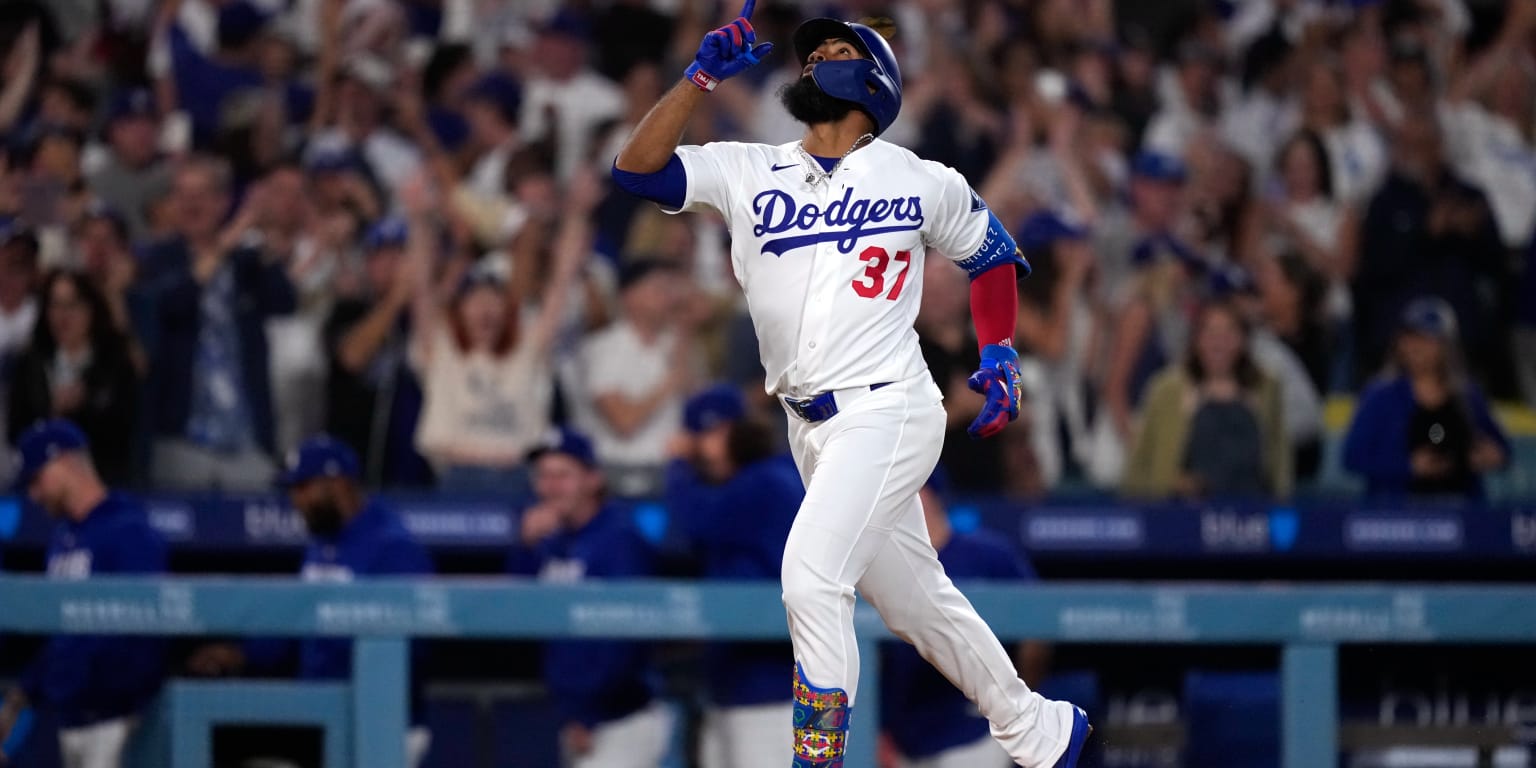
The Dodgers are building a narrative this weekend: down six runs after two innings on Thursday, then stranded through six on Friday until Teoscar Hernández connected on a first-pitch slider from Adrian Morejon in the seventh. That grand slam—106.6 mph exit velo, 419 feet projected distance—sent Dodger Stadium into a frenzy and delivered a 4-3 victory that echoed Thursday's comeback from a six-run deficit. Back-to-back wins salvaged from near-loss positions frame a team that refuses to fold, and that messaging carries weight in a division race.
Hernández's home run was his first since returning from the injured list on Monday. The specific context matters: a low-leverage situation in the sixth (King stranding two runners) suddenly flipped to maximum leverage in the seventh when a bobble by Jake Cronenworth on Kyle Tucker's grounder loaded the bases. That's the kind of sequencing that inflates a single performance into a "moment" in the playoff narrative. The slider hung slightly—Morejon's mistake—and Hernández punished it. One swing, one ballpark factor (left-center at Dodger Stadium plays short), one emotional release.
For prop bettors, the temptation to extrapolate from a grand slam is immediate and usually wrong. Hernández is a talented hitter with a career .260 AVG and real power, but his first 10 days back from injury—limited sample—will now carry the weight of that one tape-measure moment. Books may inflate his HR or TB props for the next few games, betting that the general public remembers the bomb and bids up his next plate-appearance ceiling. What they may underprice is the regression to his baseline: Hernández's career home-run rate sits around 8% of plate appearances across full seasons. Yesterday's comeback narrative is catnip for casual bettors; the sustainable edge is recognizing when a single high-leverage moment gets repriced as a new baseline.
The Dodgers' offense as a whole—which managed only three baserunners through six innings on Friday before the seventh exploded—doesn't suddenly become elite because one at-bat went 420 feet. San Diego's starting pitching (Michael King was excellent through six) remains solid enough to keep games tight. The series moved the Dodgers' moneyline tighter for Saturday, and team-total unders may face early steam on the narrative of comebacks and momentum. But comebacks are variance events, not skill signals. If you're fading Dodgers totals because of Friday's late-inning surge, you're betting on narrative. If you're leaning unders on Los Angeles because Friday's first six innings showed a team generating minimal baserunners against competent pitching, that's a mechanism worth tracking across the remaining games.