Teel's Ankle Injury Forces White Sox into Third-String Catcher Rotation
By Erik Schwartz ·
Kyle Teel exited Monday's game against Texas with a left ankle sprain, leaving Chicago with only a rookie and a Triple-A backstop to handle a critical position.
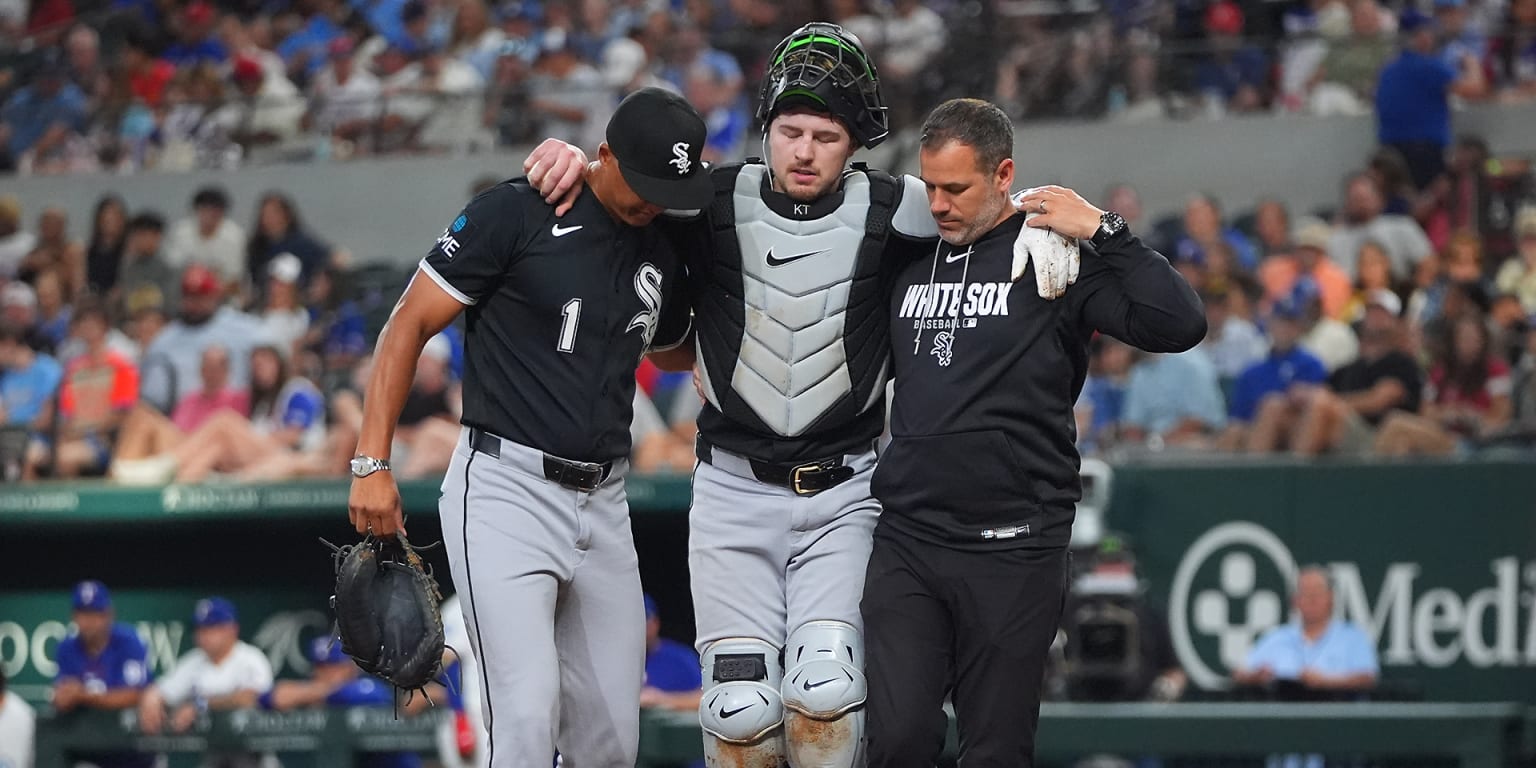
Kyle Teel departed the White Sox's Monday night matchup at Globe Life Field in the second inning after rolling his left ankle on a play at the plate. The injury occurred while attempting to tag out Ezequiel Duran, who scored on Evan Carter's single to right. Teel managed to stand but required support from manager Will Venable and the team trainer to exit, replaced immediately by Drew Romo. The club initiated further evaluation, but the damage to an already fragile catching corps arrives at a moment when depth matters.
This marks Teel's third significant injury in four months. The switch-hitter suffered a right hamstring strain during World Baseball Classic action on March 10, followed by a sprained lateral collateral ligament in his right knee on May 16 while rehabbing at Triple-A Charlotte. He finally made his season debut on June 22 — less than a month ago — and had accumulated 14 RBIs in limited action despite a .194 batting average through Monday. For a player Chicago traded assets to acquire, availability has become his defining stat line.
The organizational picture behind the plate now depends on Drew Romo, a journeyman with a career .197 MLB average, and Edgar Quero, a 25-year-old switch-hitter currently playing for Charlotte. Quero's minor-league performance doesn't guarantee competence at the major-league level, and Romo's track record suggests the White Sox have moved from managing a position of relative strength to pure triage. The catching position is already undervalued in most offensive prop markets — teams routinely absorb sub-.200 average performances at the spot — but the specific degradation of one franchise's option set creates a ripple effect on lineup construction, pitch framing metrics, and overall offensive efficiency.
For prop bettors, the immediate takeaway centers on White Sox team totals and runs-per-game expectations. Teel's injury compounds a season that has already seen the team struggle offensively. Without a reliable hitting catcher, Chicago loses both offensive consistency and the subtle advantage of pitcher familiarity that comes with a steady defensive option behind the plate. Teams cycling through emergency backstops tend to see modest but measurable declines in run production—typically a 0.3 to 0.5 run decrease per game. Romo's presence at the plate introduces a known downside; his career slash line offers no upside surprise.
Monitors should fade White Sox team totals in the near term. If the ankle sprain is significant enough to sideline Teel for an extended period—and given his recent injury history, the organization may exercise caution—Chicago will operate with diminished offensive firepower. The combination of roster depletion and forced defensive adjustments argues for unders on team run production until a clearer timeline emerges on Teel's availability.