Giants Sellers Signal Ramos and Schmitt as Deadline Chips—What It Means for Their Trade Value
By PropBetEdge Editorial Team ·
With San Francisco openly shopping Heliot Ramos and Casey Schmitt, contenders are circling two bats whose mid-season performance could dictate how much prospect capital moves before August 1.
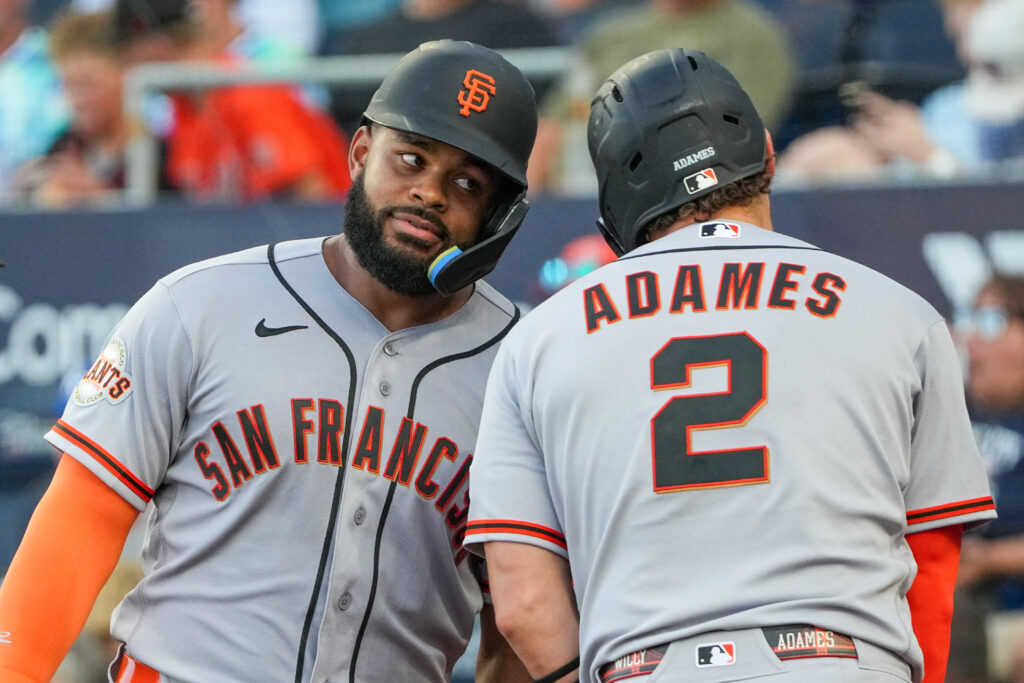
The Giants have accepted their 2026 reality. As the July 21 trade deadline window tightens, San Francisco is fielding scout traffic on two of its more moveable position players: outfielder Heliot Ramos and utility infielder Casey Schmitt. The Phillies and Mariners have already shown interest, per reporting from the San Francisco Chronicle, signaling that multiple contenders see value in rental upgrades or controlled long-term assets.
Neither player represents a franchise cornerstone, but that's precisely the point. Ramos carries a career .740 OPS and has spent three-plus seasons as a competent if unspectacular major-league contributor. Schmitt, a versatile defender with sub-.700 OPS production, projects more as a bench piece than an everyday bat. Their modest offensive profiles and controlled contract terms make them ideal salary-absorption partners—assets San Francisco can use to pry away the bloated, veteran-laden deals clogging the roster and blocking young talent. A contender like Philadelphia or Seattle, chasing a pennant push, might absorb $5M–8M of a bad contract in exchange for a mid-prospect and a fringe-major-league-ready bat.
What changes the calculus is when they move. If Ramos enters a late-July hot streak—elevated ISO, improved strikeout rate, run production—his apparent "rental" value ticks upward, and teams grow more willing to part with meaningful prospects rather than band-aid swaps. Conversely, if both players continue trending toward their season averages over the next ten days, their trade value plateaus at the "depth piece + minor salary relief" level. The Giants' willingness to shop them aggressively suggests they're not betting on a Ramos resurgence; they're signaling a full rebuild pivot.
For prop bettors, this dynamic has immediate ramifications. Ramos's plate appearances and production metrics may see volatility depending on deadline churn—if he's dealt to a contender mid-lineup, his strikeout rates could compress or improve with fresh coaching input, but his volume may dip if he slots into a crowded outfield rotation. Schmitt faces even steeper usage risk; utility players moved at the deadline often see irregular at-bats while the acquiring team settles lineup continuity. The Giants' public scouting circus also tends to tighten pitch selection and aggression as affected players become conscious of their audit. Over the next nine to ten days—the window before any transaction—monitor Ramos's plate discipline and contact rate closely. Market uncertainty around his destination will likely suppress moneyline confidence in Giants games where he's the presumed anchor, but it may also inflate his individual prop lines as books hedge their bets on post-deadline usage.