Taylor Ward's Power Shutdown Isn't a Collapse—It's Intentional Reconstruction
By PropBetEdge Editorial Team ·
The Orioles outfielder has traded 25 home runs a year for a .403 OBP and 126 wRC+, signaling a sustainable approach shift that redefines his prop profile.
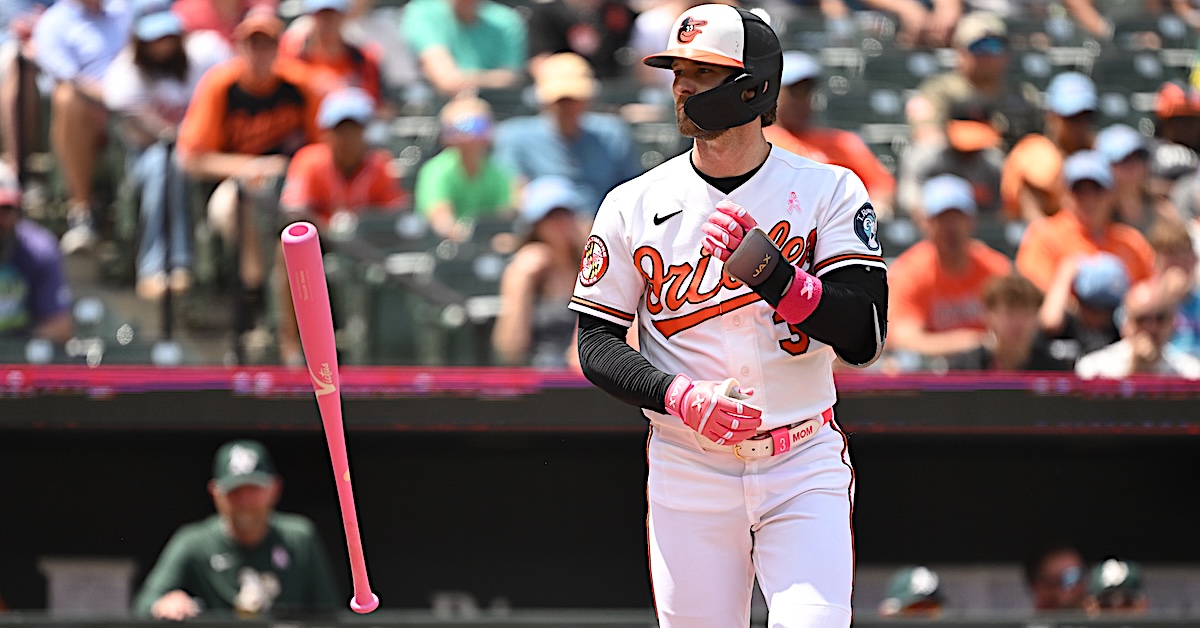
Taylor Ward has spent 2026 dismantling the hitting identity that made him one of the Angels' most valuable players. After posting a 119 wRC+ and 11 WAR across four seasons in Los Angeles, the Orioles acquired Ward on a one-year deal this offseason and he has responded by fundamentally reengineering his swing. He has launched only three home runs through early June—a pace that would finish well below 10 for the full season—while simultaneously posting a .403 on-base percentage (fifth in baseball) and an 18.8% walk rate (third). His 126 wRC+ sits on track to be the second-best of his career. The mechanism behind the shift is not hidden or accidental. Ward's bat speed has dropped 1.5 mph and now ranks in the fifth percentile league-wide. He is taking fast swings (75 mph or harder) at half his career rate. His swing path has flattened, his zone coverage has shortened, and his pull rate on fly balls has collapsed to 19.4%—career lows across the board. Yet his contact rate has soared from 78% to 84%, his chase rate has tightened to 12.4% (best in baseball by more than three percentage points), and his zone contact now sits above 90%. None of these metrics signal decay or mechanical breakdown; they reflect a deliberate shift toward Steven Kwan-style premium contact hitting.
The trade itself carries an internal valuation signal worth noting. The Orioles did not acquire Ward to be a power hitter—they already have that ceiling in their roster construction. Instead, they targeted his elite bat control and plate discipline, traits that had been secondary to his power output in Los Angeles but remain elite even as he de-emphasizes lift. Ward has never possessed more than average bat speed; his 98-homer, four-year Angels run was built on guile and precision, not raw exit velo. He directed 105 of his 116 career homers to left field because his model has always been moving the bat through the zone with timing and intent, not raw force. The walk rate rise is not an outlier spike dependent on fortune—it reflects a conscious tightening of his approach against breaking balls and off-speed offerings. His zone contact above 90% is among the best in the league; his 21.6% career chase rate even as an Angels power hitter was already elite. He is not walking more because of a BABIP bounce or unsustainable sequencing; he is walking more because he is actively swinging at fewer pitches outside the zone and making harder contact when he does swing.
For prop bettors, this pivot demands immediate line adjustment and should already be reflected in early-season markets. The predictive edge lies not in whether Ward stays on this path—the mechanism is sound, the skill set supports it, and the team investment confirms the Orioles view this as his permanent role—but in which specific prop markets lag behind the shift. His HR line has likely corrected downward, but his walk and on-base props may still carry value if books have not fully repriced his 18.8% walk rate as a sustainable seasonal floor. Ward's isolated power at .103 is down sharply from his .192 as an Angel, but his contact improvements mean his batting average is stabilizing higher than expected for a power-contact decline; his BABIP has not spiked unreasonably. His strikeout rate has fallen as his contact rate rose, a direct inverse relationship that removes guesswork from his plate appearances. Any spike in his K prop in early sportsbooks likely reflects his Angels comp pricing rather than his Baltimore reality and should be faded. Conversely, his runs scored and RBI totals may have been set with his Angels power expectation baked in; the Orioles' offensive framework puts him in more favorable baserunning and run-scoring situations than he had in Los Angeles, partially offsetting his power loss.