Tatis Ends Two-Month Drought With 474-Foot Moonshot—Power Intact Despite Slow Start
By Ty Whitney ·
Fernando Tatis Jr. launched baseball's longest home run of 2026 on Tuesday, signaling his offensive engine has finally ignited after a historically slow begin to the season.
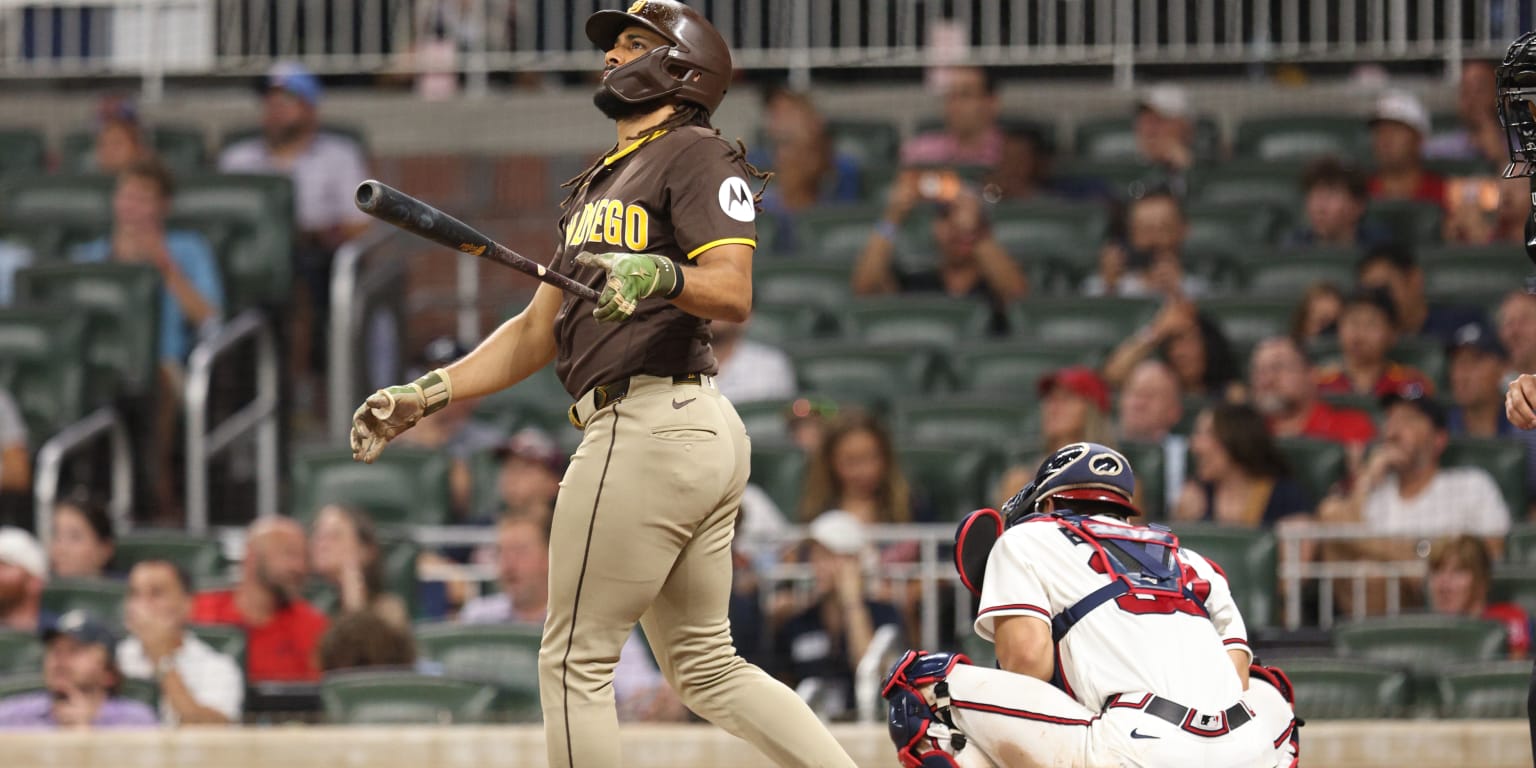
Fernando Tatis Jr. ended a two-month power drought in emphatic fashion Tuesday night, crushing a 474-foot home run in the eighth inning as the Padres routed the Braves 8-3 at Truist Park. The blast—struck at 111.0 mph exit velo with 82.2 mph bat speed—marks the longest homer in baseball this season, surpassing Drake Baldwin's 473-foot shot hit earlier this month in the same stadium. For a player of Tatis' pedigree, the timeline stings. He didn't reach the home run column until two months into the 2026 season, a drought that raised legitimate questions about his readiness and the durability of his all-or-nothing swing after previous injury complications.
Context matters here. Tatis operates in a specific power band—when his mechanics align and he connects cleanly, the results are elite-level. This 474-footer ranks as the second-longest of his career, only trailing a 477-foot monument he hit at Coors Field in June 2021, another thin-air ballpark where his swing finds room to operate. The fact that he generated this distance against an elite closer in a hostile park suggests the mechanical issues that plagued his early season are not structural. A single outlier home run doesn't erase a two-month power void, but it does change the narrative from "Is he broken?" to "Is he back?"
What the market likely hasn't recalibrated yet is the implications for his hit tool and run-production props going forward. Tatis' offensive profile depends almost entirely on power—he doesn't beat you with batting average or on-base percentage in the same way elite contact hitters do. His early-season struggles meant depressed home run totals, reduced RBI opportunities, and fewer runs scored relative to his usage. A player with his swing mechanics either produces power or produces little. There is no middle ground. Once he enters a hot streak—and a 474-footer is a reliable tell that the power is unlocked—his volume stats accelerate sharply. The next 30 games likely look very different from the first 60.
For prop bettors, the angle is straightforward: Tatis' home run line and slugging-adjacent props are now in transition from "drought-depressed" to "potentially undervalued for a late-season surge." If he's been at 0.25 HR per game over two months, expect his books to still price him as a 0.30–0.35 per-game producer while the market waits for confirmation. But his true baseline—based on 162-game career rates and the mechanical validation of Tuesday's blast—sits closer to 0.45–0.50 per game. That gap doesn't last long once the second, third, and fourth homers come in rapid succession. The real edge is on any home run props priced with early-season volatility baked in rather than normalized for his true talent. This isn't a bet on one game; it's positioning ahead of the natural regression toward his power mean.