MLB · injury
Giants' Catching Crisis Deepens With Susac's Patellar Fracture
A patellar fracture sidelines San Francisco's primary offensive catcher mid-stretch, forcing the team into a depth shuffle that will filter into offensive efficiency and run-production lines.
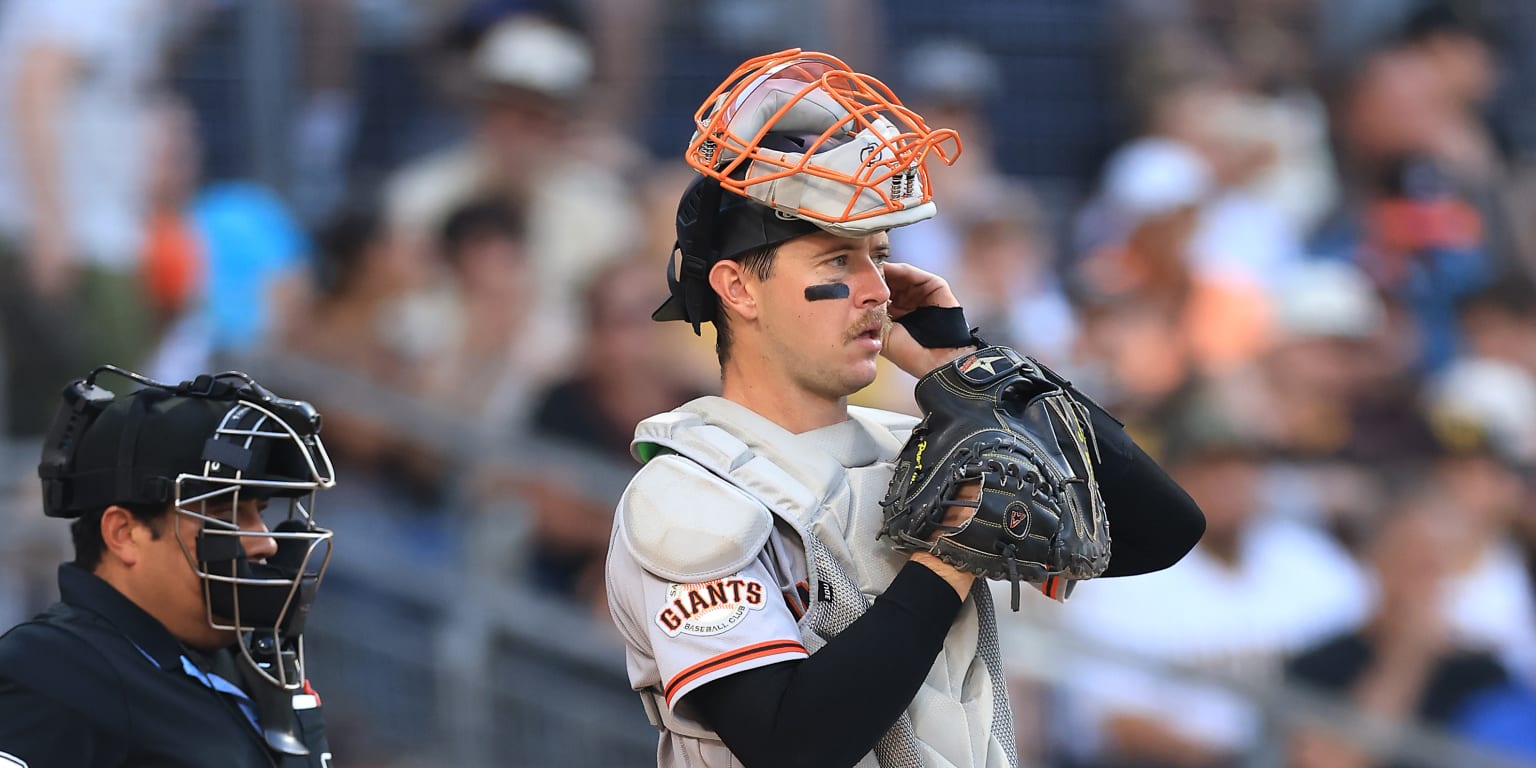
Daniel Susac's left knee patellar fracture, diagnosed Monday after an MRI that Sunday's X-rays missed, has forced the Giants into their third catching configuration in two weeks. The 24-year-old was struck by a foul ball off his kneecap in the fifth inning of Sunday's loss to Detroit, grimaced through two more innings, and returned Monday only to learn the fracture extends his season. The move lands Susac on the 10-day IL and elevates Drew Cavanaugh—a backup catching prospect with a .251 AVG and .626 OPS across 38 games this season—into the full-time offensive role.
The timing is brutal. Susac arrived in San Francisco as a Rule 5 acquisition in December and immediately rewarded the bet with a .478 AVG and 1.152 OPS in his first 11 games, sparking confidence enough for the Giants to trade franchise catcher Patrick Bailey to Cleveland in early May. Since then, Susac's bat cooled measurably—.243 AVG, .664 OPS over 53 games—after earlier stints on the IL with right elbow neuritis and low back strain. Still, his +8 fielding run value (tied fifth among MLB catchers) and defensive grading kept him in the lineup. That defense means little now. The Giants' catching depth was already compromised by right elbow neuritis sidelining Jesus Rodriguez since August 1, forcing the team to reach into Triple-A for Zach Morgan, a seventh-round 2022 pick batting .269/.739 OPS in 38 games split between Double-A and Sacramento.
The broader roster injury toll stacks the deck against San Francisco down the stretch. Matt Chapman, the third-base anchor acquired mid-stretch, is out for the season after undergoing core muscle surgery Tuesday—nearly six weeks on the sideline before the procedure. Marcelo Mayer, the secondary deadline trade, remains in rehab from a bone stress reaction in his left ulna and is weeks away from availability at third base or elsewhere. The Giants are running Christian Koss and Osleivis Basabe at the hot corner, neither of whom projects as a full-time solution.
For bettors, the calculus on Giants run production and team totals shifts. Cavanaugh's offensive profile—sub-.260 AVG, sub-.680 OPS—combined with the Susac downgrade removes approximately 0.2 to 0.35 runs per game from offensive expectancy. When Susac was healthy enough to play, he carried a 104 wRC+ this season; Cavanaugh sits at 79 wRC+. Over a full season, that delta extrapolates to roughly 12–15 fewer runs scored across a lineup that already ranked 20th in the National League in runs per game (4.18). The Giants are sellers at any team total projection of 4.5 runs or higher for the remainder of August into September. The loss of Chapman's power (nine HR in 60 games, .163 ISO) and on-base presence compounds the issue. San Francisco's offensive infrastructure has collapsed inside 72 hours, and oddsmakers may lag on repricing totals in the 4.3–4.8 window before sharps move in.
The catching shortage creates a second angle: Cavanaugh's workload will spike to 4–5 games per week, and his strikeout rate (24.4% in 2026) is materially higher than Susac's career 18.2%. If single-game prop markets open on Cavanaugh's strikeout total (roughly 0.7–0.85 K per game against major-league pitching), lean the under; the market will likely assume continuity from Susac's baseline, overpricing Cavanaugh's whiff exposure. That edge reverses once the sample grows to five-plus games, so the angle is short-dated and best deployed in the next week before the market samples Cavanaugh's true contact rates against live fastballs.
MLB Intelligence — Baseball intelligence beyond the box score. Open MLB Intelligence →