Hamstring Injury Cuts Short Hernández's Hot Streak; Dodgers Turn to Ward as Left-Field Answer
By Ty Whitney ·
A Grade 1 hamstring strain sidelines Teoscar Hernández just as he was reversing a season-long funk, forcing Los Angeles into a platoon arrangement that reshapes offensive production over the next several weeks.
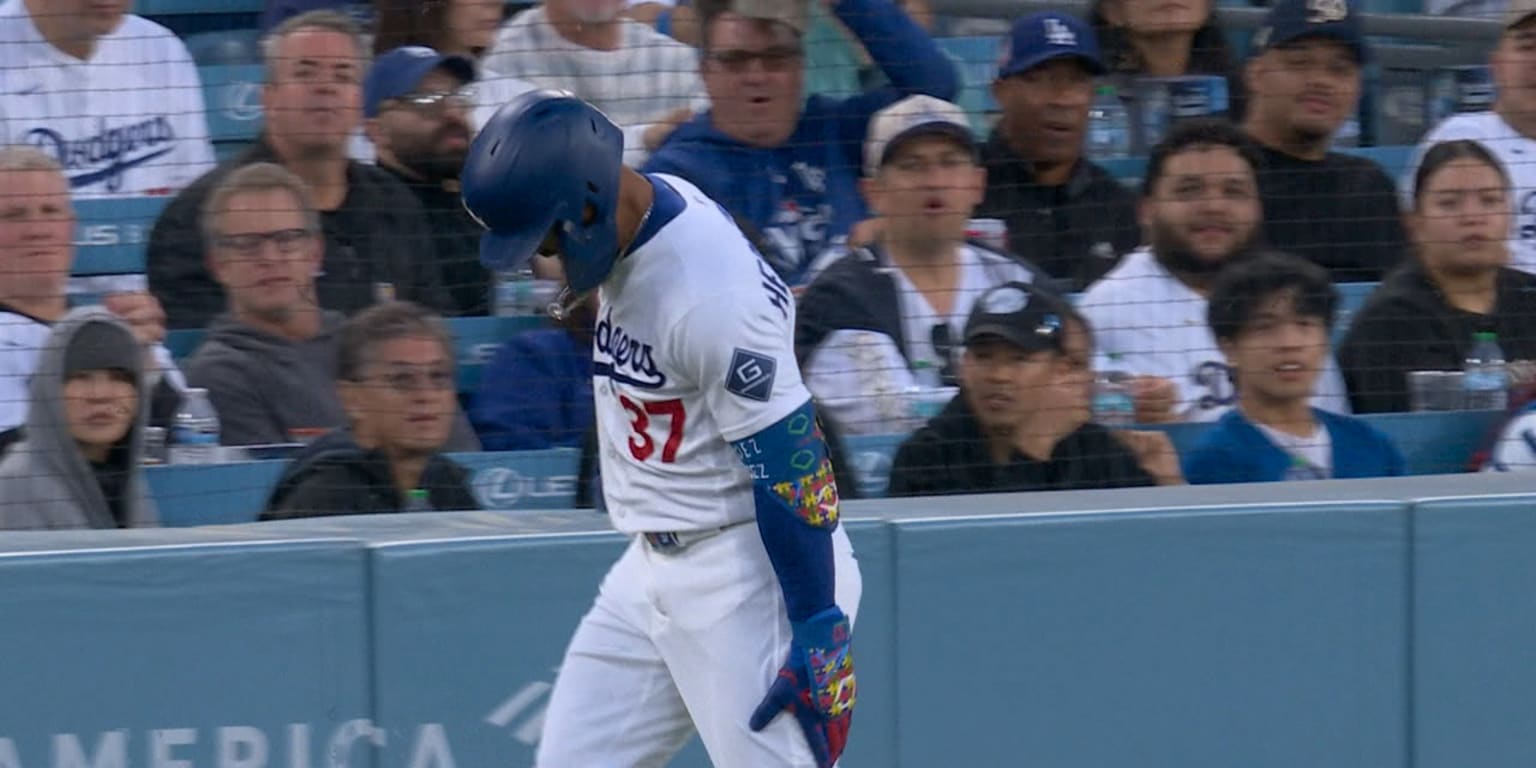
Teoscar Hernández is headed to the injured list with a left hamstring strain suffered during Wednesday's win over Colorado, removing a bat that had finally begun to generate consistent impact at the plate. The MRI revealed a Grade 1 strain—the least severe classification—but the Dodgers are adopting a cautious approach after a similar groin injury last May lingered through the remainder of the season. General manager Brandon Gomes acknowledged the team rushed Hernández's return last year and plans a slower rehab progression this time, with no specific timeline announced but an expectation he'll miss at least a few weeks.
The timing is particularly frustrating for Los Angeles. Hernández had climbed out of early-season doldrums—he'd been dropped as low as eighth in the lineup in early May—and was batting .276 with a .785 OPS heading into the injury. He'd started 50 of the Dodgers' first 56 games in left field, establishing himself as a cornerstone of the lineup. The sudden absence removes both his offensive ceiling and, more immediately, the predictability the Dodgers had started to build around him.
The Dodgers will replace Hernández's production with a left-field platoon featuring Alex Call against lefties and No. 19 prospect Ryan Ward against righties. Ward, recalled from Triple-A Oklahoma City, carries modest Triple-A credentials (.254 BA, .797 OPS) but has demonstrated competence against right-handed pitching specifically. James Tibbs III, the organization's No. 10 prospect and a far more explosive offensive talent (.310/.413/.616 in Triple-A with 14 homers), was left in Oklahoma City because he's not on the 40-man roster and the Dodgers don't expect Hernández to miss significant time. Gomes noted Ward has experience succeeding at the big-league level and has "earned" his opportunity, but the reality is clear: the platoon represents a meaningful drop-off in both contact quality and power projection.
For betting purposes, the impact bifurcates across different timelines. Immediate overs on Dodgers team totals should face scrutiny—the loss of Hernández's .276 average and consistent at-bat presence removes roughly 3-4 runs per week from the lineup's expected output, depending on matchup. Ward's power-hitting profile is materially weaker than Hernández's, and Call, a defensive replacement type, brings additional downside risk. The Dodgers' team total should compress by 0.3 to 0.5 runs for games where Ward or Call take left-field reps, which will be the majority until Hernández clears rehab. More durable is a fade on Dodgers spread expectations in tight matchups—a team built on offensive depth now has a measurable gap in a starting-nine position, and that translates to lower ceiling in close contests where they need baseline production to prevail.
The Grade 1 designation and Gomes's "quick return" framing suggest Hernández could be back within 2-3 weeks if rehab progresses smoothly, but the organizational hesitation around rushing is a real constraint. Monitor his rehab status closely; if the Dodgers keep him sidelined beyond the initial 10 days without public optimism, that signals caution around the groin-strain history repeating itself, and unders become more attractive for extended stretches.