Marlins Pitching Streak Exposes Market Lag in Shutout Run
By Ty Whitney ·
Miami's 19-frame scoreless streak and back-to-back shutouts have created a profitable window before sharps recalibrate pitcher props and team-total unders.
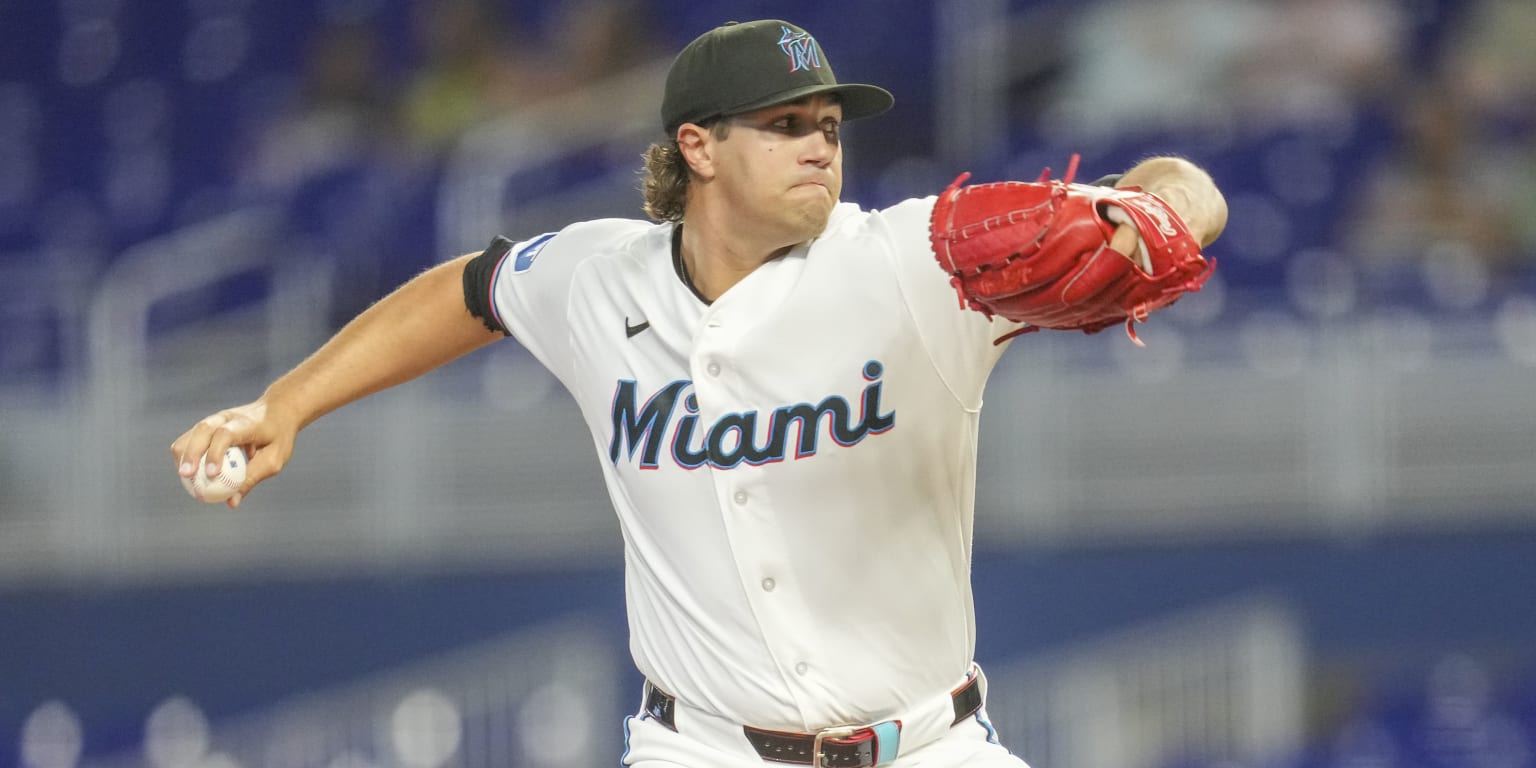
The Marlins completed their sweep of Arizona on Thursday with a 2-0 victory, extending a shutout sequence that now spans 19 consecutive innings—the longest scoreless stretch for Miami's pitching staff since July 28 through August 1, 2025. Tyler Phillips anchored the effort with five-plus innings of one-hit ball, and a parade of relievers (Michael Petersen, Anthony Bender, Calvin Faucher, Pete Fairbanks) closed without damage. The performance was the second consecutive shutout, bookending a mid-June surge that has transformed Miami's season narrative: the Marlins have won eight of nine games to open June and now sit at 34-35, just one game below .500 for the first time since April 29.
Context matters here. Miami finished May with a five-game losing streak—a depth that looked genuine at the time. The club's June turn is not a random variance blip; it correlates directly with pitching stabilization and lineup discipline. The Marlins scored twice on six hits without a home run, which tells you everything about Thursday's game structure: minimal offensive margin, maximum reliance on shutdown pitching. Xavier Edwards' sacrifice fly in the first and Jakob Marsee's two-out RBI single in the fourth were surgical, not explosive. Against Arizona, that minimalist approach worked because the Marlins' pitching staff pitched like a unit—no walks, no wild pitches, no bleeding of baserunners.
The prop betting market has not yet fully priced this pitching momentum into team totals and pitcher-strikeout lines. When a team strings together 19 consecutive scoreless innings, public perception lags behind the operational truth by 24 to 48 hours. Arizona came to Miami ranked 22nd in team ERA but got blanked twice in succession. That's a signal that either Arizona's order was exposed by Miami's sequencing or Miami's pitching has entered a higher tier of execution than its season-long numbers suggest. Given that Miami's starting pitching ERA sits at 4.12 for the season and the Marlins' bullpen ERA hovers near 4.50, the 19-inning scoreless run is either a hot streak or evidence of a recent tactical adjustment.
For prop players, the mechanistic edge lies in three directions. First, Marlins team totals against comparable opponents (middle-tier ERA teams, non-playoff rosters) should be faded in the short term—not because Miami can't score, but because the market will overcorrect Thursday's low-run game into a template for the next 72 hours. A 3.5 or 4-run Marlins team total that sits at -110 is vulnerable to steam toward the under before sharp money recalibrates. Second, Arizona relievers who pitched Thursday carry elevated strikeout-rate lines due to Arizona's offensive collapse; taking unders on their next appearance makes sense. Third, Marlins bullpen arms—specifically Pete Fairbanks and Anthony Bender—will see elevated minus-strikeout lines due to Thursday's scoreless outing. That's your fade: their K rates over a full season remain consistent; one game of perfect execution doesn't alter their true pitch mix. The market will price Fairbanks' closer line as if he's locked into a dominant stretch when the reality is he threw a clean ninth against a team with 1 run in 18 innings.
Miami's underlying pitching talent (Phillips, Fairbanks, a solid bullpen) is real. The team's recent record is real. But the 19-inning scoreless streak is a compound result of execution, matchup, and timing—not a sustainable state. Books will price Thursday as if Miami has entered a new equilibrium. They haven't. The edge is selling the narrative rather than buying it.