Kwan's Plate Discipline Reset Is Serious: Early Returns Suggest Real Correction, Not a Hot Streak
By Erik Schwartz ·
Steven Kwan scrapped his pull-heavy approach around July 1 after a catastrophic first half; the mechanical shift from ego-driven contact to opposite-field spray is yielding the highest line-drive rates of his season.
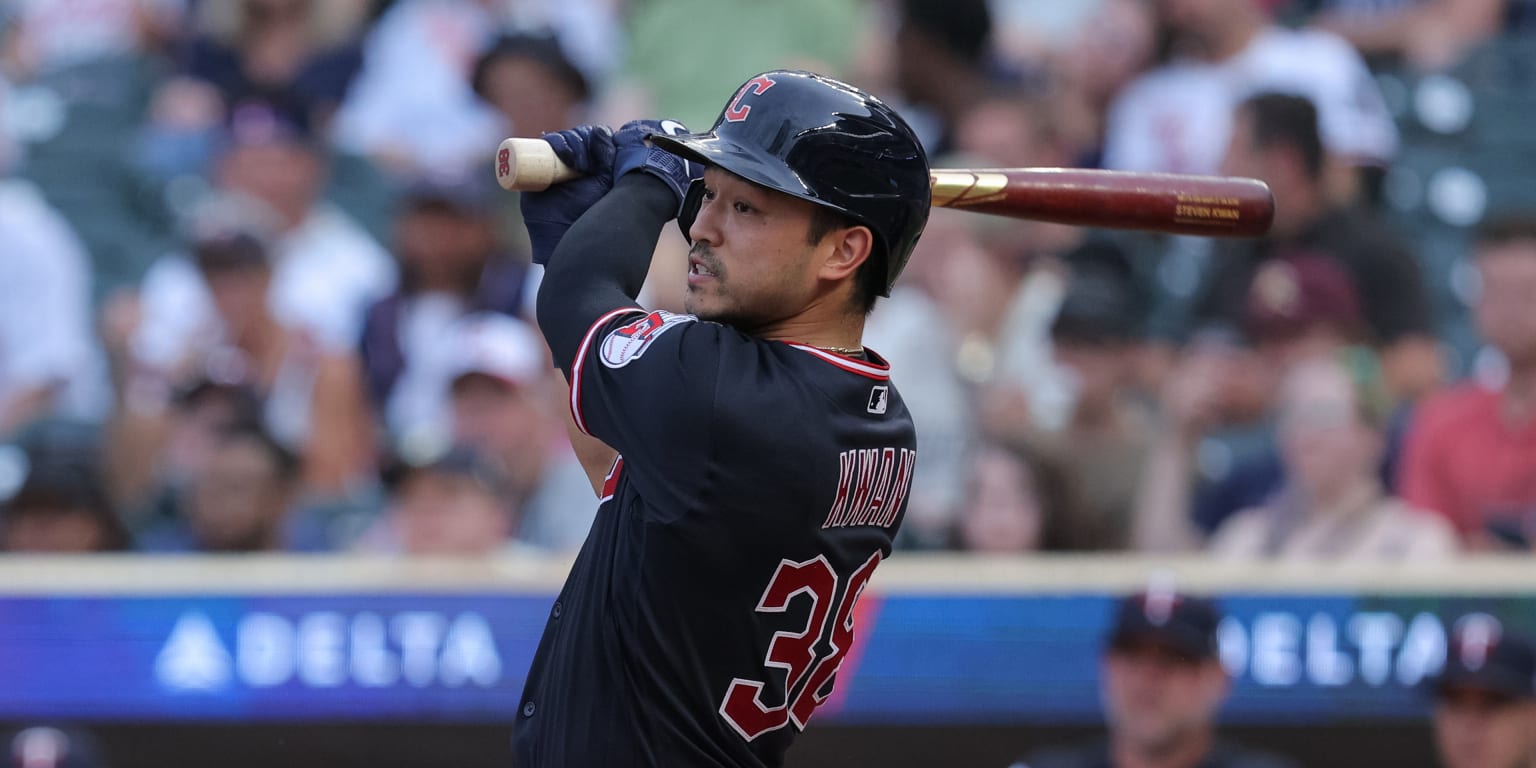
Steven Kwan entered July as a cautionary tale. Through June 30, he'd compiled a .212/.318/.257 slash line across 78 games—numbers that would threaten his roster spot on any contender. The Guardians' two-time All-Star had become a liability at the plate, and everyone knew why: pitchers had figured out that he'd stopped hunting pitches that built his reputation. Instead of stalking middle-in offerings where his elite contact chops had historically thrived, Kwan had calcified into a pull-heavy hitter. When pitchers exploited the outer half—25.5% of offerings landed in the two uppermost away zones, fourth-highest frequency against left-handed hitters—he found himself chasing or falling behind without a path back.
Around July 1, Kwan and the Guardians' hitting staff had a joint reckoning. The ideology shift was explicit: abandon the identity crisis, stop hunting for power, accept whatever the pitcher gives you. Per Kwan's account, the realization was less about humility and more about mathematics—the team was still fighting for a division title, and a .212 hitter in July was actively costing wins. The mechanical correction involved returning to fundamentals that had worked in previous years: lower swing angles, more pitch recognition, and a willingness to use the opposite field. It was, by Kwan's own framing, a devolve back to basics.
The numbers since July 1 are striking. In 14 games through Monday, Kwan posted a .436/.522/.590 line, backed by a 45.7% line-drive rate (season high) and a 43.2% opposite-field contact rate (up sharply from 27.9% in June). His BABIP sat at .472 entering Monday—well above league average (.300)—but that's only part of the story. The line-drive rate and contact distribution suggest a structural shift, not variance. Line drives convert to hits at roughly 65% historically; his April-June line-drive rate of 33% versus his July spike to 45.7% tracks a genuine mechanical recalibration rather than good fortune on balls in play. Kwan had logged a hit in 18 of his past 21 games, and while he acknowledged his cautious optimism ("it's only been a couple weeks"), the framework for sustained improvement is visible: pitchers still pepper the outer half, but now Kwan is meeting them there instead of chasing or retreating.
From a prop perspective, this matters because market pricing on Kwan likely trailed his first-half disaster. Books were built on a .212 BA narrative across the season's first two months. A player resetting his approach mid-season typically gets moderate line increases—maybe a bump from 3.5 to 4.0 hits, or 38 to 41 total bases—but the structural data (line-drive rate, contact quality, pitch acceptance) suggests the upside is genuine. The caveat is timing: Kwan's BABIP will normalize from .472, and variance will assert itself. However, the opposite-field shift and lowered swing angle are mechanical anchors, not luck. Hit props and total-bases props offer intermediate value if the market hasn't fully repriced him off the catastrophic June baseline. Single-game props lean toward caution until the sample pushes into late August; if Kwan sustains a 40%+ line-drive rate and 42%+ opposite-field contact rate through 20 more games, the correction becomes durable and multi-week plays open up.