MLB
Grisham's August Surge Reshapes Yankees Lineup Calculus as Stars Heal
With Judge, Bellinger, and Stanton all sidelined, Grisham's two-week power binge has transformed him from season-long liability into the Yankees' most reliable run producer.
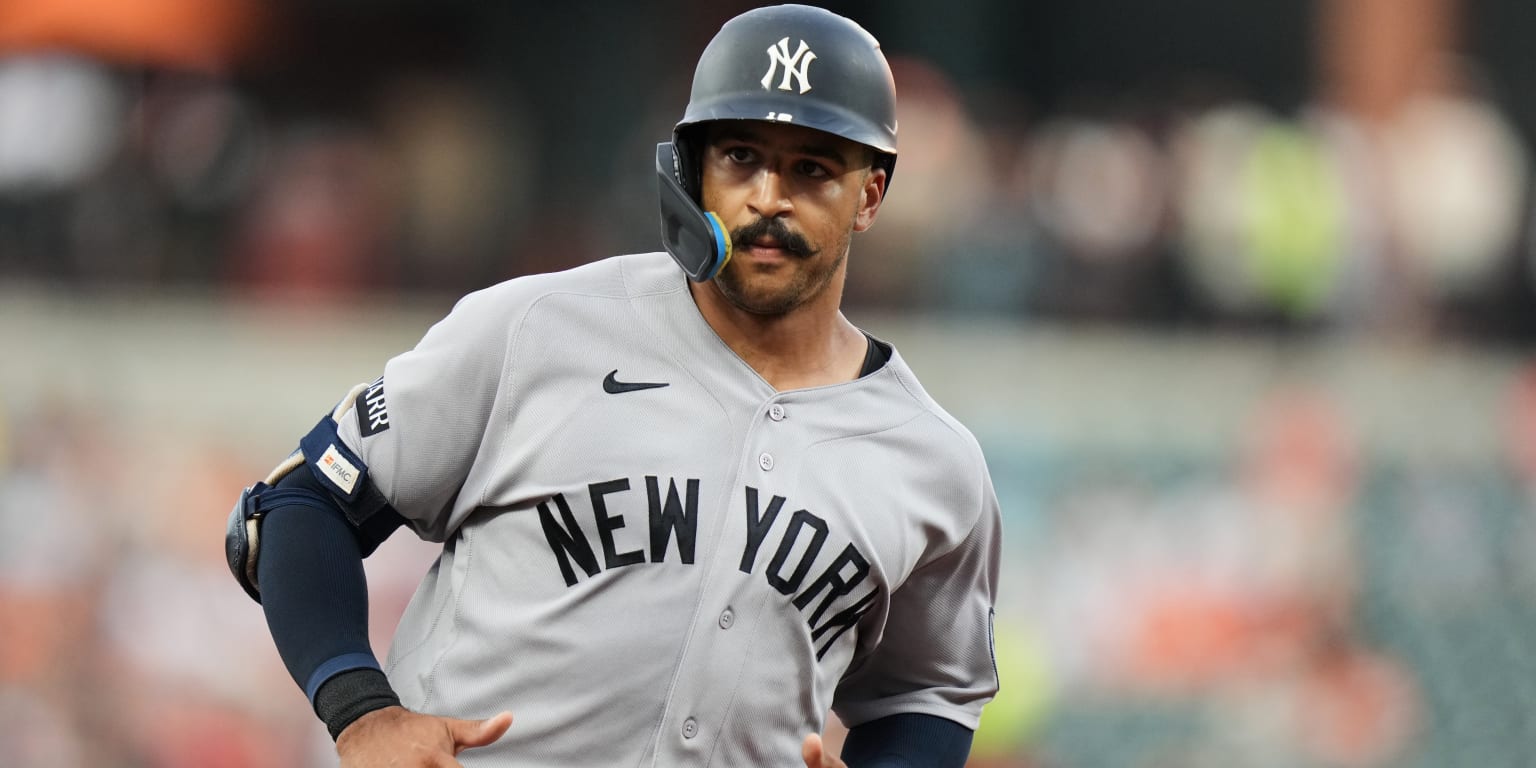
Trent Grisham did what the Yankees desperately needed Tuesday night: he delivered all three runs in a 3-1 win over Baltimore. The outfielder went deep off Shane Baz in the third and singled home two in the seventh, continuing a stretch of offensive production that has reframed his entire season narrative. For most of 2026, Grisham looked like a roster miscalculation—a .224 hitter through 105 games with power that refused to surface. But the past two weeks have exposed that framing as incomplete.
Over his last 13 games since August 3rd, Grisham has clubbed six homers with a .302 average and 12 RBIs on 16 hits in 53 at-bats. That's not a hot streak in the traditional sense; it's a structural shift in approach or pitch recognition. The timing matters: Aaron Judge, Cody Bellinger, and Giancarlo Stanton remain unavailable, which means Grisham is no longer a bench option rotating in against favorable matchups. He's batting cleanup in games that matter. The Yankees have won six of eight against Baltimore this season, and Grisham's performance Tuesday exemplifies why depth and opportunism can win postseason-window games even when your stars are in medical tents.
Carlos Rodón's return from a June 28th left elbow inflammation adds another wrinkle to the narrative. Rodón threw only 66 pitches across four innings—39 for strikes—yielding just two hits and a solo shot to Coby Mayo. That's runway management, not domination. The Yankees are clearly timing his ramp-up carefully, which means his workload will remain suppressed for at least the next two to three starts. A pitcher on a carefully monitored return rarely wins games; he simply avoids losing them. Rodón's mound time is about September readiness, not August results.
For bettors, Grisham's two-week power spike creates a tactical problem: the market hasn't fully adjusted to him as a primary run-scorer because his season-long slash line (.224/.313/.426) still anchors public perception. His HR prop likely remains calibrated to his full-season pace—roughly one every 6-7 games—when his August rate sits closer to one every 2.2 games. That gap narrows as the sample grows, but over the next week, before recalibration fully catches up, Grisham's individual prop lines (HR, RBI, TB) carry value on the over side, particularly in matchups against right-handed starters where his pull-side power historically plays. The Yankees' team total also moves higher when Grisham is producing, because the trio of Judge, Bellinger, and Stanton absent means he occupies the cleanup spot—a leverage position that inflates his run-creation opportunities relative to his career norms.
The caveat is durability. Grisham's two-week sample (53 PA) is too thin to claim sustainable regression-proof productivity. He'll face fastball specialists who didn't game-plan for his current approach, and regression is inevitable. But the edge exists right now because the line-setting models still reflect a .224 hitter, not a player who just went 16-for-53 with power. That lag creates window value, not forever value. Lean the over on Grisham's individual run props and the Yankees' team totals for the next three to five games while the gap persists.
MLB Intelligence — Baseball intelligence beyond the box score. Open MLB Intelligence →