Triple-A Strikeout Artist Simpson Debuts in Relief, Posts Clean Sheet Against Braves
By PropBetEdge Editorial Team ·
A freshly-promoted reliever with elite minor-league numbers delivered in high-leverage September action, signaling Washington's pitching depth has another option for late-inning work.
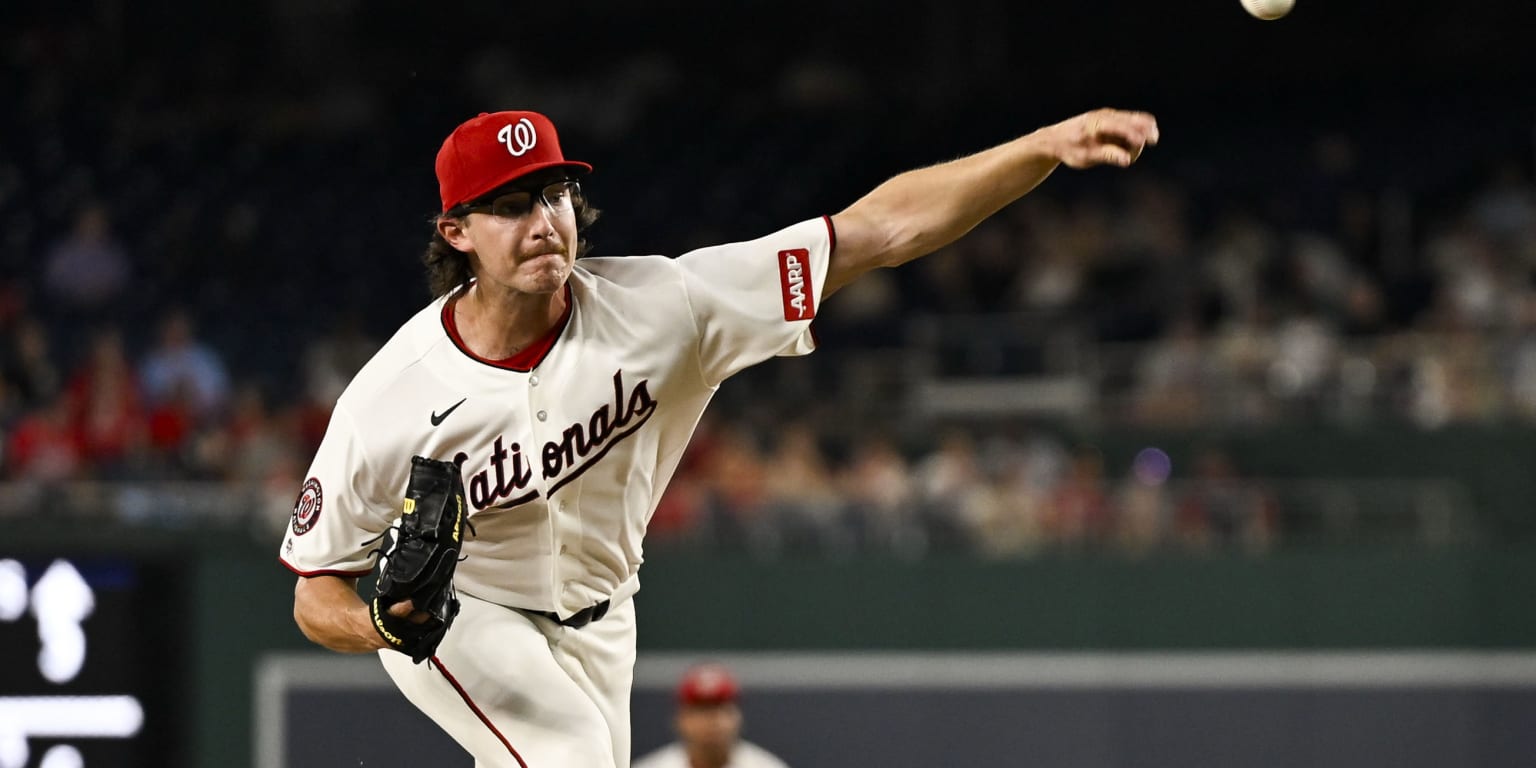
Jared Simpson got the call to the majors while being fitted for a wedding suit at Men's Wearhouse in Rochester, N.Y., on Tuesday afternoon. By evening, the 26-year-old left-hander was standing on the mound at Nationals Park in his Major League debut, entering in relief with runners on first and second and no outs in the fifth inning against the National League East-leading Braves. He threw three scoreless innings, recorded a double-play ball on his fourth pitch, and earned the win—the ninth pitcher in franchise history since 2005 to win his debut.
Simpson's ascent was steep but earned. Promoted to Triple-A Rochester on July 19, he posted a 2.30 ERA with a 11.20 strikeout-per-nine rate over 58⅔ innings, stringing together 36 scoreless outings across 44 games at Double-A and Triple-A. The addition of a two-seam fastball, per president of baseball operations Paul Toboni, has unlocked another gear in his arsenal. Those numbers in the minors—a sub-2.31 ERA and K/9 rate north of 11—put Simpson in rare air for low-leverage depth arms. The Nationals selected him in the eighth round of the 2023 Draft out of the University of Iowa and never invited him to Major League Spring Training, meaning Tuesday was not a trajectory reserved for prospects with the highest organizational investment.
What makes Simpson's debut operationally significant is the context: September roster expansion (to 28 players) gives Washington room to test whether his strikeout rate translates in October-adjacent competition. Braves hitters faced a reliever seeing big-league batters for the first time, yet Simpson engineered contact outcomes (fly ball to Ronald Acuña Jr., double-play grounder to Drake Baldwin) and threw changeups in elevated-leverage spots—a pitch mix decision that suggests command, not just velocity, underpins his success. That he kept his composure after admitting his heartbeat rose when he entered mid-inning reflects the kind of emotional processing that separates relievers who fold under October pressure from those who thrive.
For prop bettors, Simpson's debut matters primarily as a team-construction signal: Washington has certified another arm capable of eating innings without bleeding runs, which tightens bullpen-related betting edges on Nationals unders and bullpen ERA props. If Simpson secures regular late-inning work in September (a month when rosters are shallow and September callups often see outsized usage), his strikeout rate in the majors becomes predictable. He logged 73 K in 58⅔ Triple-A innings; extrapolated across innings pitched, that's a 11.2 K/9 baseline. Nationals relievers entering games in non-save situations (where Simpson debuted) historically see 2-4 innings per appearance in September. If Simpson averages 3 innings per outing and matches his 11.2 K/9, he lands in the 3.5-3.7 strikeouts-per-appearance range—a number that may not be immediately reflected in early September prop markets because his usage pattern is still undefined. Watch for Nationals bullpen strikeout totals to tighten if Simpson becomes a regular; the market may not yet price the addition of an 11+ K/9 arm into a relief corps that previously lacked that profile.
The second-order angle: Nationals team totals and unders should stabilize or compress slightly going forward, assuming Simpson holds his ERA. A bullpen that can lean on a sub-2.31-ERA contributor gives the offense more margin for error in close games, reducing blowout risk and pushing totals toward equilibrium. This is not a trade-winning edge, but it's the kind of micro-adjustment that survives the first week of line movement because it's rooted in repeatable minor-league performance, not a single scoreless outing against one opponent.