Guzman's Triple-A Power Finally Translates: Angels Rookie Hits Third Straight Homer in Comeback Win
By Ty Whitney ·
After a brutal 0-for-12 start, the 22-year-old has found his stroke with a .618 slugging percentage over nine games—and the market hasn't caught up to the spike yet.
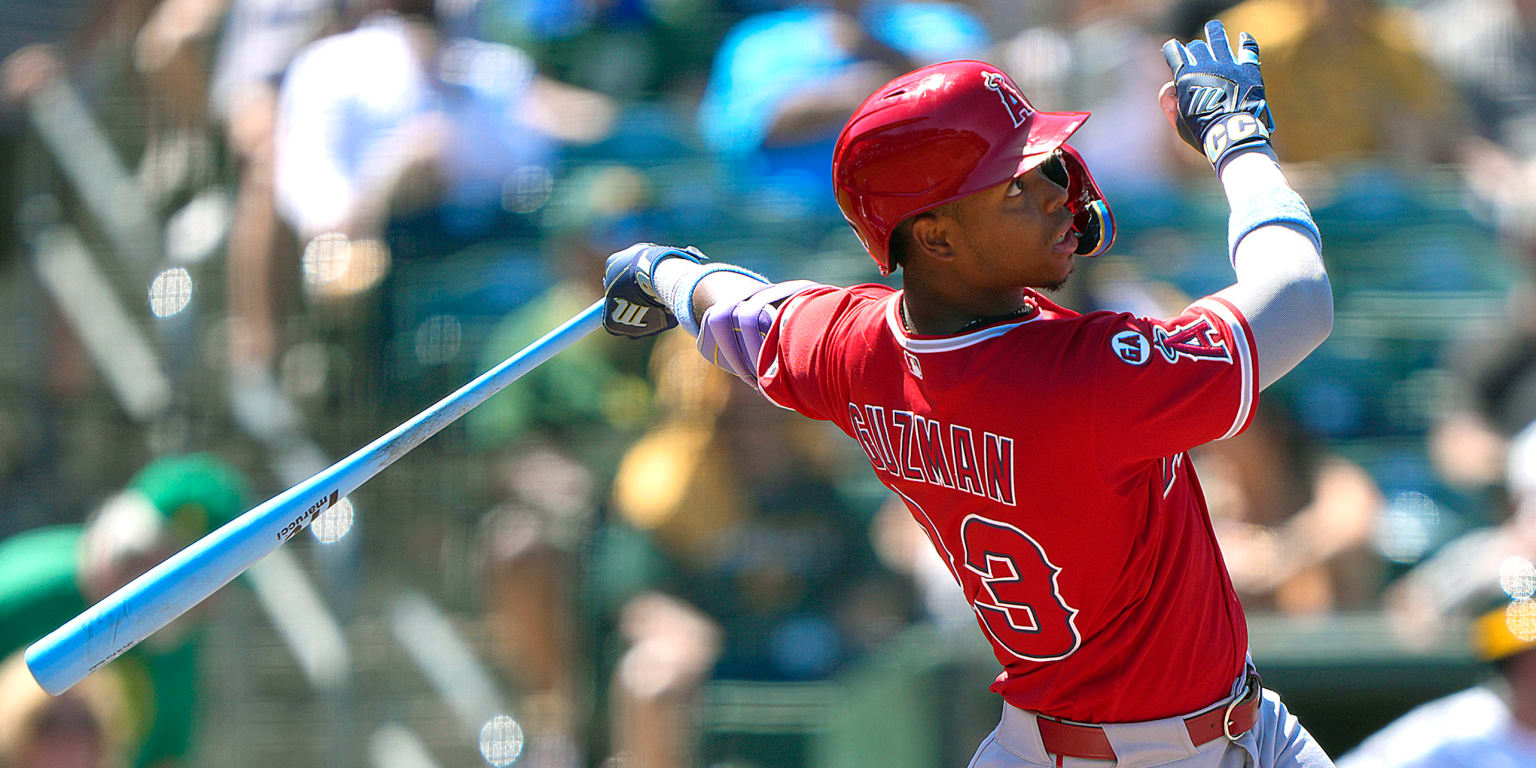
Denzer Guzman crushed a game-tying three-run homer in the eighth inning Sunday afternoon as the Angels edged the Athletics 9-7 at Sutter Health Park. The blast, a 416-foot Statcast projection off lefty reliever Hogan Harris, marked Guzman's third consecutive game with a home run—the first Angels rookie to string together that feat since Jared Walsh in September 2020. It was the kind of at-bat that justified why the organization called him up on June 8 in the first place.
The path to this moment was rocky. Guzman arrived in the majors with serious credentials—a .336/.403/.571 line with 12 homers in 58 games at Triple-A Salt Lake—but went completely silent to start, hitless through his first 12 at-bats. That's the gap between prospect pedigree and major-league reality, and it's usually where young hitters either recalibrate or get sent back down. Guzman didn't panic. Since June 12, he's posted a .324/.395/.618 mark with three homers, a double, and 10 RBIs over nine games. The changeup he hit Sunday was the 1-1 pitch he was sitting on; he stayed through it and deposited it over center field. That's not luck—that's a hitter who's started reading the league.
The timing of this surge matters for the betting market. Guzman's home run line was likely set at a modest number given his 0-for-12 crater, and books typically don't adjust aggressively off a single hot streak unless there's noise in the public action. What they may have underpriced is the consistency of his approach: he's walked 5 times in 9 games since his breakthrough, suggesting improved plate discipline, not just fastball-hunting desperation. His 10 RBIs in that span also signal he's not just hitting home runs—he's finding barrels in situations with runners on.
The cautionary note: a nine-game window is volatile. Regression to his season average (.181 BA, .250 SLG through his first 12 games) is statistically more likely than sustained .618 slugging. But the Triple-A credentials were genuine—12 homers in 58 games is a 34-homer pace over 162—and this latest stretch suggests the gap between his minor-league profile and big-league production may finally be closing. For props, that means taking overs on his homer totals is a short-term fade (the line will adjust sharply within 48 hours once books recognize the shift), but his total bases and RBI props merit a closer look if they haven't moved proportionally. The market is always slower to adjust secondary counting stats than home run rates.
Guzman's evolution also matters for the Angels' offense going forward. With Zach Neto adding a go-ahead two-run shot in the ninth, the team showed life in a game that easily could have slipped away. The Angels' run differential has been a problem this season; if Guzman can sustain even 70% of this production (which would be a .226 isolated power pace), he becomes a legitimate middle-order piece rather than a fill-in. The betting implication is straightforward: Angels team totals should tighten once the market recognizes that their third-base situation—one of their offensive weak points—may no longer be a liability.