Crow-Armstrong's Cycle Rewrites the Cubs' Hit-Rate Narrative
By Erik Schwartz ·
Pete Crow-Armstrong's reverse-order cycle—the first in the majors this season—lands just 14 months after Carson Kelly's, signaling elevated offensive efficiency that prop bettors should track across the Cubs' lineup.
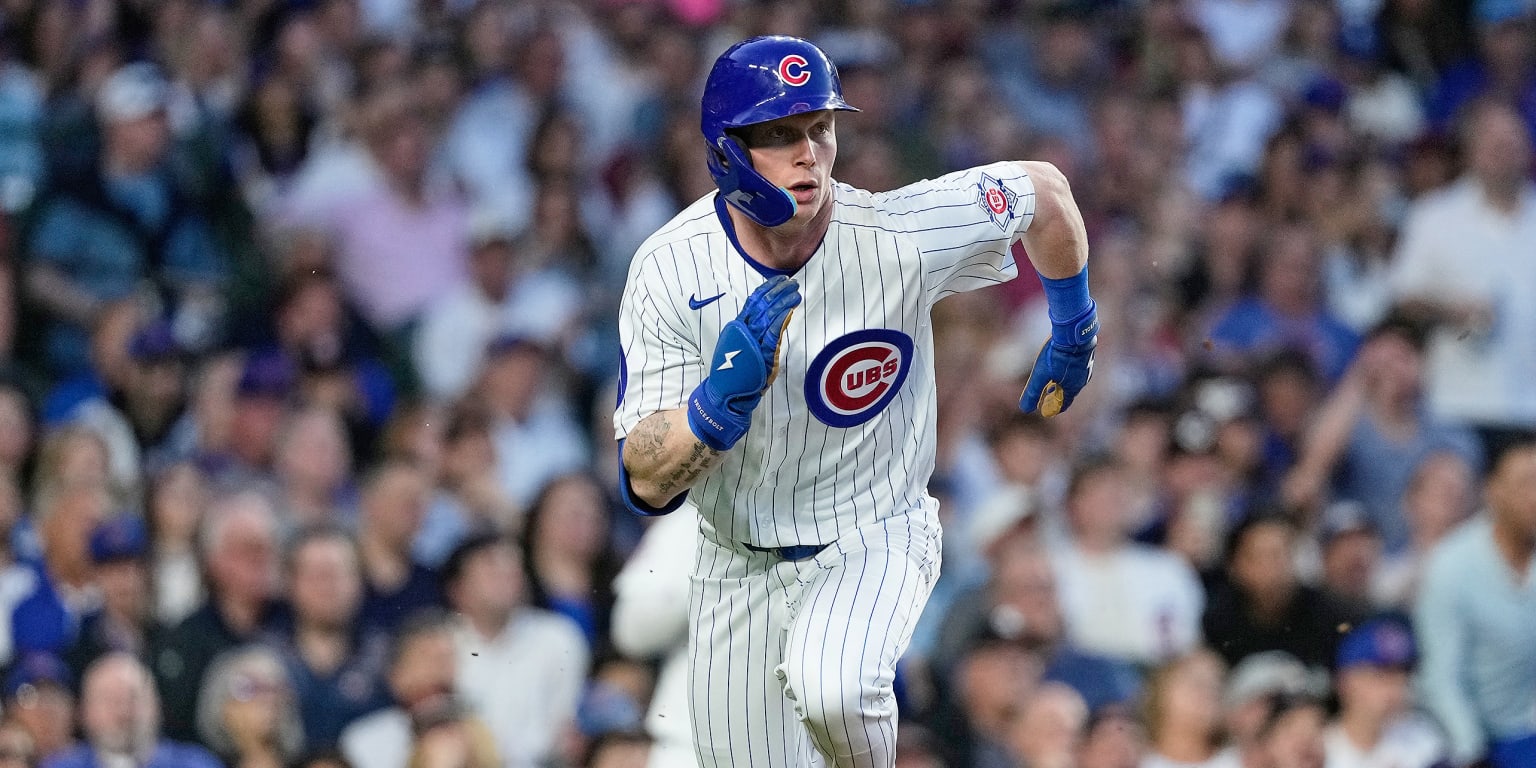
Pete Crow-Armstrong completed the first cycle of the 2026 MLB season on Monday at Wrigley Field, leading off with a 434-foot home run and then racing to a stand-up triple off the right-center wall in the third before adding a fifth-inning double and seventh-inning single. The achievement marks the Cubs' 13th cycle in franchise history and arrives just 14 months after catcher Carson Kelly hit for the cycle on March 31, 2025—a sharp acceleration relative to the club's historical baseline. The previous Cubs cycle came 32 years earlier when Mark Grace turned the trick in May 1993, making two cycles in 14 months a remarkable statistical cluster.
Crow-Armstrong's performance carries particular weight because cycles are high-variance events; they require both elite contact rates and favorable sequencing. The Cubs center fielder didn't generate this outcome in isolation. Two days prior, he fell a triple shy of the cycle in San Francisco, missing one leg on a deep fly that approached but didn't clear the wall. That near-miss pattern—combined with Monday's success—suggests Crow-Armstrong is operating at an elevated exit-velocity threshold right now. The 434-foot leadoff homer and the stand-up triple both speak to consistent hard contact, not luck variance.
What makes this noteworthy for prop construction is the timing signal embedded in back-to-back near-cycles. When a hitter threads the needle on batted-ball placement—gap shots, line drives, and elevated contact in quick succession—he's often in a sustained hot streak, not a one-day noise event. Crow-Armstrong's recent offensive profile suggests elevated daily hit totals and run-scoring probability over his next 7-10 games, especially at home, where Wrigley's dimensions reward the gap power he's displaying.
For Cubs team totals, the cycle carries a secondary signal: it arrived on a Monday against a Rockies team playing at altitude disadvantage and in a ballpark (Wrigley) where the wind favors left-center carry. The run environment that produced Crow-Armstrong's four hits isn't a permanent feature of the Cubs' offense, but it does tell us that when favorable park conditions align with elevated Crow-Armstrong form, the Cubs' daily run total stands to move upward. Oddsmakers likely priced Monday's game before Crow-Armstrong's hot-hand nature was fully visible; if similar conditions reappear in the next 72 hours, Cubs team totals under 4.5 carry elevated risk, especially if Crow-Armstrong is in the lineup and the pitcher matchup doesn't heavily favor the opposing rotation.