Rays Shore Up Catcher Position With Mid-Deadline Hicks Trade; Offensive Profile Reshapes Catching Prop Slate
By Ty Whitney ·
Tampa Bay adds a disciplined hitter at catcher hours after acquiring Peralta, signaling aggressive deadline moves that will compress playing time and alter offensive projections for the position.
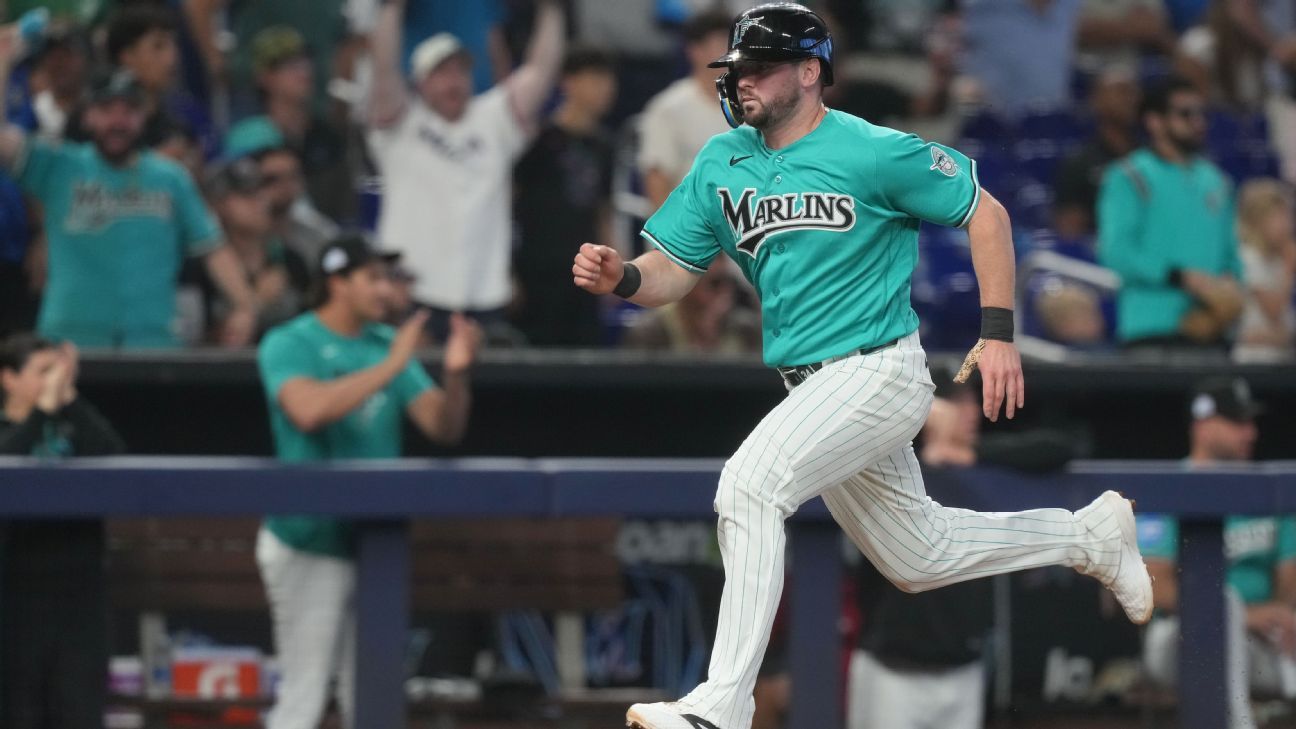
The Tampa Bay Rays acquired catcher Liam Hicks from the Miami Marlins on Monday, sending three minor-league prospects—pitcher Jacob Kisting and infielders Brayden Taylor and Adrian Santana—to Miami. The move arrives one day after the Rays landed right-hander Freddy Peralta from the Mets, marking back-to-back acquisitions aimed at reinforcing both rotation depth and offensive production behind the plate.
Hicks, 27, brings a contact-heavy skill set that diverges notably from the strikeout-prone catching crop around baseball. He is hitting .282/.363/.432 with 14 home runs across 409 plate appearances this season—a line that reflects strong plate discipline (9.8% walk rate) paired with modest whiff rates (9.5% strikeout rate). That combination is rare at the position; most catchers operate with strikeout rates in the 20-25% range. His slugging percentage sits 60-80 basis points below league-average output for the position, but his OBP advantage and low-K approach provide foundational value in deeper counting stat environments.
For Tampa Bay, Hicks plugs a gap left by injuries and inefficiency at catcher. The move signals the front office believes late-season depth in the position justifies the prospect capital—especially given the team's rotation reinforcement just completed. The three prospects surrendered (Kisting was a mid-rotation consideration in the system) suggest Miami prioritized youth injection over rental value, a valuation call that tells us the Rays' internal view of Hicks' remaining window is longer than a deadline-only hold.
From a prop-betting standpoint, Hicks' contact profile creates a secondary angle on strikeout props. His 9.5% K rate this season ranks in the 35th percentile among qualified hitters—well below the league median of 22-23%. Where most catchers selected at deadline typically carry 20%+ whiff rates and play in high-leverage situations (boosting PA volume and K totals), Hicks will enter a Tampa Bay role with mixed platooning possibilities. If he settles into 70-80% of games behind the plate, his K prop line—wherever the market prices it—will be built on assumptions about his per-plate-appearance rate, not his overall position output. The edge lies in recognizing that his sub-10% K rate is a repeatable skill, not an outlier: over 409 PA this season, strikeouts have been structurally low, driven by a disciplined approach rather than a lucky variance window. Books pricing his K total at baseline catcher averages (typically 0.6-0.8K per game) will overestimate volatility. A more conservative 0.4-0.5K per game floor applies if he sees regular at-bats against standard rotation.
The trade also reduces the surface-level appeal of over-betting Rays catching production. Hicks will split time with existing options, compressing the path to high game-to-game counting totals. Early-market reactions may overshoot the positive (new bat added = hitting gets better) without accounting for the minute constraint. Fade any Rays catcher team total overs if they're priced assuming full-time production; the actual floor is 4-5 games per week for Hicks, not 6-7.