Padres Trade for Ray: A Rotation Gamble on a Second-Half Surge
By PropBetEdge Editorial Team ·
San Diego bets that Robbie Ray's June-July dominance signals a sustainable upgrade, not a mirage built on weak competition.
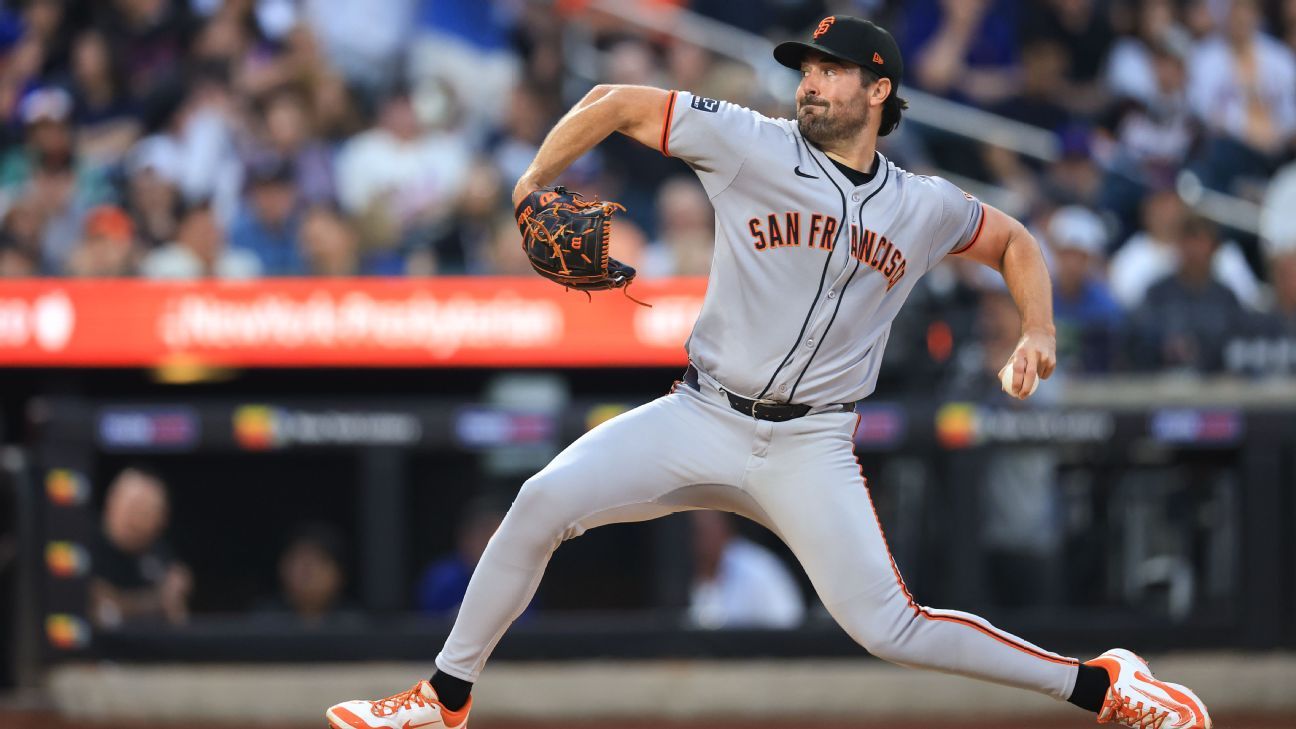
The San Diego Padres acquired left-hander Robbie Ray from the Giants on Monday, sending 17-year-old Cuban shortstop prospect Joniel Hernandez and 24-year-old right-hander Miguel Mendez to San Francisco. Ray, 34, arrives with a 10-6 record, 3.08 ERA, and 107 strikeouts through early August, carrying a $25 million salary and free-agent status come October. On the surface, the move addresses a critical weakness: the Padres rotation owns a 4.66 ERA, fourth-worst in baseball, and Michael King is the only reliable starter San Diego can lean on to log quality innings night after night.
The market narrative around Ray is seductive. In June, he posted a 1.36 ERA with a 0.88 WHIP across five starts—23 strikeouts, just 17 hits, and a .149 opponent batting average in 33 innings. July was nearly as clean: 2.00 ERA, 1.51 WHIP, 25 strikeouts in 27 innings across five starts. A 34-year-old left-hander returning from Tommy John surgery in 2024 pitching like an ace in consecutive months is headline-worthy. The issue is the fine print. Ray has allowed just one home run in 49⅓ innings since June, and the lineups he's faced lean weak. More telling: his home/road split is severe. At Oracle Park, his 2.22 ERA and .193 opponent average look elite. On the road, that ERA balloons to 4.06 with a .263 opponent average—a full two runs per nine innings. Right-handed batters have launched 14 of his 15 home runs. His walk rate remains bloated, and his strikeout percentage is declining.
The Padres are 11 games back in the NL West but just one game out of the final wild-card spot after an 8-2 stretch, so desperation is real. Acquiring Ray signals organizational confidence that Joe Musgrove and Nick Pivetta will return from injury, but even with both, the rotation needed depth. Ray's salary is reasonable for two months of rental production. The gamble, however, is whether his dominant June-July months were a product of sequencing and weak opponents or a genuine resurgence. The Padres will face stiffer lineups immediately in playoff competition.
For bettors, Ray's strikeout props offer the sharpest edge. His K/9 has declined to roughly 7.8 this season—respectable but down from his 9.2 career mark and well below his peak years. Books will likely price Ray's strikeout totals relative to his season-long 3.08 ERA and hot July numbers, not the underlying rate deterioration. His road ERA tells a clearer story: expect higher whiff rates and contact quality against the harder lineups San Diego will face down the stretch. Any Ray K prop priced above 6.5 against a middle-of-the-order offense with right-handed power is vulnerable to underperformance.
The broader impact: Padres starting pitcher quality improves from "functionally impaired" to "passable," which should tighten their team total projections. San Diego's 8-2 recent run was built partly on unsustainable bullpen usage. Ray's addition doesn't mean clean innings every night—his home/road gap and RHH vulnerability are real—but it lifts the floor. Early numbers priced Ray as a rotation piece in the Giants organization; the Padres context is different. His strikeout volume will likely regress relative to recent hype.