Diamondbacks' Rotation Collapses as Soroka Exits Mid-Game
By Erik Schwartz ·
Arizona's pitching depth faces a crisis with two starters down in a single day, forcing emergency roster moves and reshaping near-term game construction.
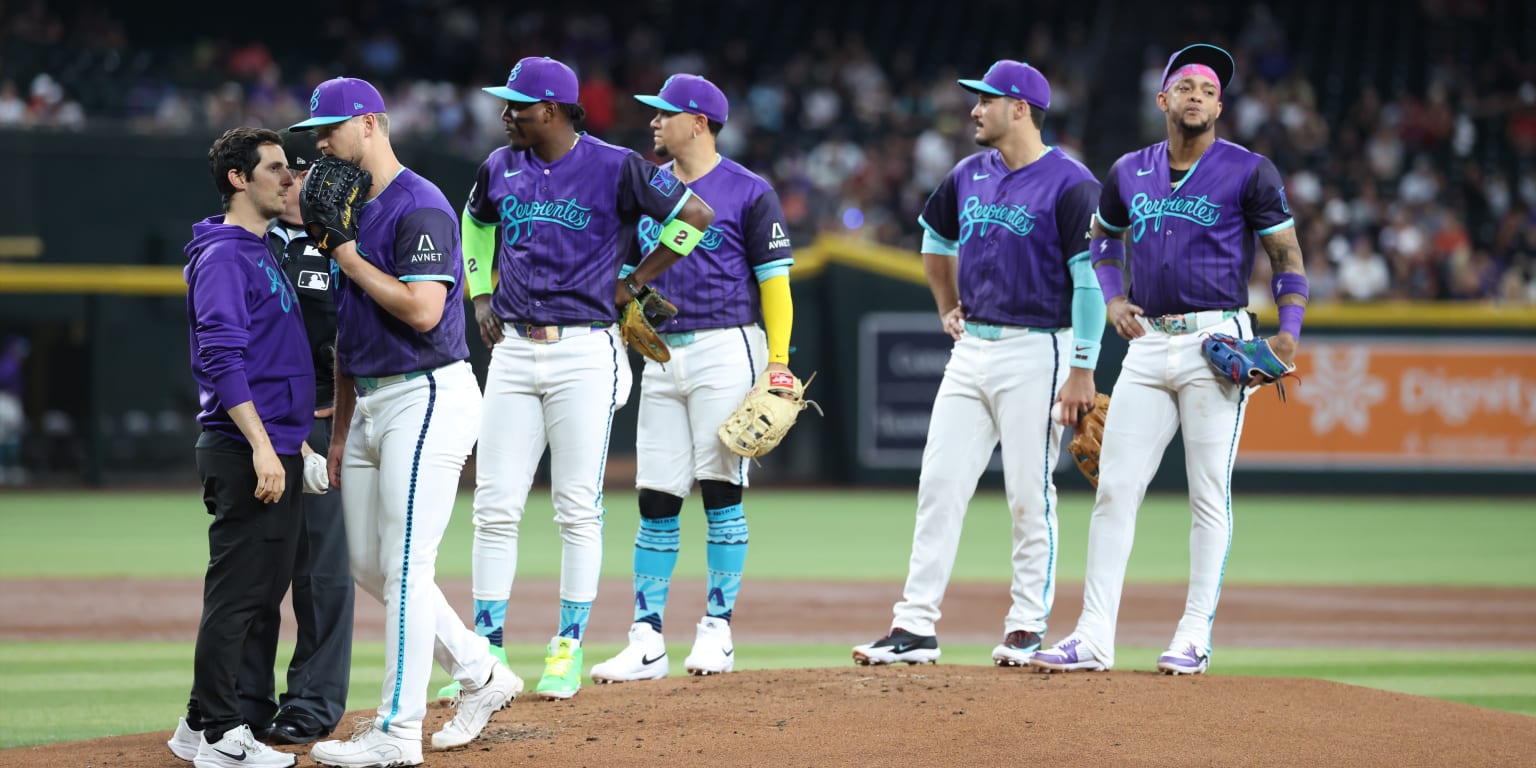
Michael Soroka walked off the mound in the top of the second inning Friday night against Minnesota, leaving the game with left posterior hip discomfort. The exit came hours after the Diamondbacks placed Ryne Nelson on the injured list with a strained flexor tendon and sprained ulnar collateral ligament—injuries that will sideline Nelson through at least September. In a span of one day, Arizona lost two rotation anchors, a blow that immediately forces the club into contingency staffing for its pitching needs.
Soroka's injury timing is particularly punishing because it arrives mid-game with no replacement option available for the night. Nelson's setback, meanwhile, was not a sudden event but rather a setback to a previous injury, suggesting the right-hander's recovery from his earlier issue did not hold under game stress. The dual losses expose a structural vulnerability in Arizona's rotation depth. The Diamondbacks were already thin behind their top three arms; losing two starters simultaneously means the bullpen will absorb innings across multiple games while the front office evaluates internal and external options to fill the void.
For betting purposes, the Diamondbacks' near-term game totals and run-line pricing will reflect an immediate structural shift. Arizona's bullpen workload will spike over the next 5–10 days as interim starters—likely pulled from the farm system or grabbed via waiver claims—burn through high-leverage arms in compressed innings. This creates a compounding effect: early-game run prevention improves (weaker starters give up fewer runs in the first five innings than a tired reliever would in the fourth), but later-inning volatility increases as the bullpen depletes. Game totals for Arizona games should move lower in the short term as the club plays tighter, defensive baseball, but the -1.5 or -2 run-line pricing will widen in favor of opponents taking advantage of bullpen fatigue in the sixth inning onward.
The more durable prop angle targets Diamondbacks team totals and overs/unders in games where Arizona bats against a right-handed pitcher. With the rotation in flux, opposing managers will deploy fastball-heavy pitching early, knowing the Diamondbacks face extended bullpen exposure and may be playing tight, contact-focused baseball rather than swinging aggressively. This defensive posture will depress Arizona's offensive output relative to what the club would normally produce against the same opponent. Fade team-total overs for Arizona over the next 10–14 days; the mechanical reality of roster depletion drives run suppression more reliably than volatile, single-game performance metrics.