Smith-Shawver's Return Signals Braves Rotation Depth Before Trade Deadline
By Ty Whitney ·
Atlanta's young right-hander makes his first start since Tommy John surgery 14 months ago, entering a Wednesday doubleheader that reshuffles the team's near-term pitching plans.
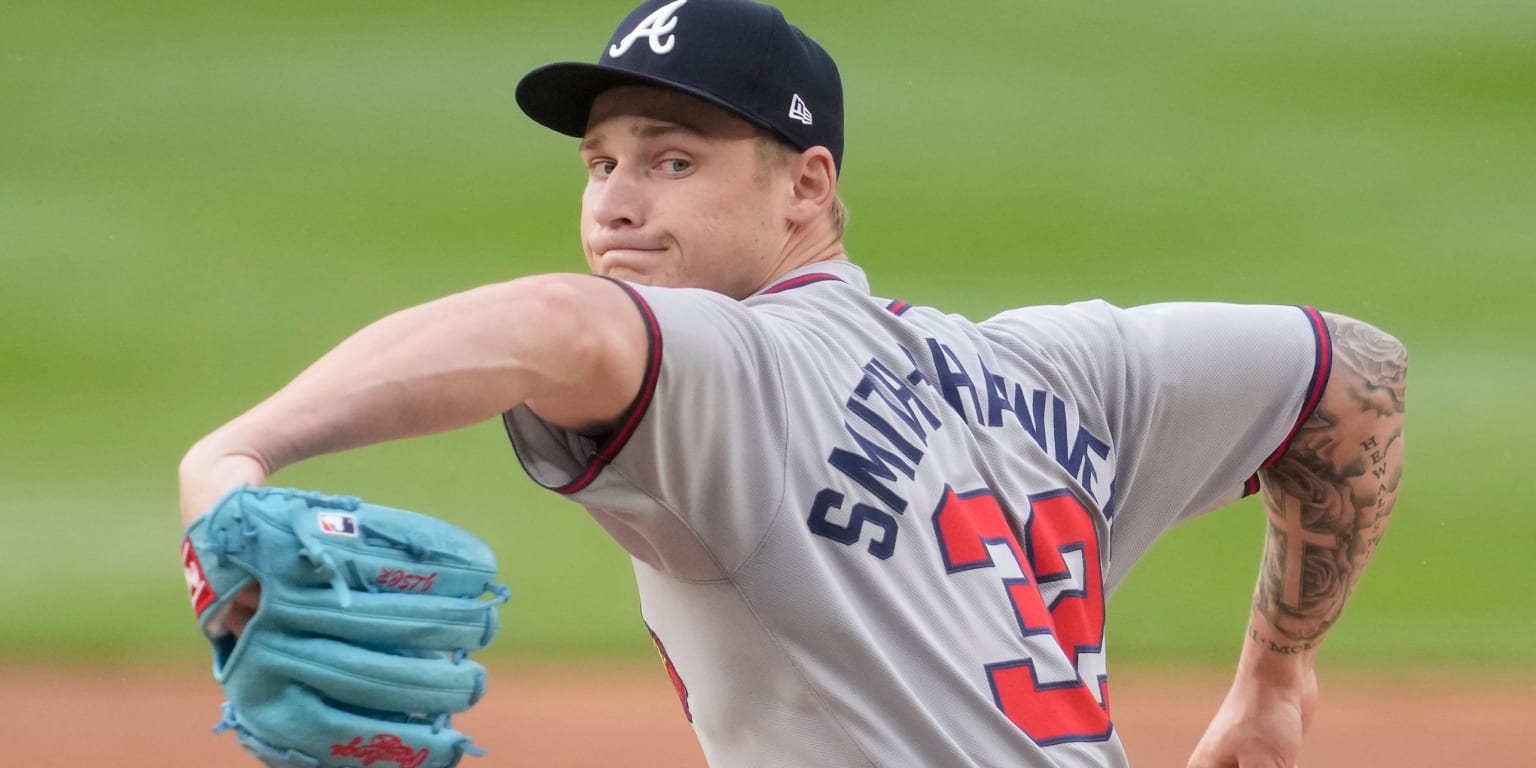
AJ Smith-Shawver takes the ball in Game 1 of Wednesday's doubleheader against the Mets, marking his return to a major league mound for the first time since tearing his ulnar collateral ligament on May 29, 2025. The Braves shuffled their rotation after Tuesday's rainout, moving Chris Sale to the nightcap and inserting Smith-Shawver in place of Grant Holmes—a move that signals both organizational patience with the 23-year-old prospect and tactical necessity given injuries to Hurston Waldrep and Spencer Strider.
Smith-Shawver underwent Tommy John surgery and spent the last 14 months in rehab, cumulatively throwing for Single-A Augusta and Triple-A Gwinnett over the past few weeks. His workload climbed carefully: 72 pitches across 4⅓ innings on July 18 against Toledo, then 86 pitches over four innings against Iowa on July 24. Both outings showed no structural setbacks—he allowed only one unearned run across both starts. Critically, his fastball velocity jumped back to 97.5 mph in his most recent appearance, a 1.9 mph gain over his pre-injury average of 95.6 mph in his 2025 cup of coffee. His splitter also showed teeth: he induced four whiffs on 13 swings against the Iowa lineup, a 31% rate that suggests his out-pitch is functional.
Context matters here. Smith-Shawver's 2025 debut was legitimately impressive—2.33 ERA over his first seven starts before the injury occurred during his eighth start against Philadelphia. The Braves are betting that his young arm, paired with present velocity and movement improvements, can patch rotation holes while they monitor the trade market for arms like Tarik Skubal or Logan Webb ahead of Monday's Trade Deadline. Neither Waldrep nor Strider is likely to return as starters this season, so the organization needs innings depth immediately.
For bettors, Smith-Shawver's return introduces variance into Braves-Mets pitching lines that the market has already priced for known commodities. The sportsbooks will open Game 1 with limited recent data on his stamina (he's never thrown more than 4⅓ innings in a rehab start) and no performance data against major league hitters since May 2025. His strikeout rate from early 2025 was 8.3 K/9 in limited action; his splitter whiff rate is trending up; his fastball is electric. A Smith-Shawver under on strikeouts in this debut carries obvious execution risk—he's an injury returnee with a capped workload, likely pulled well before 100 pitches. The over on Mets team total and the under on the run line both benefit from an untested arm making its first start post-surgery. The book will shade conservatively on his innings pitched given the rehab protocol, but oddsmakers won't have baked in the full volatility of a prospect's return curve. Early-morning trade action will define the edge; that window closes fast once sharps adjust.
The Braves' rotation depth picture is now less dire but remains unstable. Sale remains their only reliable near-term anchor. Smith-Shawver's arm angle and velocity suggest he's back to full health, but his first start is an outlier event—high-variance, unlikely to repeat in predictable patterns, and priced with less precision than a 20-game sample would command.