Jordan's Memphis Dominance Doesn't Guarantee MLB Production—But His Lineup Spot Does Matter
By Erik Schwartz ·
The Cardinals promote a prospect off a .548 slugging percentage in Triple-A, but rookie power hitters face a steep adjustment curve that short-term prop markets haven't fully priced.
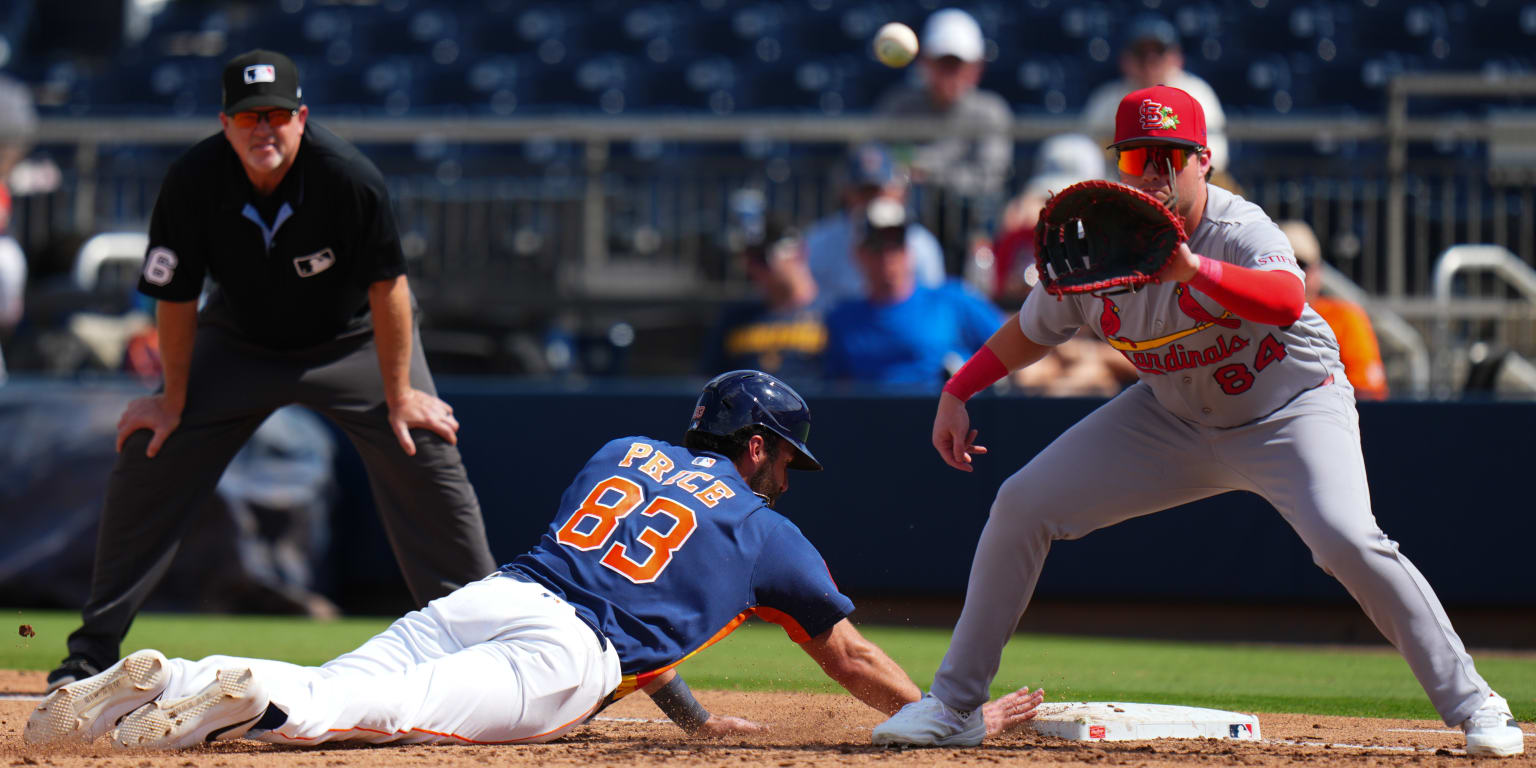
The Cardinals selected Blaze Jordan's contract from Triple-A Memphis on Friday and inserted him directly into the lineup for his Major League debut against Minnesota, batting eighth and playing third base. Jordan, 23, was acquired from Boston at last season's Trade Deadline and has dominated Minor League pitching in 2026: .313/.373/.548 with 11 home runs and 35 RBIs in 57 games. The promotion came alongside the optioning of Nolan Gorman—whose .194/.279/.318 slash line and 74 strikeouts in 62 games had made his roster spot untenable—and represents a hard organizational reset at the position.
Jordan arrives with pedigree. He was Boston's third-round pick in 2020 and famously went viral as a 13-year-old for hitting back-to-back 500-foot home runs. The problem: elite youth power output and Triple-A dominance do not translate smoothly to Major League at-bats, especially for a 23-year-old infielder who spent years in organizational purgatory before breaking through this season. The Cardinals are betting that his recent Memphis explosion—particularly the .548 slugging percentage—represents true talent unlocked rather than inflated metrics against weaker pitching. That distinction matters enormously for prop construction.
The mechanics of the Jordan situation cut against early excitement in the betting market. Triple-A pitching lacks the velocity and command complexity of Major League stuff; a hitter who crushes 95-mph fastballs on elevated counts will face 97-plus heaters with sharper secondary offerings in the Majors. His home run rate in Memphis (11 in 57 games) projects to roughly 30-35 over a full season if sustained—but sustained it won't be. First-call-up sluggers typically see their isolated power drop 80-120 points in their first 60 plate appearances. Jordan's lack of Major League experience (zero at-bats before Friday) makes him a candidate for the steeper end of that adjustment curve. The Cardinals sent down Gorman partly because he stopped making contact; Jordan's strikeout rate in Memphis (58 K in 261 PA, or 22.2%) hints that whiff vulnerability may be a component of his profile.
For prop bettors, the immediate play is not to chase Jordan's raw power potential. His home run props and slugging percentage lines will be aggressively priced by the market based on his Triple-A slash, creating an incentive to fade overs on his individual power production over his first 20-30 at-bats. The sharper angle is team totals context: the Cardinals lineup now features a 23-year-old rookie playing one of the most demanding defensive positions, batting eighth, and facing a steep learning curve against Major League velocity. This is a downgrade in aggregate offensive firepower, not an upgrade, despite the prospect pedigree. Run production should compress slightly in the near term as the offense absorbs a net-negative swap at a critical position.
Gorman's removal is the real story. His season-long struggle—compounded by 74 strikeouts, a rate that suggests a fundamental issue with pitch recognition—opens a void that Jordan's prospect ceiling cannot immediately fill. The Cardinals are gambling that a fresh body with demonstrated bat speed will eventually outproduce a veteran performer in a deep slump. In the betting window (next 10 games, before Jordan either validates or fails his call-up), the safer positioning is to view St. Louis's offensive output as temporarily destabilized, not reinvigorated.