Gage Wood's Curveball Revolution: How the Phillies' Top Prospect Rewired His Strikeout Path
By PropBetEdge Editorial Team ·
Wood's career-high 10 strikeouts came not from his 98 mph fastball but from a curveball he barely threw in Single-A, signaling a fundamental shift in how the Phillies' arm is evolving through the minor-league ladder.
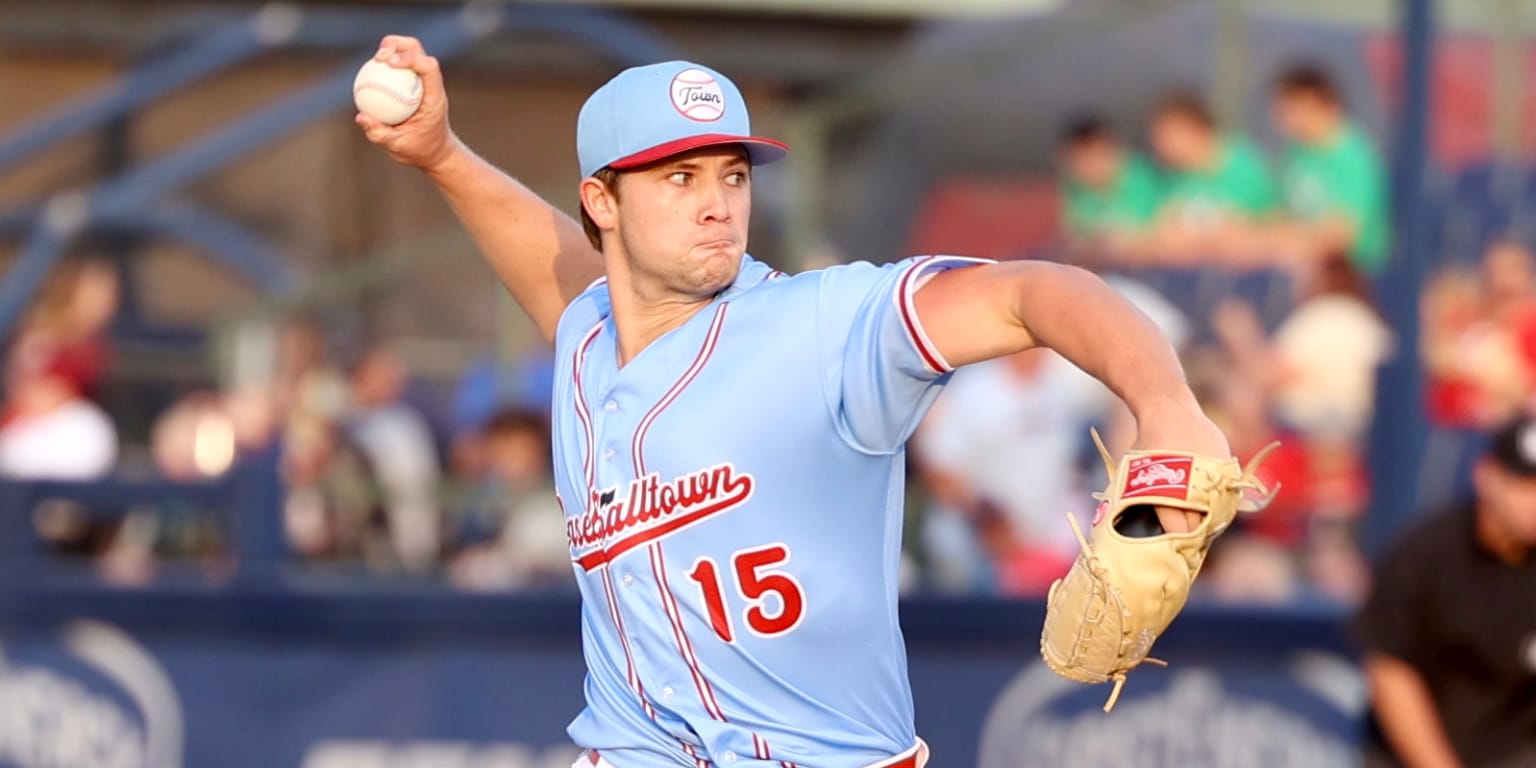
Gage Wood struck out 10 batters in four-plus innings for Double-A Reading on Thursday, tying his career high and cementing a performance arc that defies typical prospect development. The 2025 first-rounder (No. 26 overall) has spent the past six weeks grinding through an innings workload he's never approached—his previous career max was 40⅓ frames out of relief in 2024 for Arkansas—and Thursday's outing revealed something that wasn't obvious in the box score alone: he's not winning with the same weapon that got him drafted.
The fastball, a 70-grade offering that touches 98 mph with elite carry and a flat plane angle, accounted for just one strikeout. Wood's curveball, a mid-80s breaker he threw sparingly in Single-A (only five of his 35 Statcast strikeouts came on it), produced five whiffs on Thursday. His changeup added two more, his slider another two. The distribution matters because it signals deliberate arsenal construction rather than random variance. Wood threw first-pitch strikes to 15 of 20 batters faced and logged 15 total whiffs across his three out-pitch offerings—the fastball functioned as a tunnel tool, letting the off-speed stuff work deeper in counts.
Phillies director of pitching development Casey Weathers has called Wood's mound presence "electric," and the numbers back the intensity assessment. Wood enters this outing with the fifth-best K-BB percentage in the minors among pitchers with at least 80 innings (26.6), placing him alongside four other Top 100 prospects. More tellingly: he has walked two batters or fewer in all 16 starts since his Double-A promotion. A right shoulder impingement during his college junior year limited his innings before the draft; the workload constraint created an incomplete film on durability and true four-pitch sequencing. Thursday was evidence that the Phillies' development staff is actively constructing a multi-pitch starter rather than riding a single elite fastball.
For bettors tracking Reading's playoff push, Wood's ability to generate strikeouts across multiple pitches—especially the curveball's newfound effectiveness—matters for the stage he'll face down the stretch. With just over a week remaining in the Double-A regular season, Reading sits atop the Northeast Division. If Wood makes another start (likely) and the team extends into postseason play, his strikeout props will reflect a market still anchored to fastball-dominant baseline expectations. The data now shows his curveball is a legitimate K-inducer at the Double-A level, widening his pitch-mixing optionality and lowering variance on strikeout outcomes. That's not a fluke performance—it's a development milestone.
What comes next is the spring-training context that will shape 2027 projection. Wood has stacked 40 strikeouts in 26⅓ innings this spring (separate minor-league season not mentioned in career totals) and has pitched through the 2026 All-Star Futures Game. The ERA sits at 4.81 for Reading and 4.40 overall, which means the development is about pitch diversity and durability, not immediate success rates. Bettors should expect minor-league strikeout lines to tighten as scouting reports circulate; the market will price in the curveball's emergence and reduce plus-odds on high K totals.