Murakami's High-Velo Mastery Flips the Scouting Script
By Erik Schwartz ·
The White Sox rookie is not just surviving 97-plus fastballs—he's the most productive hitter in baseball against them, with underlying metrics that confirm the edge is real.
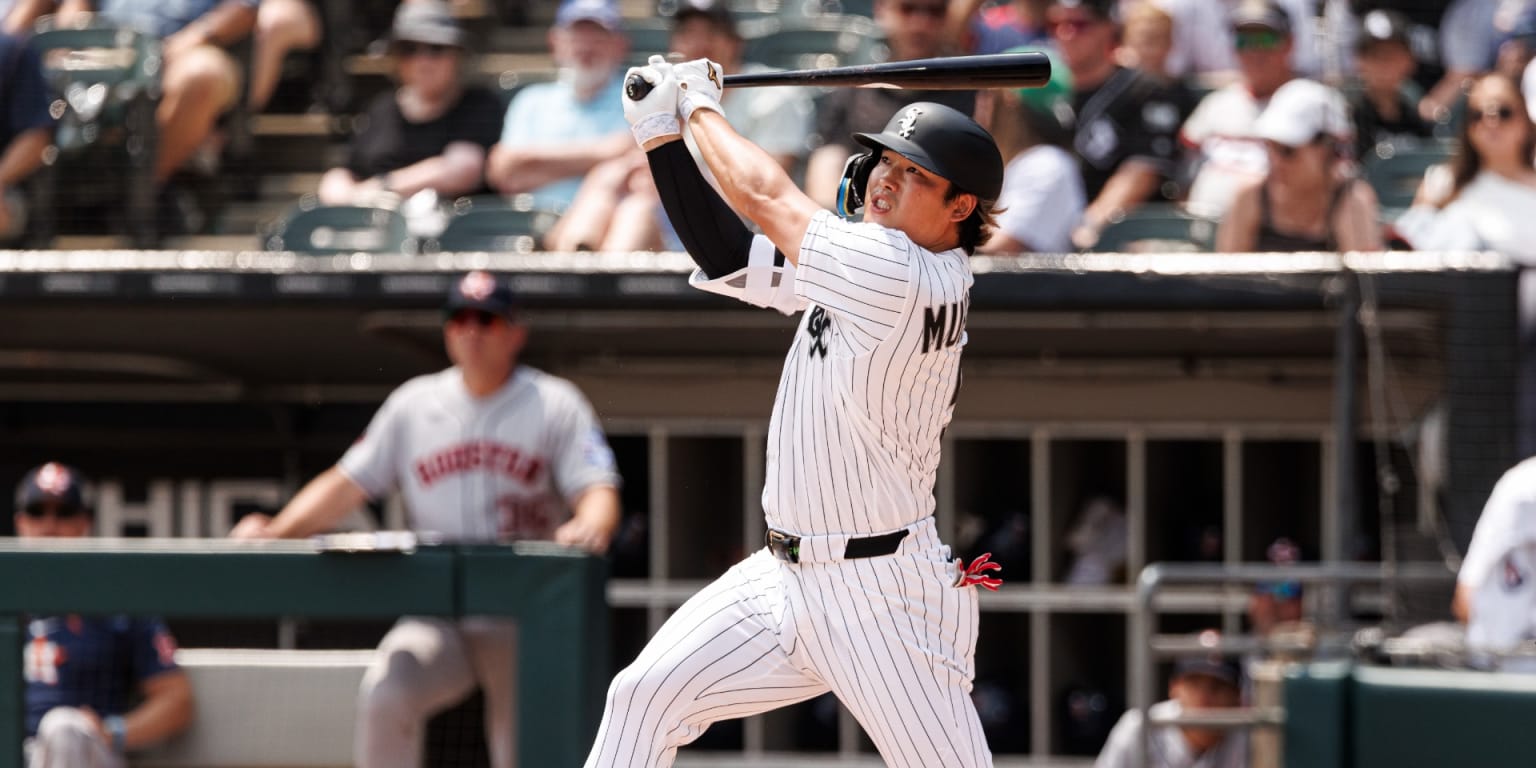
Munetaka Murakami has spent half a season systematically dismantling the one scouting concern that followed him from Japan to the majors: his perceived inability to handle elite fastball velocity. The evidence is now overwhelming. Among 144 MLB hitters with at least 30 plate appearances against 97-plus mph fastballs in 2026, Murakami leads baseball with a 1.249 OPS—outpacing Yordan Alvarez (1.142) and Juan Soto (1.103), two of the game's most dangerous weapons. He's not just getting on base; he's doing damage. His .792 slugging percentage against upper-tier heat towers over the field, with four home runs off 97-plus fastballs this season—tied for the league lead alongside fellow All-Stars Soto and Junior Caminero.
The velocity landscape itself makes this achievement sharper. The average MLB four-seam fastball sits at 94.9 mph in 2026, the highest mark in the pitch-tracking era dating to 2008. Japanese hitters rarely face fastballs at this frequency or intensity; scouts flagged Murakami's contact rate as a red flag precisely because NPB doesn't operate at MLB's velocity spectrum. The concern was tactical—that his timing mechanisms and hand speed would break down when exposed to relentless heat. Instead, Murakami has weaponized the exposure. His expected OPS against 97-plus fastballs stands at 1.161, meaning his quality of contact validates the actual production. These aren't lucky swings inflated by ball-in-play variance.
Tonight's matchup against Cam Schlittler sharpens the test. Schlittler, the AL Cy Young favorite, throws almost exclusively heat—four-seamer, sinker, cutter account for 90-plus percent of his arsenal, with over half his pitches hitting 97 mph or faster, third in the league among starters. This is exactly the environment where Murakami's breakthrough is most visible. In his 34 PA ending on 97-plus fastballs, he's reaching base at a .441 clip, a rate that would sustain elite offensive production if extended across a full season.
For prop bettors, the angle flows directly from this mechanism: Murakami's hit rate and slugging potential against high velocity are uncorrelated with league-wide regression models that assume contact breaks down at 97-plus. Books have been slow to price this edge because it contradicts pre-established scouting consensus. Early-season Murakami props will reflect the old narrative—caution on high-velo arms, modest hit and RBI projections—while his actual performance data suggests he should be priced as a plus hitter in velocity-heavy matchups. The market is repricing toward him, but the repricing lags behind the evidence.
The timing matters. Murakami is a rookie five weeks into high leverage exposure; traditional projection systems (Steamer, ZIPS) will not have fully converged on his true high-velo talent until late August or September. Until then, individual game props and slate totals against flame-throwing opponents carry value disparity—his over-line odds are still tethered to pre-season doubts, while his actual skillset has already answered them.