Schwarber's Padres Mastery Reaches Historic Pitch: One HR Per 2.38 Games
By PropBetEdge Editorial Team ·
Kyle Schwarber just notched his 21st home run against San Diego in 50 career games—the second-most prolific homer rate against any team in MLB history—raising a critical question about how aggressively to price his power props in this series.
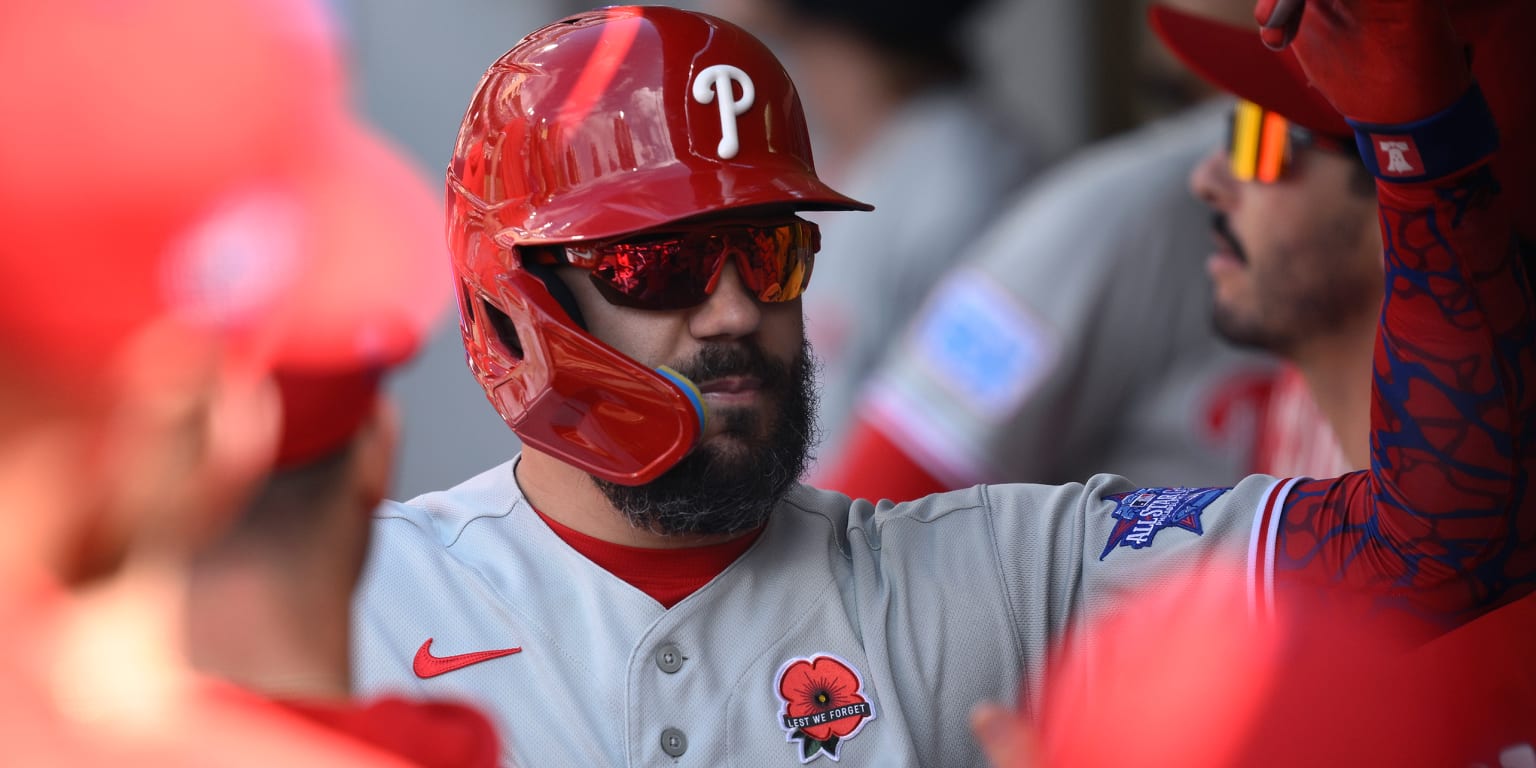
Kyle Schwarber clubbed his MLB-leading 21st home run of the season in Monday's 3-0 Phillies win over the Padres, a first-inning solo shot that stood as the difference-maker until Brandon Marsh added two runs of insurance in the seventh. The blast itself was routine by Schwarber's standards this year—far less dramatic than the 488-foot postseason missile he uncorked against San Diego in 2022—but the context transforms it into something scarcer: the 21st home run in Schwarber's 50 career games against the Padres, including playoffs. That works out to one homer every 2.38 games, the second-best rate by any player against any opponent in MLB history, trailing only Giancarlo Stanton's 2.33 average against the Rockies.
The Padres' pitching staff had ample warning. Schwarber enters any matchup against San Diego as something closer to a fixed outcome than a variable risk. The consistency of this dominance—spanning regular season and postseason across multiple years—eliminates the noise of cold streaks or sample-size volatility. This isn't a hitter running hot for a week; it's a structural mismatch between Schwarber's approach and what Padres pitchers have shown they can execute against his swing plane and timing. When Luzardo took the mound Monday, he worked around early chaos (bases loaded, no outs in the first) by grinding through six scoreless innings with surgical precision, but that effort was rendered academic by Schwarber's opening volley. The Phillies' offense otherwise evaporated—the lineup went 0-for-21 outside Schwarber and Marsh—which underscores both Schwarber's outsized role in this series and the precarious nature of Philly's offensive depth in tight contests.
For prop bettors, Schwarber's profile against the Padres presents a rare opacity in the market. Sportsbooks price home run props based on season-long rates, park effects, and recent form, but they often insufficiently weight head-to-head historical dominance, especially when that dominance spans playoff appearances and multiple seasons. A 2.38-game homer cadence translates to roughly a 42% probability he goes deep in any given game against San Diego—far above his season baseline of roughly 20% per game (21 HRs in 108 games played). The market's opening number on Schwarber's HR line for upcoming Padres matchups this week will likely reflect his 2024 season rate and recent performance, not the San Diego-specific distortion. This is where line efficiency breaks down: books treat each opponent as an adjustment factor when they should treat Schwarber-vs-Padres as a distinct, historically calibrated phenomenon.
The causal mechanism behind Schwarber's mastery here isn't random variance—it's rooted in Padres pitcher tendencies and Schwarber's plate coverage. San Diego's staff leans heavily on fastball-heavy approaches and elevated velocity, which plays directly into Schwarber's aggressive, out-of-zone chasing profile. He doesn't wait for strikes; he hunts elevated heaters. The Padres pitch to contact, and Schwarber makes those contacts with obliterating leverage. Additionally, Petco Park's dimensions (right-center gap sits at 409 feet, but the upper deck overhang creates favorable geometry for left-handed pull power) reward his natural swing path. Younger Padres arms lack the spin weaponry or command precision to expand the zone against a hitter of his caliber and familiarity with their stuff. Over the remainder of this series and beyond, Schwarber's HR props should command a premium relative to his season baseline—but that premium exists only if you're first to identify it.
Monday's outcome exemplifies the efficiency edge: one swing decided a one-run game, and Schwarber supplied it. In a series where run differential matters and the Padres' offense struggles to generate consistent support for their rotation, that concentration of power in a single hitter becomes tactically decisive. The market will likely adjust Schwarber's HR line upward after one or two games of this series, but the adjustment will still trail the true historical probability. Bettors sharp enough to isolate the Schwarber-Padres distortion from opening numbers carry an edge that persists across multiple games.