Casey Schmitt's Power Surge Offers Giants a Rare Offensive Bright Spot in Dismal 2026
By Erik Schwartz ·
With San Francisco's marquee bats struggling through a 20-30 start, an unlikely fourth-year utility man has emerged as the team's most productive hitter—and his elite contact quality suggests the production is real.
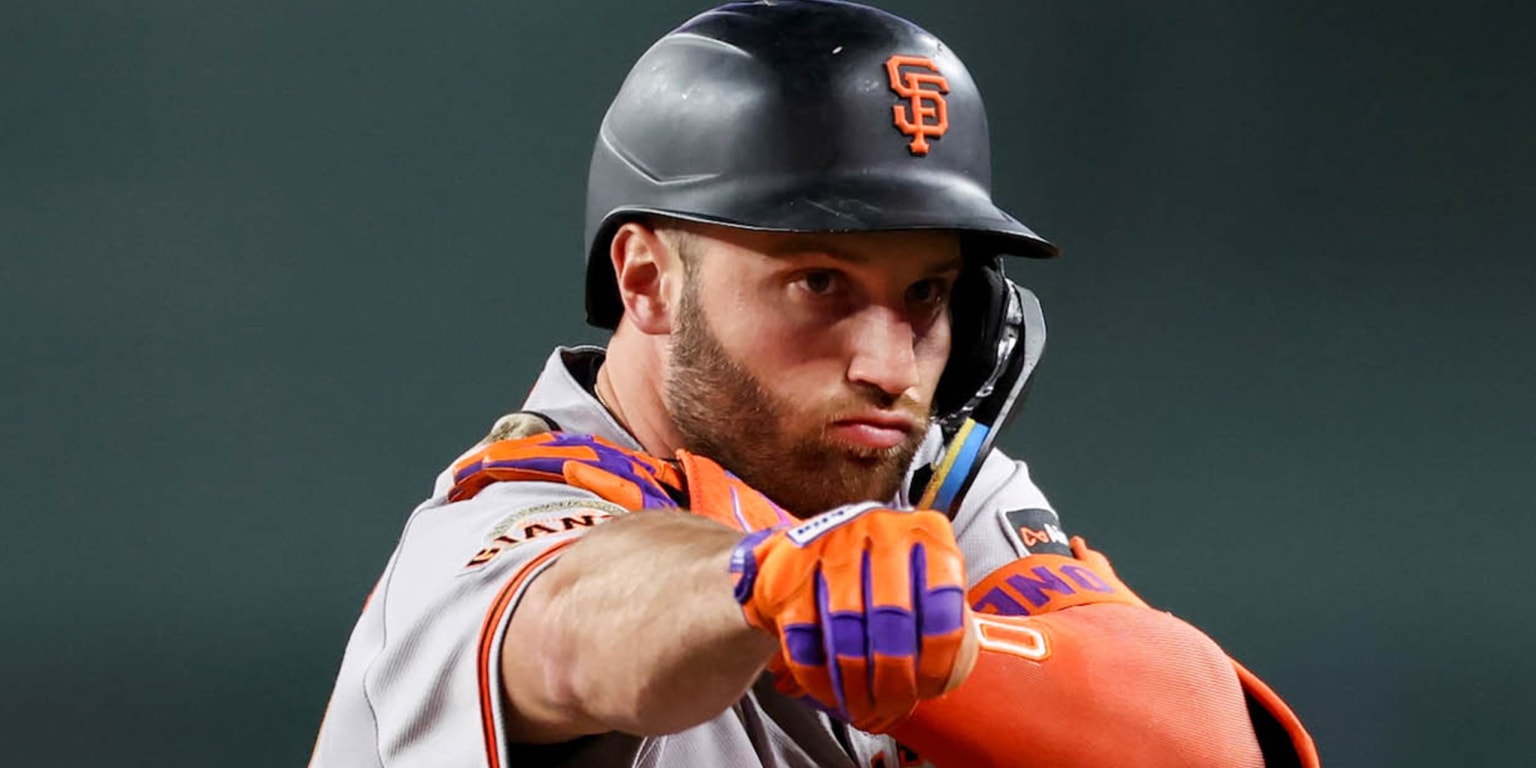
The Giants are limping through 2026 at 20-30, fourth in the NL West, with Rafael Devers, Matt Chapman, and Willy Adames all underperforming expectations. That the team has found any offensive footing at all rests on an unexpected pillar: Casey Schmitt, the versatile infielder-turned-DH posting a .293/.337/.529 slash line with a team-leading .866 OPS. Manager Tony Vitello called him "one of our best producers for the whole year," a statement that would be damning indictment of the lineup's depth if the underlying mechanics weren't so clean.
Schmitt's power has been engineered through disciplined pull-field approach. His 28.3% pulled-air rate ranks 18th among qualifying hitters, putting him alongside established sluggers like Kyle Schwarber and Yordan Alvarez. Eight of his nine home runs have been pulled to left field, and the data underneath the surface matters more: his 14.3% barrel rate sits in the 86th percentile, while his 47.5% hard-hit rate marks a career high. Most tellingly, his expected slugging percentage of .510 significantly outpaces his actual .529—a rare situation where realized production matches or slightly exceeds the quality-of-contact forecast, meaning he's both hitting the ball hard AND catching it in the sweet spot.
Where Schmitt truly separates himself is against secondary stuff. He's slugging .612 on breaking balls and .688 on offspeed pitches, placing him in an elite seven-player tier (.600+ combined slugging against breaking and offspeed, minimum 50 PA) ahead of established sluggers like Alvarez (.551) and Ronald Acuña Jr. (.563). This isn't random noise—it reflects a conscious approach adjustment. His first-pitch swing rate dropped to 33.3% in 2026 from 38.5% over his first three seasons, inching toward league average; his whiff rate (22.7%) is a career low; and despite a concerning 3.6% walk rate, his 20.6% strikeout rate is his best. Schmitt is making harder contact on fewer swings, the blueprint for sustainable offensive contribution.
For prop purposes, Schmitt's home run production and slugging percentages against secondary pitches offer a counterintuitive edge in a Giants lineup starved for offensive certainty. His 47.5% hard-hit rate and 86th-percentile barrel rate suggest his nine home runs through the sample aren't a hot streak but the output of a mechanically sound approach. The matchup lens matters here: when the Giants face pitching staffs that rely on breaking balls and offspeed stuff (which is most of baseball), Schmitt's .688 slugging on those pitches creates an over-the-expected-performance angle. His lineup position as designated hitter ensures consistent at-bats, and his willingness to attack slower stuff in the zone—despite lower walk rates—means he won't grind into pitcher-favorable counts that suppress slugging opportunities. The edge is most durable in games where the Giants face secondary-heavy pitching profiles; the market hasn't fully capitalized on Schmitt as a proxy for Giants offensive production when the team's star names are dormant.
Schmitt's emergence also matters contextually for team total pricing. The Giants' 20-30 record has compressed their win expectations, and their team totals likely reflect the offensive malaise of Devers, Chapman, and Adames. But Schmitt's .510 xSLG and mechanically sound approach offer a floor to an otherwise fragile lineup. If one or two of those star bats find their footing, the team total jumps sharply; even if they don't, Schmitt's consistency as a high-contact, hard-hit producer limits the downside. This creates a scenario where Giants team totals may be underpriced at current market levels, especially in ballpark-friendly conditions.