Schlittler's Stuff Wasn't Enough Against Yamamoto—What His K Rate Tells Us About Next Starts
By Ty Whitney ·
Eight strikeouts and a 2.20 ERA still couldn't save Schlittler from an early exit; the Yankees' ace's pitch efficiency problem is starting to surface at the worst moment.
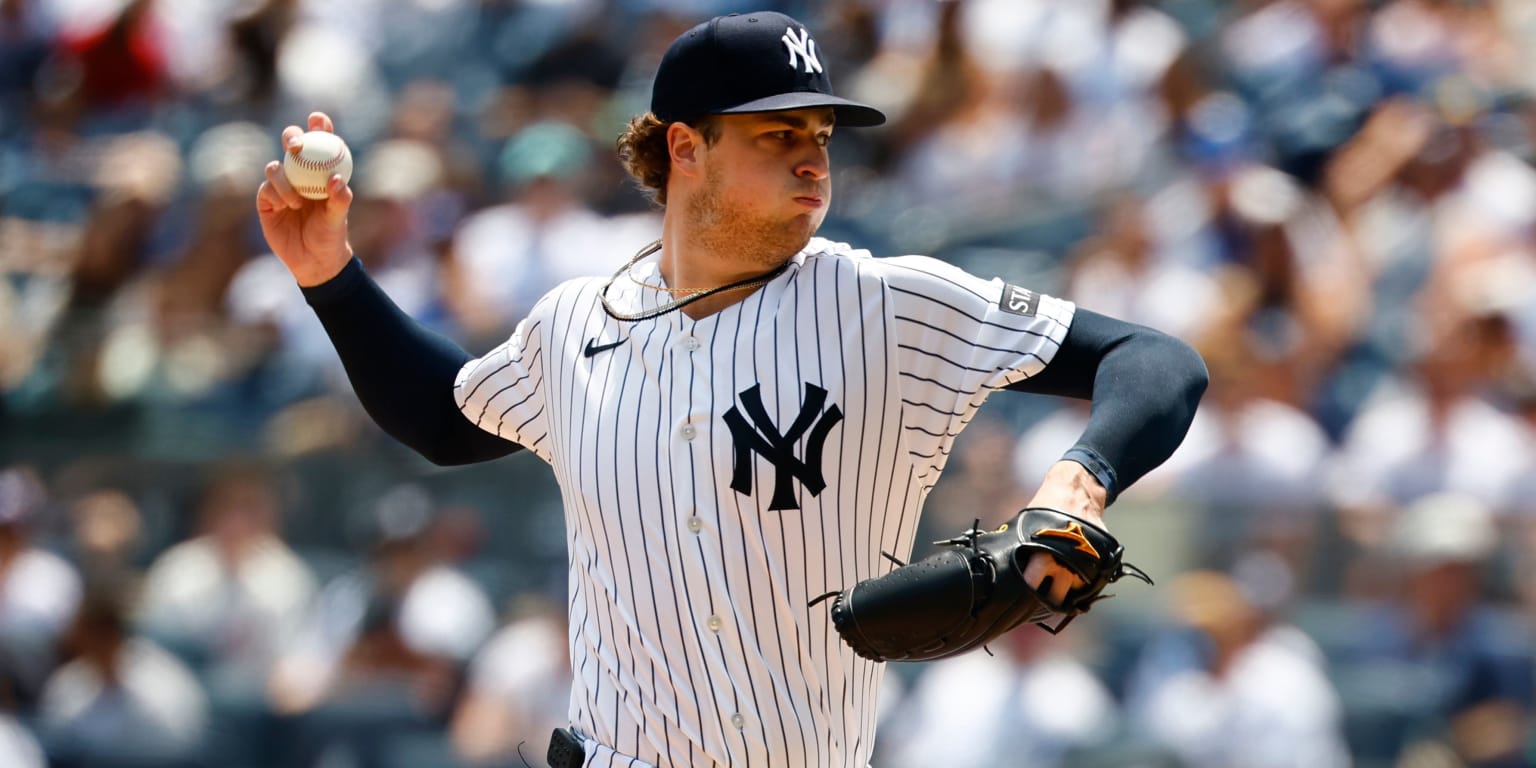
Cam Schlittler chose rest over the All-Star Game, banking on recovery time to sharpen his command for the stretch run. Sunday's clash with the Dodgers was exactly the kind of high-leverage assignment he had in mind when he stepped back from Philadelphia. Instead, he got a clinic in how even elite strikeout stuff can fail when efficiency breaks down. Schlittler fanned eight batters across 4⅓ innings but needed 98 pitches to do it—a ratio that forced his exit trailing 3-1 in what became an 8-2 loss at Yankee Stadium.
The damage came in bunches. Ohtani's third-inning double and Freeman's run-scoring single arrived with Schlittler working at 69 pitches through three innings; by the time Andy Pages' fifth-inning double chased him, the pitch count had become the real opponent. Six hits allowed, zero walks—that selectivity is signature Schlittler—but the strikeout-to-pitch ratio (8 K's in 98 pitches) suggests he was working harder than his peripherals indicate. His ERA still sits second in the American League at 2.20, behind only Jacob Misioroski's 1.62 in Milwaukee, and only Chris Sale in Atlanta (2.06) ranks lower across baseball. That's the residue of a genuinely dominant arm. But a pitcher who needed 22.6 pitches per strikeout on a day he faced one of the game's premium lineups is operating on narrower margins than the national rankings suggest.
The mechanics here matter for the betting lens. Schlittler's strikeout rate hasn't moved—he'll likely stay within his season band—but his pitch efficiency is tilting toward the concerning. Against a Dodgers lineup that sits in the top third for walk rate, he got the outs he wanted but burned through his tank doing it. When teams with patient approaches face him next, especially on short rest or when he enters a game with elevated leverage, that efficiency tax becomes visible. His next three starts are against division rivals or wild-card contenders; if the fifth-inning exit becomes a pattern, his strikeout props will remain attractive on volume, but the underlying story is a pitcher creeping toward fatigue rather than dominance.
For prop players, Schlittler's strikeout line likely won't move much despite the loss—the market values strikeouts independently of wins, and 8 K's reinforces the high-volume profile. But the path to those strikeouts, and the innings in which he accumulates them, just shifted. Expect his props to skew toward under on innings pitched in his next 2-3 starts as the Yankees manage his workload more carefully. The strikeout total itself remains a lean-over play on volume alone, but only if paired with an under on innings; a 6-inning appearance with 9 strikeouts is a different bet than a 5-inning appearance with 8.