Schlittler's Fastball Diet Exposed: The Nationals Found the Script, and It's Repeatable
By Ty Whitney ·
A 2.01 ERA masks a dangerous vulnerability—Schlittler's 92% fastball-heavy diet is getting squared up by hitters who hunt it, and the market hasn't yet priced the volatility into his next start.
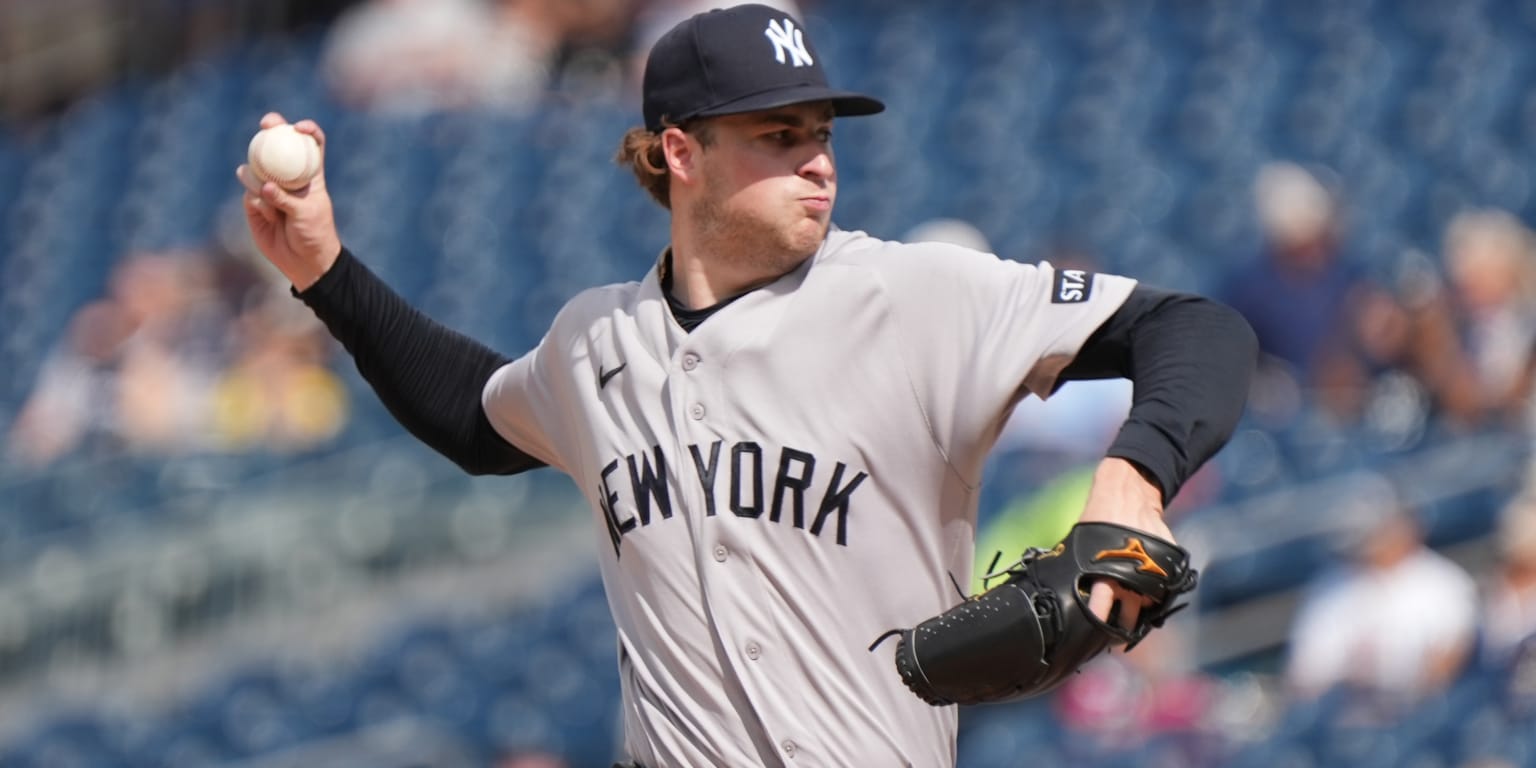
Cam Schlittler entered Saturday's outing as the Yankees' ace-level right-hander, armed with a 2.01 ERA and All-Star credentials heading into the All-Star break. The Nationals came in second in the majors in home runs, and the matchup felt like a collision course. It was. James Wood jumped a first-pitch 98.5 mph fastball in the first inning and deposited it 388 feet over the right-center-field wall. Two batters later, Curtis Mead pulled a 96.2 mph cutter the same distance over left-center. Schlittler had allowed two homers before recording an out—only the second time this season he's given up multiple homers in a single start.
The damage revealed something sharper than a bad outing: a structural vulnerability built into Schlittler's approach. According to Brooks Baseball, he operates a four-seam fastball, cutter, and sinker 92% of the time—an unusually concentrated diet for an elite starter. That's not an adaptation problem; it's a profile. He hit 100.3 mph on his sinker Saturday and showed the heat that earned his All-Star nod. But heat alone doesn't lock in hitters who know what's coming. After those two homers, Schlittler recovered, allowing just two more singles across the final 5 2/3 innings while striking out six. He exited after 6 2/3 innings on 99 pitches, including four walks—the same count he issued against Toronto on June 13. The quality-start line (six runs or fewer, six-plus innings) technically holds, but the underlying pattern is active: he's surrendered seven of his 12 homers over his past four starts. That's a spike, not noise.
Manager Aaron Boone's pregame framing—"You got to lean on your strengths"—is tactically sound but also reveals the constraint. Schlittler cannot reliably dial back his fastball diet because his secondary stuff doesn't carry the same swing-and-miss profile. Opponents already know this. The Nationals, explicitly game-planning for fastballs, didn't need a complicated scouting report. They sat fastball and got it. The reproducibility of this approach is the key variable. Any team entering a game against Schlittler with a fastball-hunting mindset, a short right-field porch (or power to all fields like Washington's lineup), and patience on early counts will have a roadmap.
For prop bettors, the market likely priced Saturday's performance as an isolated struggle—a quality start against a top-five power lineup is exactly what you'd expect the line to reflect. But the four-start spike in homer rate and the mechanical inflexibility introduce a layered risk. Schlittler's strikeout rate remains elite (his six on Saturday fit his season pattern), but his ERA estimators are likely inflated by the narrow pitch diet combined with improving offensive approaches. His next outing post-break, against any opponent with power and discipline, will inherit the same structural pressure. The line may hold tight on his strikeout props (he'll keep punching out 6-7 per outing), but team totals and home-run props tied to his ERA are vulnerable to further compression if he faces another fastball-hunting lineup.