Schlittler's Seventh-Inning Collapse Signals Fatigue Risk in Young Starter's Workload
By Ty Whitney ·
After six immaculate innings, Cam Schlittler unraveled in the seventh, walking the bases full and surrendering a sacrifice fly—a pattern that matters for future start-prop pricing.
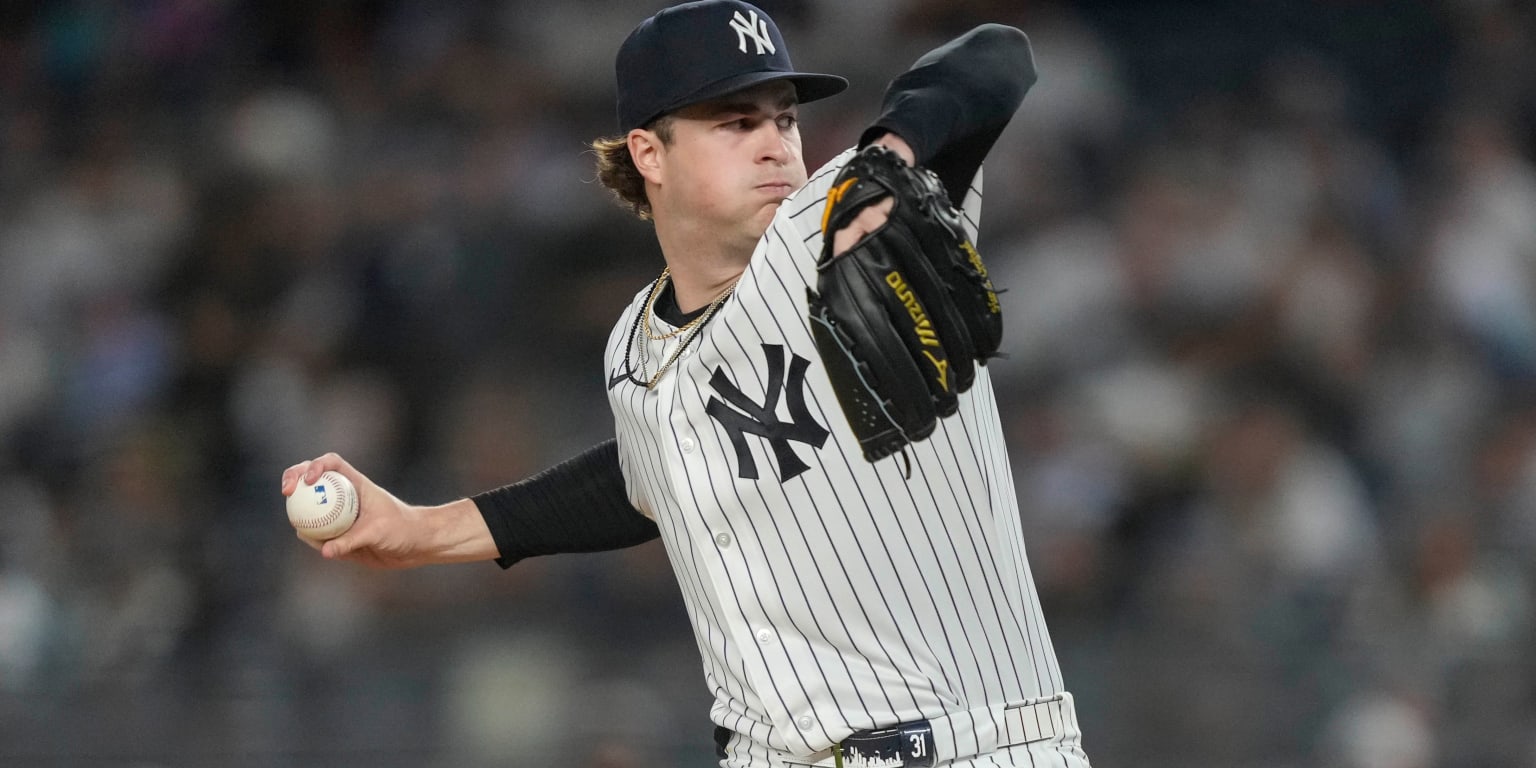
Cam Schlittler arrived at Yankee Stadium primed for a showcase. The 24-year-old right-hander and Toronto counterpart Trey Yesavage had traded zeros through six innings, a genuine pitchers' duel that validated the hype surrounding both organizations' young arms. But between the sixth and seventh frame, something shifted. Schlittler's control fractured. An 11-pitch battle with Andrés Giménez ended in a bases-loaded walk. Vladimir Guerrero Jr. followed with a sacrifice fly off Jake Bird, and Schlittler's perfect evening evaporated. He stomped into the dugout visibly frustrated, both hands pressed to his cap—the body language of a pitcher who understood he'd surrendered the moment.
The outing itself remains strong on paper: seven strikeouts over six-plus innings, eight hits scattered, 106 pitches (70 strikes). His ERA ticked to 1.50, a minor rise from an already elite baseline. But the mechanical story beneath those numbers is what matters for future prop construction. Schlittler had strung together six consecutive starts allowing one earned run or fewer—a run of dominance that made him look untouchable. Then he hit the pitch count threshold (106 pitches matching his season high) and immediately lost command. Two walks in six innings became a bases-loaded free pass in the seventh. That's not randomness; that's workload degradation.
For a young arm still climbing the innings-pitched ladder, this pattern is predictable rather than aberrant. Schlittler's efficiency eroded in direct proportion to his workload, which is precisely what teams monitor when they cap starts or limit pitch counts on talented rookies. The Yankees haven't published a hard ceiling on his usage, but this outing provides a data point: once he touches 105+ pitches, his command margin compresses. Opposing teams will file this away. So will bettors.
The prop implications ripple outward. Schlittler's strikeout line will likely remain attractive early in his next start (first 5 innings), because his fastball-curveball pairing remains dominant in the opening acts. But overs on his full-game strikeout props should tighten in price, or bettors should demand better odds, because the path to seven or more strikeouts now requires him to pitch deeper into games without hitting fatigue. His K/9 is elite (11.2 for the season), but the market will begin to factor in that his high-leverage innings—the seventh onward—show degraded command. Similarly, first-five-inning unders on opposing team totals become more valuable, because Schlittler's control remains sharp through five innings but softens thereafter. That's an exploitable split.
Yankees bettors and prop players should expect Schlittler's usage to be managed more carefully in his next start. The team will likely reduce his pitch ceiling or pull him earlier, not because of arm health but because this outing demonstrated that his command deteriorates predictably after 100 pitches. That management pattern itself becomes a prop edge: shorter outings mean fewer strikeout opportunities and lower total innings pitched. Price his next start's strikeout prop conservatively.