Scherzer's Rehab Arc Offers Toronto a Rotation Lifeline—But Only at Reduced Risk
By Ty Whitney ·
Max Scherzer threw 73 pitches Friday in Buffalo as the Blue Jays stagger toward rotation health; his velocity numbers encourage, but his injury history demands patience on his volume props.
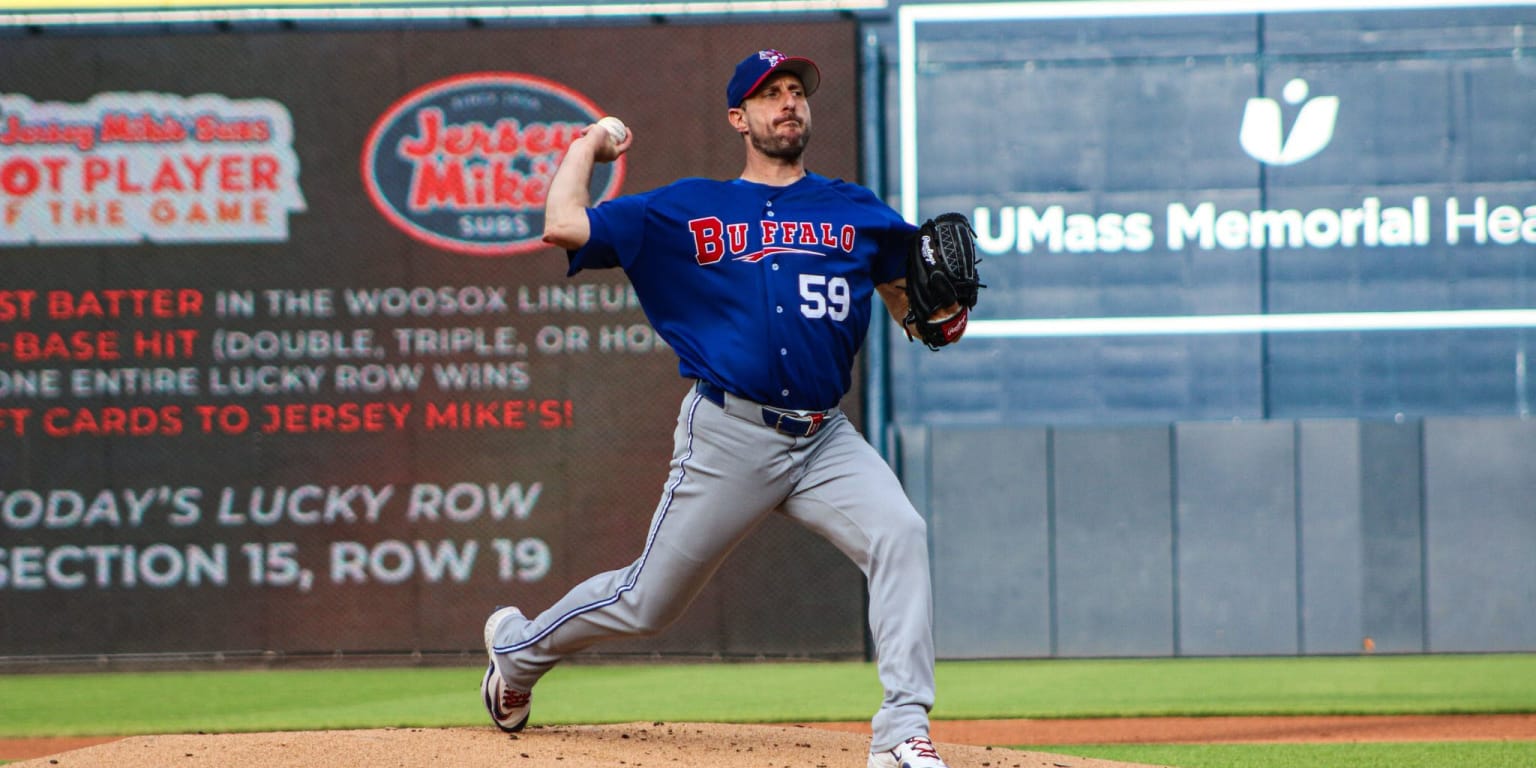
Max Scherzer made his second Minor League rehab start Friday for the Buffalo Bisons, working 3⅔ innings on 73 pitches against a backdrop of organizational pitching collapse. The Blue Jays rotation has fractured: José Berríos out for the season with Tommy John surgery, Cody Ponce and Bowden Francis sidelined by ACL and Tommy John respectively, leaving Toronto reliant on a patchwork of Trey Yesavage, Kevin Gausman, and Patrick Corbin. Scherzer's return matters partly because there are almost no other options.
The mechanical news was sound. His fastball averaged 93.4 mph and touched 95.7 mph—respectable metrics for a 41-year-old coming off a series of injuries (thumb, forearm, elbow, ankle) that have haunted his two seasons in Toronto. When Scherzer has pitched healthy, he's a different pitcher; the problem is the definition of healthy has been elusive. Over 22 starts this season before the IL stint, he posted a 5.99 ERA, which isn't a Cy Young performance but also reflects the wear of fighting through injuries rather than the baseline of his capability. The real question isn't whether Scherzer can help—it's whether Toronto's medical staff can keep him upright long enough to matter.
Dylan Cease threw 75 pitches in his own rehab outing Thursday and appears on track to slot into the rotation during next week's series against Philadelphia, possibly as early as Monday. Shane Bieber follows Scherzer into the Buffalo rotation Saturday. If the next 48 hours go cleanly, the Blue Jays will have added two frontline arms to an emergency relief map. Manager John Schneider was joking Friday that the team couldn't yet confirm a starter for Saturday's game—a reflection of how dire the depth has become.
For prop bettors, Scherzer's presence on the radar creates a sharp volatility play tied to innings volume rather than pure performance. His first rehab outing was designed conservatively; his second was a test of workload tolerance. When (not if) he graduates back to the major leagues, expect the Blue Jays to cap his initial appearances at 80-90 pitches, which places any strikeout props well below his career 10.2 K/9 baseline. He's also one strikeout shy of 3,500 career strikeouts—a milestone that will generate attention—but that narrative momentum doesn't change his risk profile in real time. The edge exists in fading overstated volume expectations in his first 2-3 starts; books may anchor to his 2024-2025 baseline when his actual 2026 usage will be rationed.
The Blue Jays have little choice but to deploy Scherzer in a structured ramp-up, which means early-season prop prices will be too high relative to his allocated workload. If you're sizing a Scherzer strikeout prop for his first start back, you're likely betting against the team's own conservatism, not his talent.