Sasaki's Fifth-Inning Collapse Exposes Volatility Behind Recent Gains
By Ty Whitney ·
One dominant start masked underlying command issues that resurfaced Friday night, complicating the narrative around the Dodgers' young right-hander.
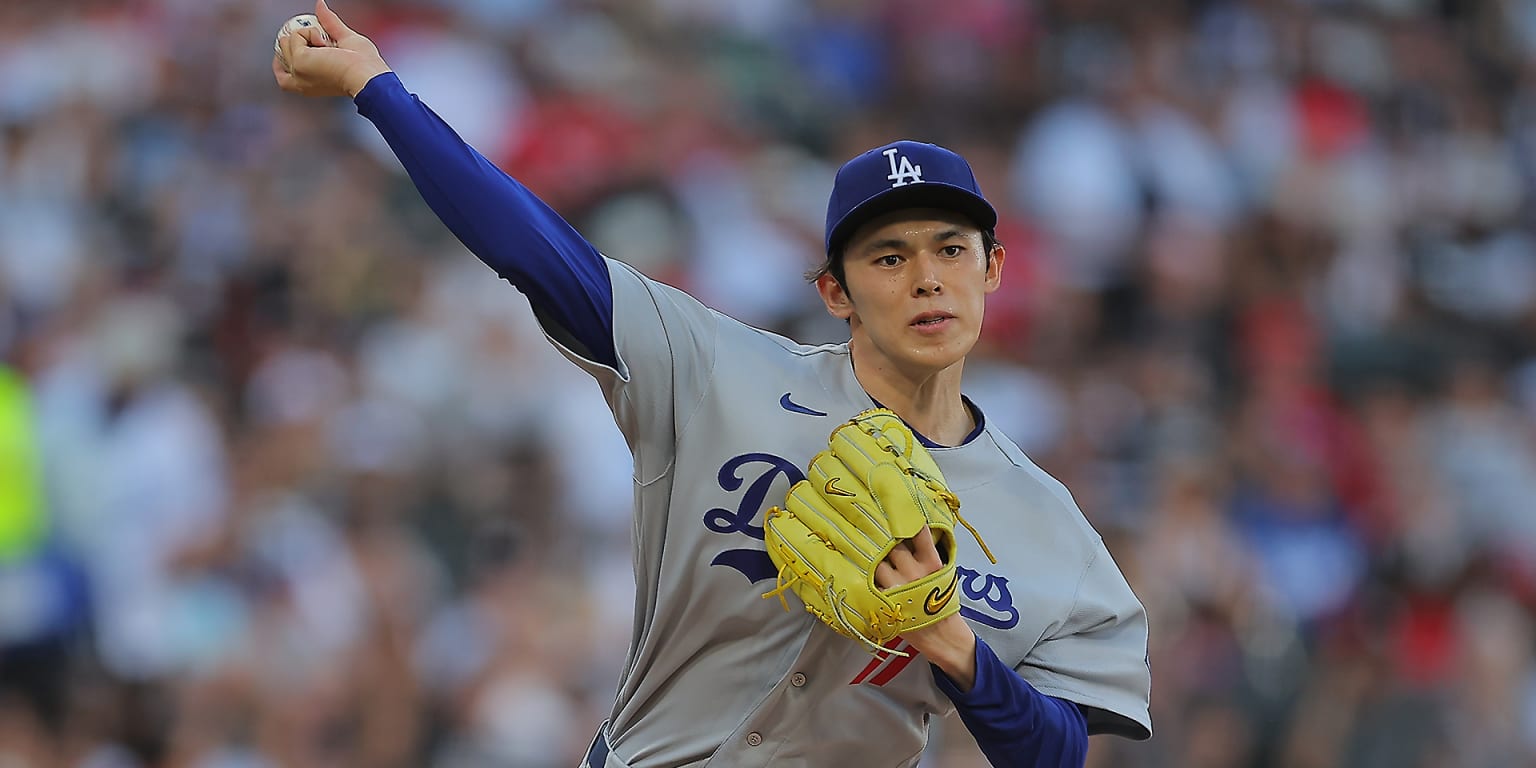
Roki Sasaki crumbled in the fifth inning Friday as the Dodgers fell 8-2 to the White Sox, allowing a career-high seven runs across 4 1/3 innings. The implosion came after what the Dodgers believed was his most complete start of the season—a 10-strikeout, seven-inning effort that had framed a coherent narrative: the 24-year-old had finally assembled the mechanics, pitch sequencing, and command to pitch deeper and more consistently into games. One inning dismantled that story.
Sasaki was functional through four frames. A solo homer to Andrew Benintendi in the first stung, but he worked around it. The fifth inning began ordinarily: a two-out situation after a walk and a single. Then his control evaporated. He threw eight consecutive balls. Two runs scored on wild pitches and a walk; the final pitch of his night handed in a third inherited runner. Treinen inherited the loaded bases and allowed all three to score. The cascade was sudden and total—not the gradual erosion of a pitcher tiring, but a technical break.
This wasn't simply a bad outing. The timing matters. Since April 19—when Sasaki added a harder splitter to his arsenal that became the centerpiece of recent success—he'd made seven starts before Friday. In that stretch, he went 3-1 with a 3.12 ERA across 40 1/3 innings, routinely pitching past the fifth inning for the first time in his major league career. The Dodgers had visibly grown more aggressive in how deep they pushed him. The White Sox series opener revealed the fragility beneath that confidence. When command deserts a young pitcher this suddenly, it typically signals either mechanical regression, fatigue accumulation, or the return of pre-adjustment baseline volatility. Sasaki's early-season unpredictability—the version the Dodgers hoped he'd matured past—looked present again.
For prop bettors, the practical question is durability of edges built on recent performance. Sasaki's strikeout rate the past seven starts had settled near elite levels, making strikeout props attractive. But that same seven-start sample didn't clarify whether his command gains were foundational or situational. Friday exposed the latter risk. His inability to pitch past the fifth inning for the first time since mid-April is the mechanical tell that matters more than the run total. If command volatility returns as a baseline trait, his ability to accumulate strikeouts deep into outings diminishes—not because he loses stuff, but because he'll get shorter leashes.
The Dodgers won't panic over a single start, and neither should bettors. But the reliability framework around Sasaki needs recalibration. His next two starts will clarify whether Friday was a variance spike or a return to form. Until then, strikeout props carry elevated variance risk, particularly K/9 derivatives and overs on pitch counts. Conversely, any pitcher matchup disadvantage (weak opposing lineup, favorable arm angles) becomes more valuable as a risk offset when Sasaki takes the mound, since single-inning collapses have now been documented at a vulnerable stage in his development.