Sasaki Clears the Seventh-Inning Threshold, Triggering a Dodgers Rotation Realignment
By Ty Whitney ·
The Dodgers rookie's first seven-inning start without a walk signals real workload expansion in a rotation gutted by injury.
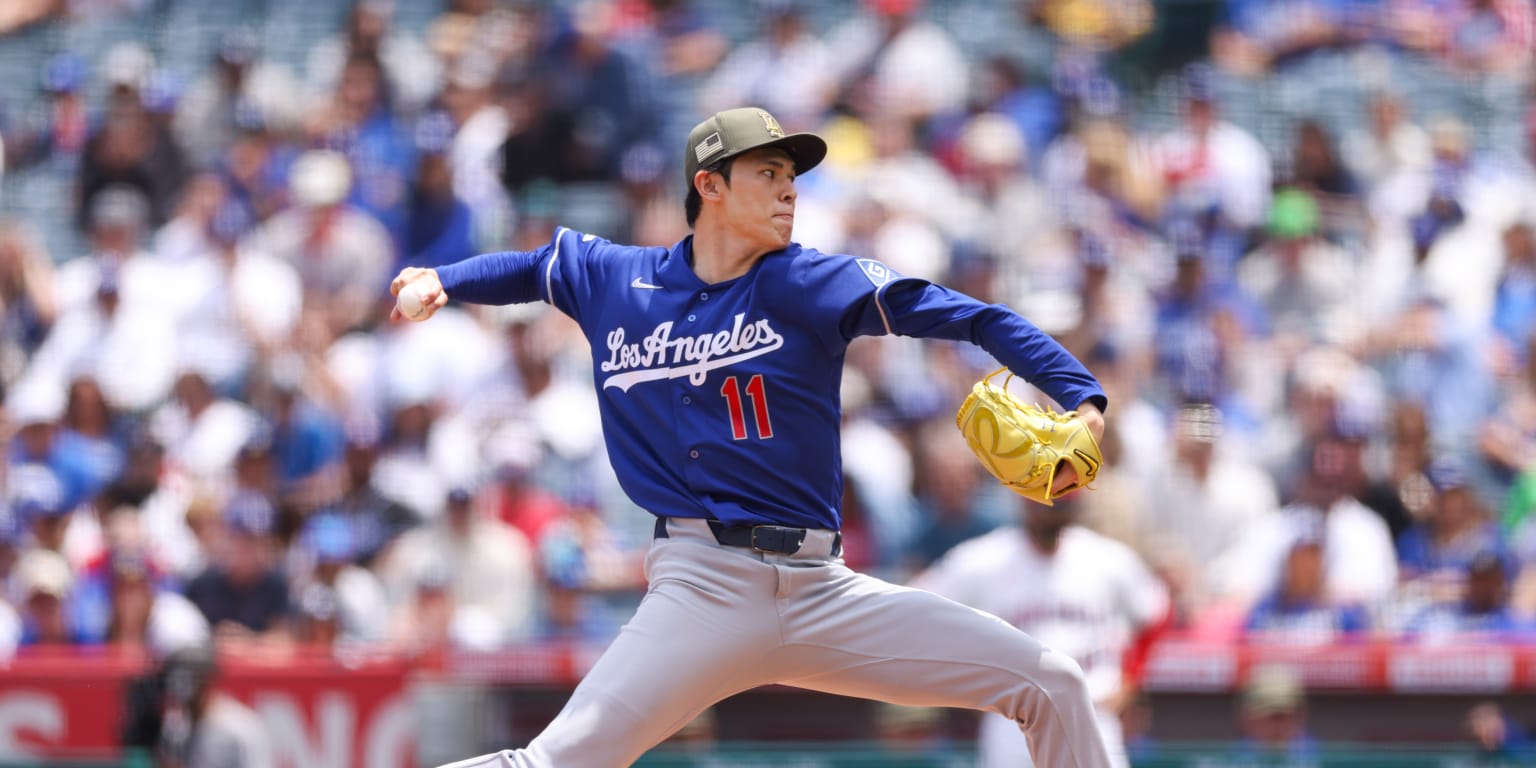
Roki Sasaki did something Sunday he had never done in 15 major league starts: he pitched into the seventh inning. What should have been routine—navigating three batters against a bottom-ten Angels offense—becomes significant context when Sasaki's prior ceiling was the sixth. Against Anaheim, he dispatched Jorge Soler, Yoán Moncada, and Jo Adell in five pitches, securing 7.0 innings of one-run ball with eight strikeouts and, for the first time in a big league outing, zero walks. The Dodgers won 10-1, sweeping the series and extending their winning streak to five games.
The milestone matters because Sasaki's role has been constrained by design. A 23-year-old with a rebuilding workload history in Japan, he has been managed as a potential workload risk—limited to around 100 pitches per start and typically exiting by the sixth. Sunday's extension to 109 pitches across seven innings, paired with the clean command (zero walks), suggests the Dodgers have confidence in both his durability and his stuff against major league competition. He struck out eight and induced weak contact (three outs on five pitches in the seventh) in a start that felt less like a contained experiment and more like a genuine workload elevation.
Context amplifies the move. With Tyler Glasnow and Blake Snell both injured, Los Angeles cannot afford to keep a healthy starter on a pitch count. Sasaki's ability to extend into the seventh without losing command or command reliability—the walk-free outing is the tell—positions him as a concrete rotation anchor rather than a depth contributor. Dodgers manager Dave Roberts has already started leaning on Sasaki in higher-leverage spots; a seven-inning start with no free passes is the validation that he can handle that role.
For bettors, the implication is narrow but real. Sasaki's strikeout rate has hovered around 10.2 K/9 across his first 15 starts; that efficiency on a 100-pitch diet is already solid, but an expansion to 109+ pitches with the same K/9 trajectory means his strikeout prop ceiling moves up. A K total that was safe at 7.5 in a six-inning start may now carry +110 to -110 pricing at 8.5 in future starts if books haven't yet adjusted for the new workload floor. The Angels lineup (27th in batting average, 26th in runs) masked some of this—he won't face bottom-10 offenses every week—but the command floor established in this outing (zero walks) is the durable signal. Expect his walk rate to remain sub-3.0 per nine innings going forward, which is elite-level control for a young power pitcher.
The Dodgers rotation overhaul will be incremental. Sasaki won't suddenly become a 120-pitch pitcher; extension is measured. But confirmation that he can handle seven innings, sustain strikeout rate, and tighten command in the process resets his prop baseline upward. The market will likely catch up within the next two starts; smart books may have already adjusted. Early action on his K props in the next outing should be treated as post-adjustment pricing.