Sasaki's Velocity Spike and Muncy's Clutch Hit Offer Dodgers Reset After All-Star Break Collapse
By Ty Whitney ·
Los Angeles halted a first-half spiral with a 2-1 win in the Bronx, but the real signal lies in what Sasaki's fastball revamp means for his second-half leverage.
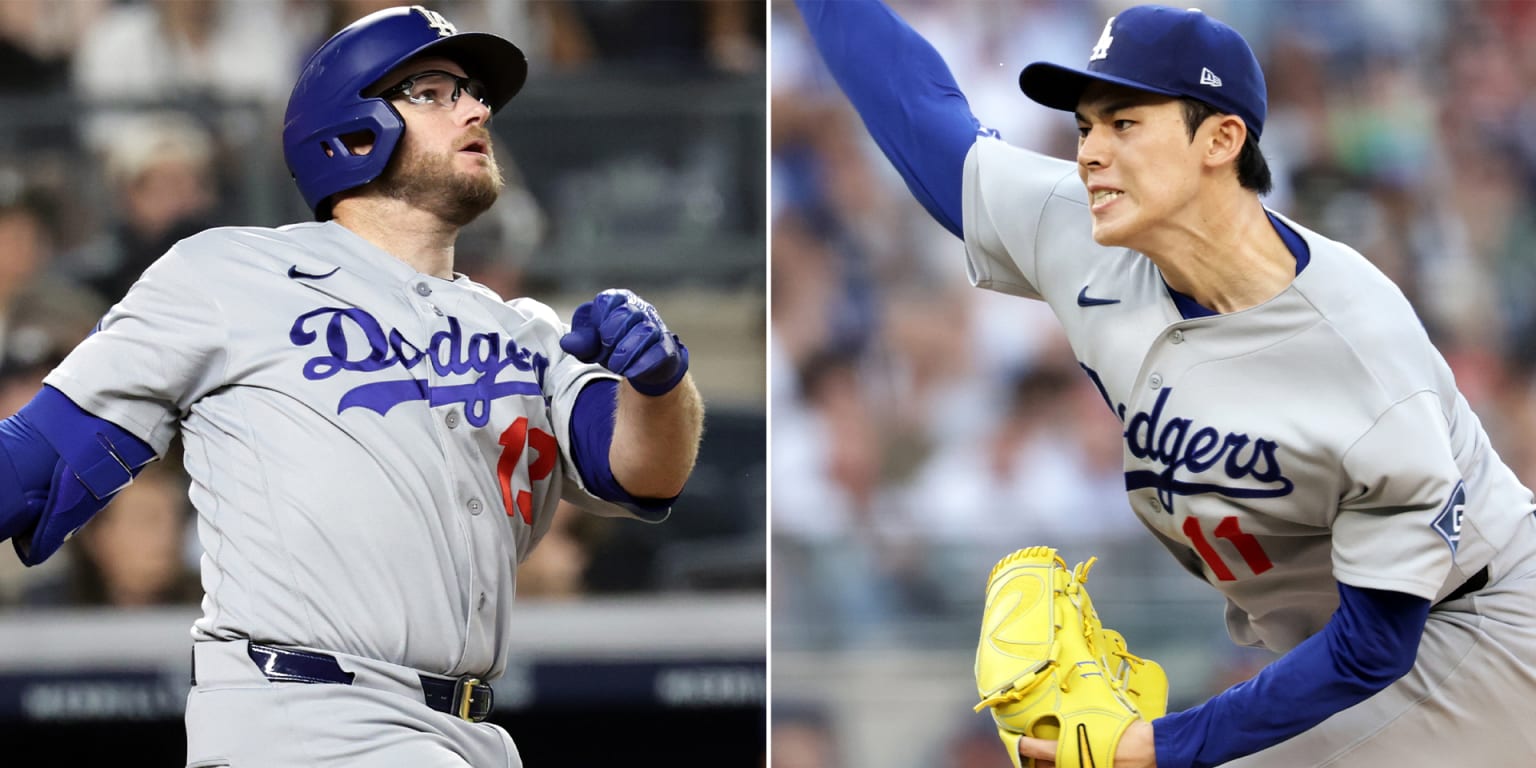
The Dodgers' first-half finale was a wreck—nine errors in five games, outscored 30-15, swept for the first time. Friday night in the Bronx offered catharsis. Roki Sasaki delivered a 5⅔-inning start anchored by elite strikeout stuff (five K's, one walk) and a fastball velocity upgrade that bordered on alarming: 101.8 mph peak, an MLB career high, with 21 pitches at 100+ mph, the most by any Dodger since 2008 pitch tracking began. Max Muncy's two-run blast off Gerrit Cole in the seventh—a 2-2 slider into the second deck—proved the difference in a 2-1 victory that gave Los Angeles the series opener it desperately needed.
Context matters here. Sasaki's mid-season arc tracks like a prospect finding equilibrium. The 24-year-old right-hander opened 2026 as the phenom who dominated Nippon Professional Baseball, but he hemorrhaged command in June and early July, surrendering 22 earned runs across his final 25 innings before the break. That's a 7.92 ERA over a five-start span—the kind of stretch that triggers front-office anxiety and public hand-wringing about adjustment periods. One game doesn't erase that trend, but the velocity catalyst deserves scrutiny. When a mid-rotation starter suddenly finds an extra 2-3 mph on his heater—especially one with Sasaki's pedigree—it often signals either mechanical correction or a recalibration of his pain tolerance and arm health post-All-Star break. The Yankees' inability to generate hard contact against him (five hits in 5⅔ innings) despite Cole matching him zero for six through six suggests the fastball quality itself, not luck, fueled the differential.
Muncy's dagger carries less predictive weight. A pinch-hit home run off a tiring starter in the seventh is noise in isolation—high variance, high drama, low sample. But the Dodgers' offensive drought against Cole (zero runs through six) and the Yankees' own sluggishness (one run, five hits total) framed a game where manufacturing a single power swing became decisive. That calculus shifts if Sasaki's velocity holds and his command stabilizes; Dodgers starters with sub-3.00 ERA profiles and 100+ mph fastballs push team bullpen workload down and situational matchup probability in LA's favor for the next month.
For prop bettors, the volume shift is immediate. Sasaki's strikeout prop should attract reverse-line action over the next two starts—sharp money will test whether the velocity bump is durable or a one-off adrenaline spike. His career K/9 in NPB hovered around 10.1; if he sustains fastball velocity north of 101 with improved command consistency, his swinging-strike rate should inch toward 12+% from his current 10.4%, lifting strikeout totals above market consensus. The Yankees and Dodgers combined for eight strikeouts on the night; if Sasaki's next two opponents match similar strikeout profiles (teams with elevated K%, chase rates above 30%), lean the over on his strikeout prop for starts where velocity tracking confirms sustained 100+ mph usage. Conversely, if the fastball regresses to his pre-break 98-99 range, the angle evaporates—check the pitch-tracking data before committing unit.