Sasaki's MLB Shortcut: Why Miami's Prospect Pipeline Matters for the Long Game
By Erik Schwartz ·
A 21-year-old Japanese slugger turned down professional baseball at home to chase the majors faster via the Marlins organization—and his path reveals why prospect development speed is the hidden edge in a compressed draft calendar.
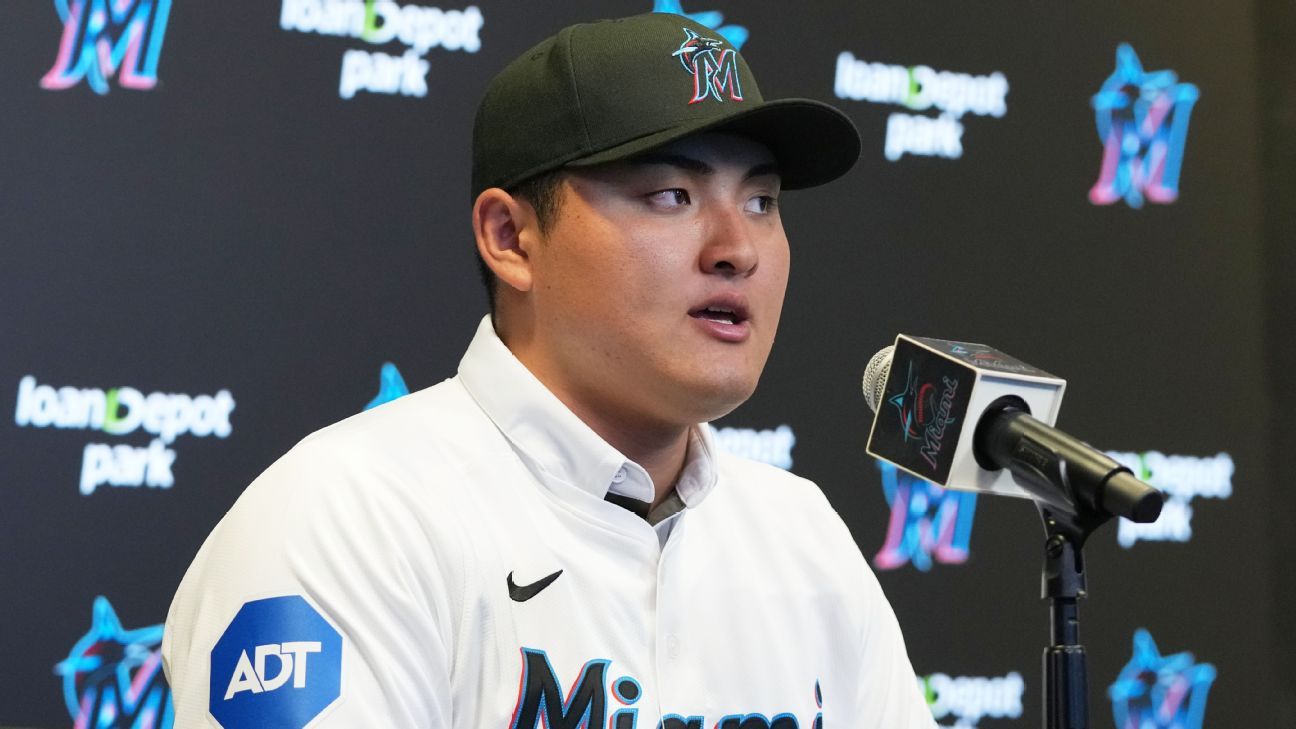
Rintaro Sasaki signed with the Miami Marlins this week after declining a first-round NPB contract with the Fukuoka SoftBank Hawks, choosing instead to enter Miami's minor-league system as an eighth-round amateur pick. The 21-year-old first baseman, Japan's all-time high school home run leader with 140 dingers, framed the decision in explicitly temporal terms: Miami offered the fastest route to the majors. He had leverage—two seasons at Stanford, a pro contract waiting in Japan—and still picked the path that maximized runway speed over immediate money or league prestige.
Sasaki's calculation hinges on organizational infrastructure. The Marlins, despite their competitive struggles, have invested in prospect development velocity. Minor-league systems that compress advancement timelines—through accelerated assignment protocols, cross-level skill transfer, and early exposure to big-league coaching—create genuine edges for young hitters still assembling their approach. Sasaki, hitting .262 with 16 homers across two Stanford seasons, needs refinement. A player at his developmental stage benefits more from high-volume at-bats and calibrated feedback in a focused pipeline than from waiting for roster spots in a more congested organization. The Marlins' relative depth at premium positions (and general lack of defensive constraints in a rebuilding roster) theoretically speeds his timeline to relevance.
The betting angle here is less about Sasaki himself—he's years away from meaningful major-league playing time, and even his minor-league trajectory won't carry reliable action for months—and more about how prospect acceleration affects organizational roster construction and trade-deadline positioning. A front office that views player development as a genuine competitive advantage tends to manage its current payroll differently: more selective about aging depth, more aggressive in shedding salary for picks and international bonus pool space. Miami's willingness to pass on short-term production to maximize developmental throughput can shift the composition of teams buyers face at the deadline. When sellers emphasize speed-to-impact over pedigree, the talent they move tends to be older, costlier to acquire, and available only at premium cost.
For bettors tracking Miami's mid-season posture, Sasaki's signing is a structural tell. It's unlikely to move this season's win total or team-total props—his presence in the organization doesn't alter 2026 payroll or roster depth. But it underscores a philosophy: the Marlins are building around acceleration, not accumulation. That mindset typically manifests in higher volatility in player usage (younger callups, more platoons, shorter leashes on underperforming veterans) and faster personnel turnover. Volatility in lineup construction creates variance in scoring rates, which can inflate team totals in early-season windows when the roster is still crystallizing. If Miami's September call-ups and prospect-first approach generate unexpected offensive sparks, unders on Marlins team totals through August carry slightly elevated risk—not because Sasaki will play, but because the organizational culture he represents may already be visible in roster deployment.
The real edge is subtle and unfolds over a full season: organizations that prioritize prospect velocity over immediate contention often see inflated over-under ranges early, before the market prices in the inherent ceiling volatility of youth-heavy lineups. Track Miami's August usage patterns closely. If the front office is already deploying young hitters in high-leverage spots to accelerate their development, team totals could track higher than sustainable October talent would suggest.