Sasaki's Slider Adjustment Signals Genuine Growth, Not a Single-Game Flash
By Ty Whitney ·
The Dodgers' young ace went from getting shelled in the first inning to dominant, using a mechanistic shift in pitch selection that reveals why his ceiling remains one of baseball's most intriguing.
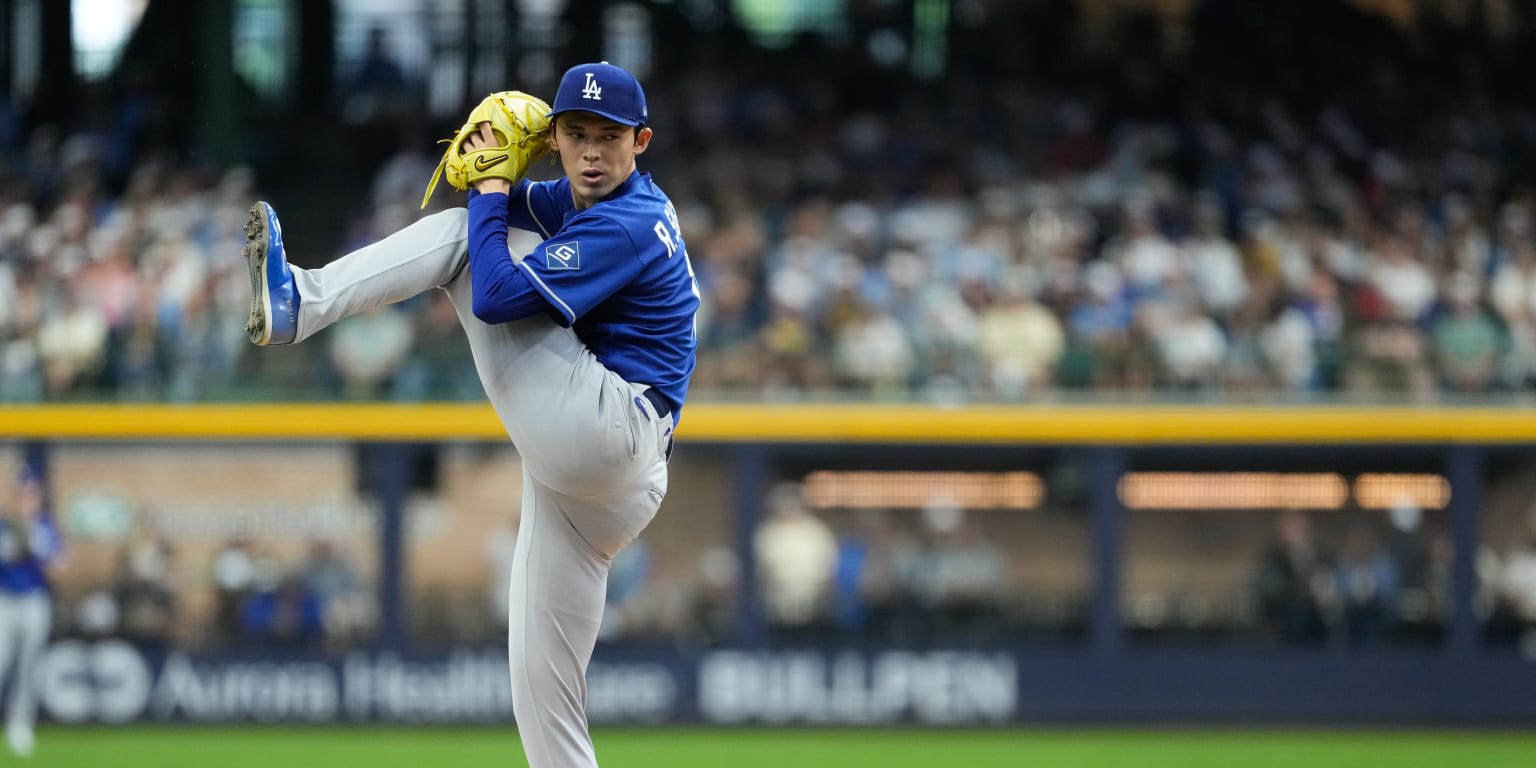
Roki Sasaki allowed three runs in the first inning—two via well-struck doubles, one unearned via a fielding error—then retired the final 10 batters he faced. That swing tells you everything about why Dave Roberts and the Dodgers' front office view this outing as evidence of structural improvement, not variance. The raw line: 7 innings, 4 hits, 3 runs, 6 strikeouts. Below his season baseline. But the process behind those numbers reveals a pitcher learning to adjust within an inning, not just across a season.
Sasaki's slider usage jumped from 21% first-time-through-the-order to 35% on the second pass. His velocity climbed as the game progressed. His four fastest pitches all landed for strikes or outs in a clean fifth inning. These aren't statistical noise—they're deliberate tactical choices. After struggling with first-pitch strikes early (just four of his first 12), he engineered a shift in rhythm and sequencing that forced opposing hitters into worse counts. The Brewers got their free-swinging early. By the third inning, they were chasing. That sequence directly enabled the Dodgers' fourth-inning rally: a deficit that could have spiraled instead became a launchpad for Freddie Freeman and a three-run Teoscar Hernández homer.
The context matters for durability. Sasaki's recent form—reliable outings with rising velocity and improved command—isn't a single-game outlier tied to Milwaukee's lineup. Roberts noted visible behavioral shifts: better off-field composure, clearer communication with coaches, steadier rhythm on the mound. These are sustainable indicators, not accident-dependent. A 24-year-old with elite arm talent learning to trust his stuff and adjust mid-start is exactly the type of growth curve that sticks.
For prop purposes, Sasaki's strikeout line deserves fresh attention. His K/9 has climbed as confidence has grown; he struck out six in seven innings Saturday despite a chaotic first. Against lineups that don't attack early (as the Brewers did), his second-half aggression with the slider—a whiff-inducing pitch—should translate to cleaner strikeout totals. His next three starts offer a window before the market fully reprices him. Books haven't yet embedded this behavioral shift into his lines; they're still pricing him on season-long medians. A starter gaining command and confidence mid-season while Dodgers management publicly endorses his trajectory is a team-side valuation tell worth tracking.
The bullpen note amplifies the angle: 36 consecutive scoreless innings, a franchise record since 1961. When a young starter proves he can eat innings cleanly and the bullpen enters games with a reliable lead, team totals compress. Dodgers games where Sasaki starts and delivers six-plus innings in the win column now feature different run-expectancy profiles than earlier in the season.