Santos' Bullpen Conversion Signals Real Prospect Reclamation in Houston System
By Erik Schwartz ·
A second-round arm who'd stalled in the minors found his command lane as a reliever, posting August numbers that matter for Astros depth.
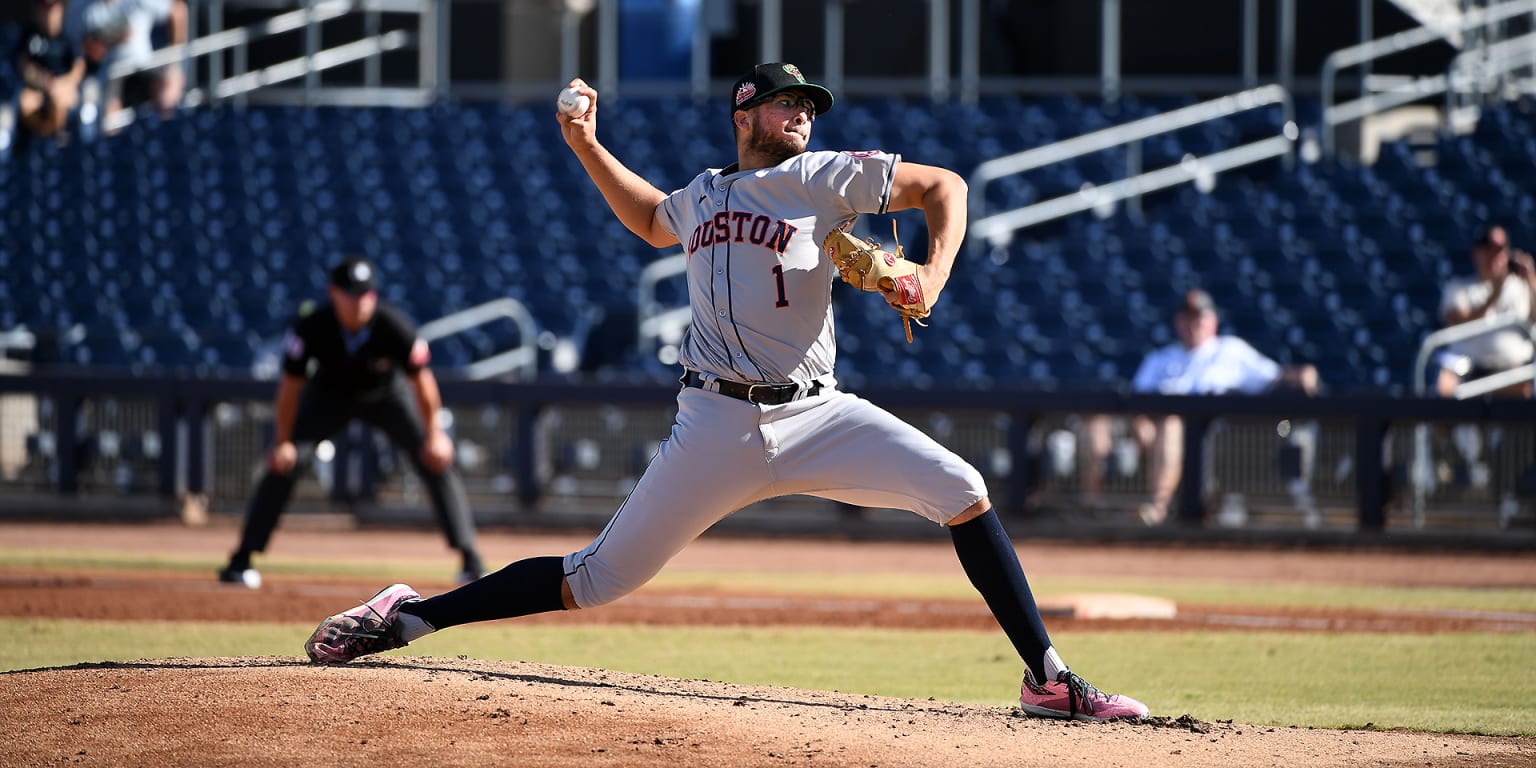
Alex Santos II, a 24-year-old right-hander who was drafted by Houston in the second round of 2020 as Gerrit Cole compensation, has spent most of his minor-league career sliding sideways—underperformance, injuries, organizational neglect marking a trajectory that should have flatlined years ago. But a move to the bullpen this season has reset his utility value. The Astros promoted Santos to Triple-A Sugar Land on August 22, and the timing is not cosmetic. In his August appearances across Double-A and Triple-A, Santos posted a 0.68 ERA with 24 strikeouts in 13⅓ innings, earning Minor League Pitcher of the Month honors. For the full season, he's delivered a 3.15 ERA, 93 strikeouts, 1.38 WHIP, and a .216 opponent batting average across 44 relief appearances in 60 innings.
The pivot matters mechanically. Starting innings force a pitcher to manage multiple at-bats, rhythm, and repertoire sequencing over long stretches—Santos had struggled with consistency in that role. Bullpen work, by contrast, demands explosive stuff for short windows. Relief pitchers with velocity and a swing-and-miss arm often find clarity when freed from the starter's burden. Santos' strikeout rate jumped once he was handed a defined role: go compete, attack, exit. "I fell in love with it," Santos said. That's not sentiment—that's a pitcher whose skill set finally matches his situation.
The injury history—ulnar collateral ligament inflammation recurring over the past two seasons—made him a genuine liability as a full-time starter. A reliever who can deliver high-effort innings in bursts and then rest is structurally safer for a player managing that kind of structural stress. The Astros' player development director, Sam Niedorf, framed it as organizational philosophy: "never give up on players. They always have the ability to get better." But Niedorf also said the results came first. Santos didn't get a feel-good promotion; he earned one. His 93 strikeouts in 60 innings is a 14.0 K/9 rate, which is elite-tier stuff for a minor-league arm at any level.
For Houston's bullpen projection, this opens a lane worth tracking. The Astros have used multiple late-season bullpen reshuffles over the past three seasons, cycling through organizational depth as injuries and performance gaps opened. Santos' demonstrated ability to log high-strikeout relief innings at Triple-A—from August 22 through season's end—means the organization now has a credible depth option if they push toward October or need to manage arm workload down the stretch. His path to MLB remains contingent on 40-man roster space and circumstance, but the functional competence is now proven.
For bettors tracking Astros bullpen volatility, this is context for why Houston's relief ERA projections for the final month may be understated. If Santos gets extended Triple-A work and the team stays in contention, a call-up becomes plausible before year's end. A reliever with 14.0 K/9 at that level, even in limited sample, will depress team total unders if inserted into late-inning, high-leverage spots. That's a low-probability edge (Santos' call-up is not a lock), but it's one worth monitoring in series-preview numbers after rosters expand or injury strikes.