Sale's Velocity Holds Despite Run Shortage; Braves Escape in Ninth
By PropBetEdge Editorial Team ·
Chris Sale's arm strength remains elite even as Atlanta's offense continues to strand him in games—but Saturday's walk-off win masks a deeper run-support pattern worth tracking.
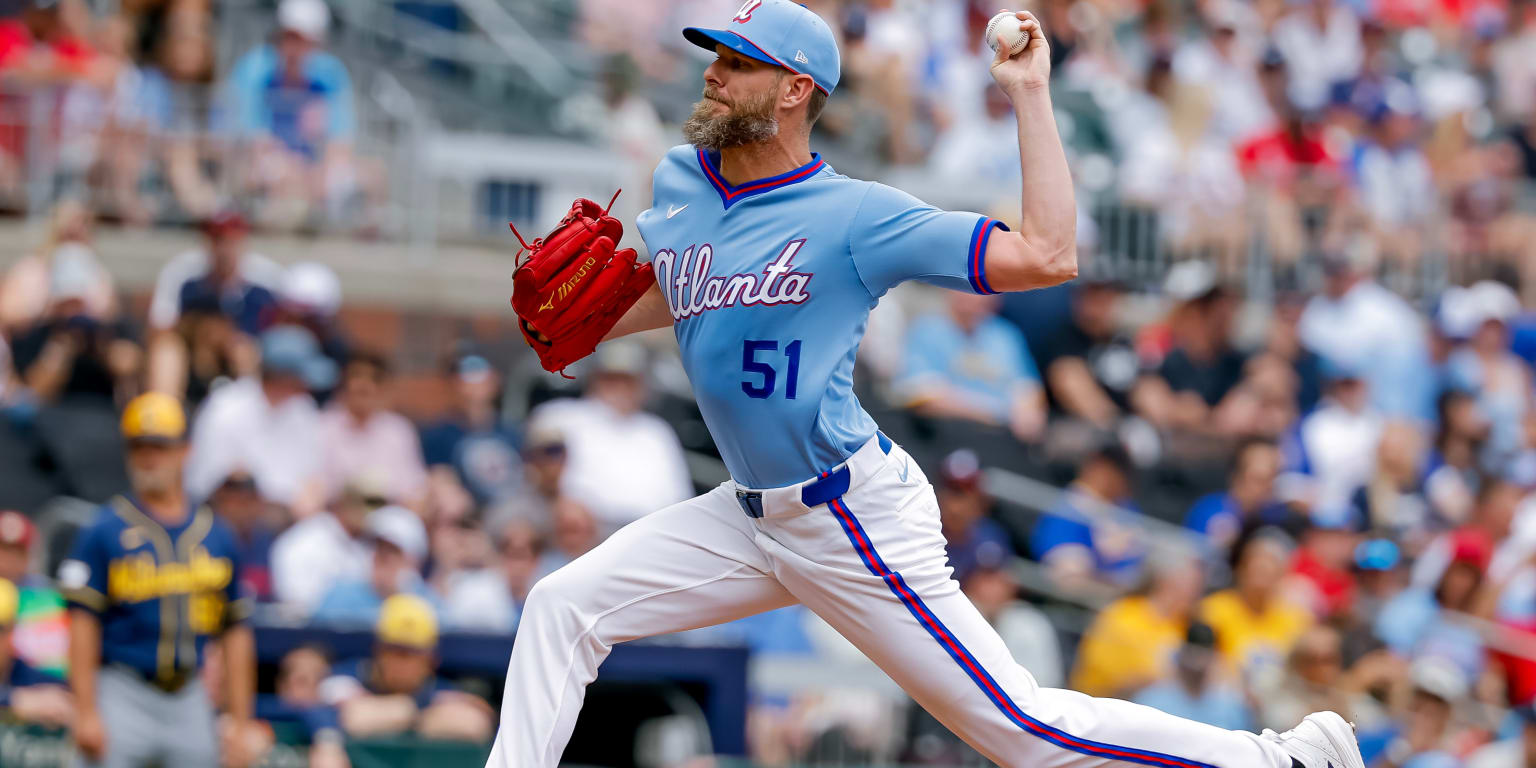
Chris Sale took the mound Saturday afternoon at Truist Park against the NL Central-leading Brewers and delivered exactly what the Braves' rotation is built to do: six innings of two-run ball with elite strikeout stuff. He allowed five hits, struck out seven, and generated a 97 mph average on his four-seamer—a velocity line that sits at the upper end of his recent range. The problem wasn't Sale's arm. It was the lineup's silence until the ninth inning.
The Braves came into this start having scored one or fewer runs in four of Sale's past six starts. That's not statistical noise—that's a pattern of offensive collapse in his games. Atlanta's hitters faced Kyle Harrison, Milwaukee's starter, who retired the first 12 batters in order before Ozzie Albies broke through with a solo shot in the fifth. For five and two-thirds innings, the Braves managed exactly one run while Sale kept the Brewers' potent lineup quiet. Milwaukee, meanwhile, took full advantage of an error in the sixth to go up 2-1, threatening to hand Sale another no-decision loss despite his stuff. The walk-off came courtesy of Albies again—a two-run homer off reliever Aaron Ashby in the ninth that salvaged what could have been another frustrating result.
Sale's velocity stability across this stretch suggests his mechanics and conditioning are sound. He's averaging 96.5–97.5 mph on the four-seamer across his past four starts, a level of consistency that matches his early-season form. The issue isn't durability or declining stuff—it's that the Braves' 6th-ranked offense in runs scored has inexplicably shut down when Sale takes the ball. Over his past six starts, the team is averaging fewer than two runs per game behind him. That's a significant drag on win probability and win-loss record, regardless of ERA or strikeout rate.
For prop bettors, this creates a layering problem. Sale's strikeout line likely reflects his elite peripherals (7 K's on 5.67 IP is strong), but the team-total frame and game-line value are being suppressed by a real run-creation deficit. When Sale pitches, the Braves' implied run total should trade at a discount relative to their seasonal average. This isn't a reflection of Braves pitching—it's an artifact of their inability to generate early offense in his starts. Conversely, the Brewers came into this game with clear strikeout exposure against Sale's stuff, and they showed willingness to capitalize on mistakes (both the fielding error and the solo homers allowed). The Saturday result masks a recurring vulnerability: the Braves' inability to provide early run support creates compounding pressure on their defense and creates higher-leverage spots later in games.
Moving forward, Sale's actual performance (K rate, ERA, velocity) deserves credit. But betting the Braves' team total or moneyline in his next start should account for the demonstrated pattern of offensive drought. The velocity isn't the tell—the run-scoring environment is. That's a persistent edge that won't disappear with one walk-off win.