Rushing's Return as Dodgers Bench Option Reshapes Late-Inning Platoon Math
By Ty Whitney ·
The activation of Dalton Rushing as a pinch-hitting specialist three weeks before the postseason resets Los Angeles's bench construction and creates measurable leverage in specific high-leverage spots.
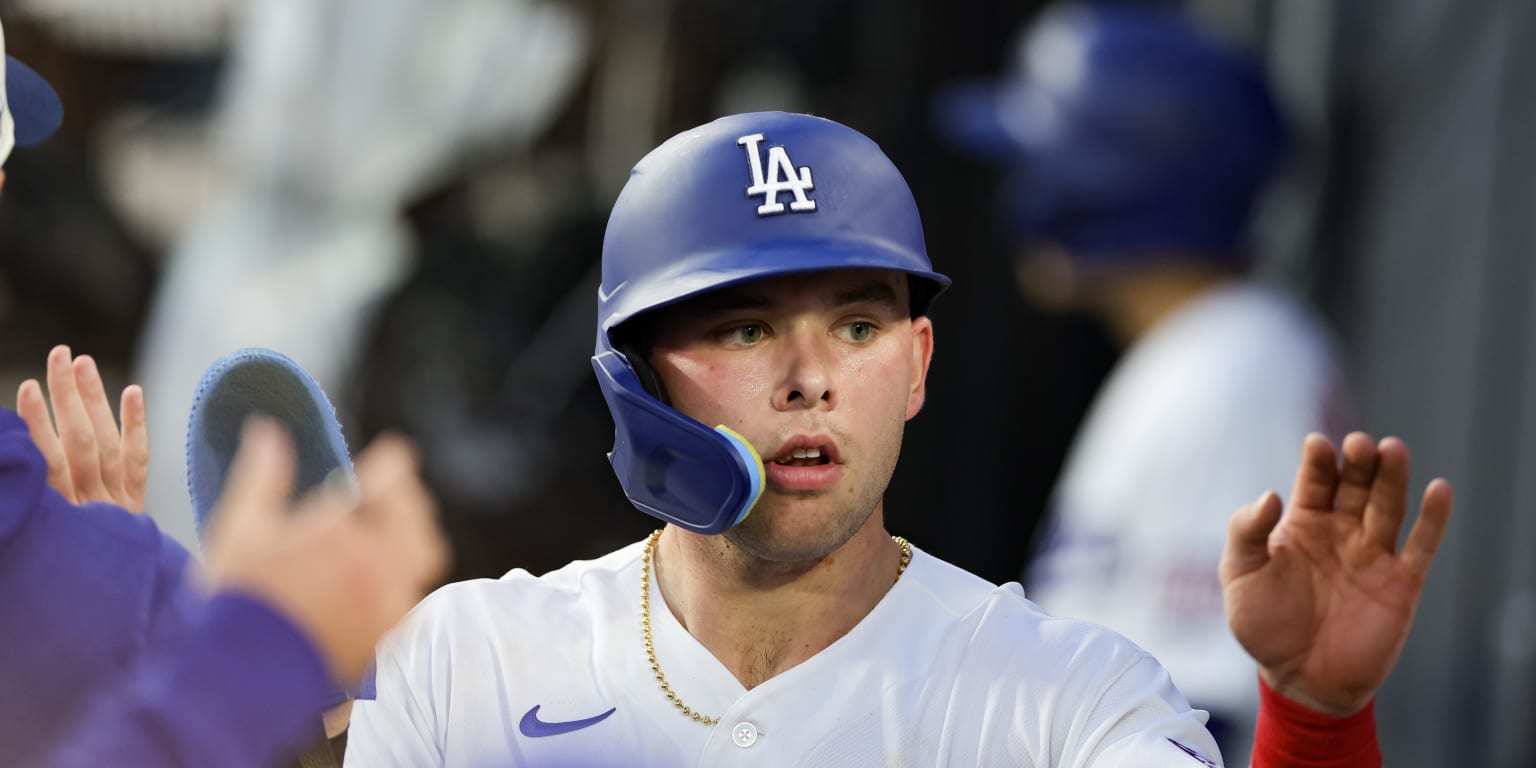
Dalton Rushing is back in uniform for the Dodgers, but not as advertised. Activated from the 15-day injured list when September rosters expanded on Tuesday—without a single rehab game—the left-handed catcher will operate strictly as a bat off the bench while his right elbow continues its rebuild. The ulnar collateral ligament partial tear that sidelined him earlier this season remains the operative constraint. His glove stays in the locker. For now, his job is narrower than ever: pinch-hitting and potential designated-hitter fill-in if Shohei Ohtani requires a rare day off. That limitation is the price of his return, but it reshapes Los Angeles's late-inning flexibility in ways worth tracking.
Rushing spent time as the Dodgers' primary catcher after Will Smith's extended neck injury sidelined the team's veteran backstop. He proved capable of handling a reduced schedule—starting roughly twice a week—but the mental adjustment from full-time availability to spot duty has been documented as a genuine challenge. Now the Dodgers are asking him to compress that role even further: one at-bat per night, almost exclusively in high-pressure situations where platoon advantage or bench depth matters most. Manager Dave Roberts is explicit about Rushing's catching timeline: he's optimistic but noncommittal about seeing him behind the plate before season's end. A throwing program has begun, but bullpen sessions are still ahead. The path to full catching availability within the next month is narrow.
What matters for Los Angeles's postseason roster construction is whether Rushing can prove effectiveness as a situational hitter in this final month. His career pinch-hit line sits at 2-for-15, an undeniably small sample that carries high variance. But the Dodgers' rationale for his activation despite that underwhelming rate is straightforward: their bench has long lacked a left-handed bat with genuine power potential and plate discipline. Against right-handed relief pitchers—the category where pinch-hitters typically appear—a catcher who can walk and elevate offers measurable value in close games. The Dodgers need proof that Rushing can translate that upside into execution over the next 28 days before roster construction for October is finalized.
For betting purposes, Rushing's role creates a narrow but durable edge in specific game states. When the Dodgers face a right-handed reliever in a close game with runners in scoring position or leading off an inning, Rushing's presence on the bench alters the marginal probability of a successful plate appearance compared to a backup infielder or pitcher. His slugging potential against fastball-heavy right-side arms is materially higher than the alternative. This doesn't mean Rushing will generate a dramatic win probability shift—he's still a reserve operating in a limited sample—but it does mean that the Dodgers' bench configuration is marginally stronger in those specific splits. Sportsbooks likely factored the team's bench depth at a generic level when setting Dodgers totals. The addition of a left-handed power bat in a pinch role, even one coming off injury, nudges that edge incrementally upward. Game-level volatility remains high, but the direction of expected value on Dodgers team totals tilts slightly higher when Rushing's at-bat falls in a high-leverage spot.
The key variable over the next three weeks is execution. If Rushing continues to struggle in pinch situations—extending his 2-for-15 line further—his activation becomes a marginal storyline. If he posts a .280+ OBP or shows genuine power (extra-base hits in spot at-bats), the Dodgers' bench depth narrative changes materially and could influence how aggressively they deploy him in close postseason games. For now, the edge is modest but directional: the team's marginal strength as a bench has increased, and that should marginally favor overs on team totals in close games where Rushing is likely to bat.