Ruiz's May Surge Points to a Catcher Finally Catching Up to His Contact Skills
By Erik Schwartz ·
Keibert Ruiz homered for the third time in five games Saturday, driving in five runs and signaling that his early-season slump may be genuine dead weight rather than a preview of his ceiling.
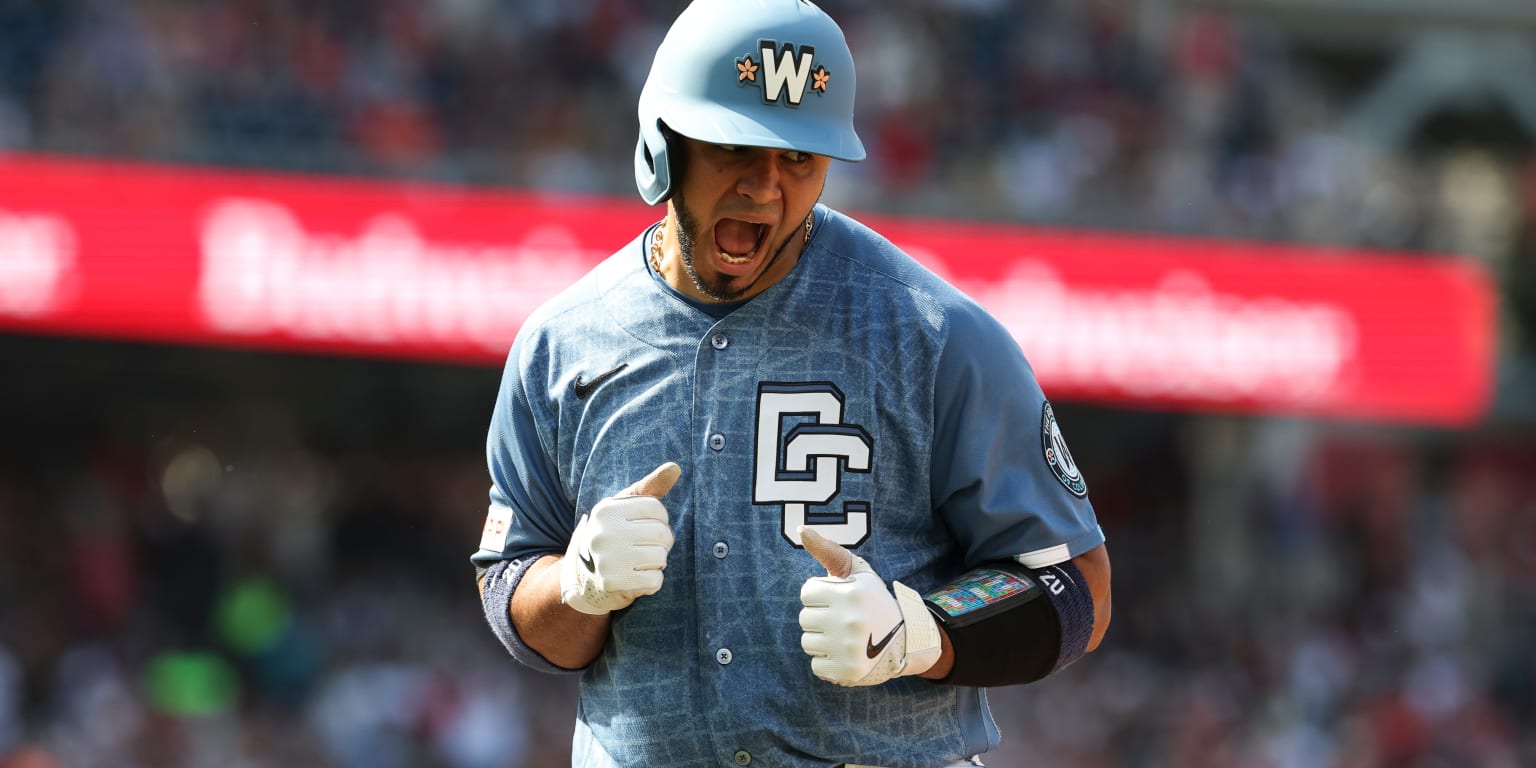
Keibert Ruiz went 3-for-5 with a home run, a double, five RBIs, and a stolen base in Washington's 13-3 rout of Baltimore on Saturday. The performance capped a five-game stretch in which the catcher has homered three times, a pace that stands in sharp relief to his March-April disaster—a 10-for-56 start that had already seeded doubt about whether his 2024 breakout was sustainable.
What matters for evaluation is the mechanism behind the turnaround. Ruiz's early-season struggle wasn't rooted in swing mechanics or plate discipline collapse; his strikeout rate and walk rate remained stable from his 2024 form. Instead, the numbers suggest bad luck layered over the natural volatility of a smaller sample. His barrel rate and exit velocity stayed in line with career norms. Once the calendar flipped to May, he stopped grounding out and started barreling fastballs. The three-homer tear in five games isn't sustainable at that exact rate, but it does signal that the bat is calibrated correctly—he's not regressing toward a lower true talent level; he's simply regressing toward his actual true talent after a brutal variance stretch.
The Orioles bullpen gift-wrapped some of Saturday's damage. Ruiz's fifth RBI came off reliever Keegan Akin with the bases loaded in the seventh inning—a situation that inflates volume stats but doesn't necessarily signal a shift in pitcher matchups or Ruiz's true advantage. However, his early-inning home run off Chris Bassitt (a 90th-percentile pitcher in stuff) demonstrates that he's making hard contact against quality velocity, not just padding stats against third-arm pitching. The stolen base—his first of the season—is a minor flyer; it doesn't suggest a new speed component to his game.
For prop bettors, the angle is narrow but real: Ruiz's home run props have likely ticked upward based on the five-game sample, but the market hasn't fully adjusted the RBI line for the fact that he's batting in a middle-to-lower-order position in an offense that's streaky. His RBI opportunities spike when the Nationals' leadoff hitters get on base; when they don't, his counting stats crater even if his individual performance holds steady. A three-homer stretch is noise on a two-week basis, but his underlying contact quality—barrel rate, exit velo—has normalized back to 2024 levels. That makes him a fade on home run props if the books have overshot based on pure recency; it makes him a lean on RBI props only when the Nationals are batting first in a series (higher base-runner turnover, more RBI opportunities). The stolen base is one swing—ignore it for forecasting purposes.
Ruiz's path forward hinges on pitch selection and lineup stability. If he stays middle-of-the-order with a competent leadoff hitting duo, his RBI volume should stabilize around 0.8 per game (higher than his season rate but well below Saturday's outlier). His homer rate will likely compress from the May burst—three in five is a 97-home-run pace; his 2024 rate of one every 16.3 plate appearances is the floor. Expect him to finish the season somewhere in between, with the margin depending on how often he faces fastballs early in counts.