Royals' Historic Offensive Explosion Exposes Phillies' Pitching Depth Problem
By PropBetEdge Editorial Team ·
Kansas City's 15-1 demolition of Philadelphia revealed far more than a statistical oddity—it exposed a rotation vulnerability that will shape AL Central matchups for weeks.
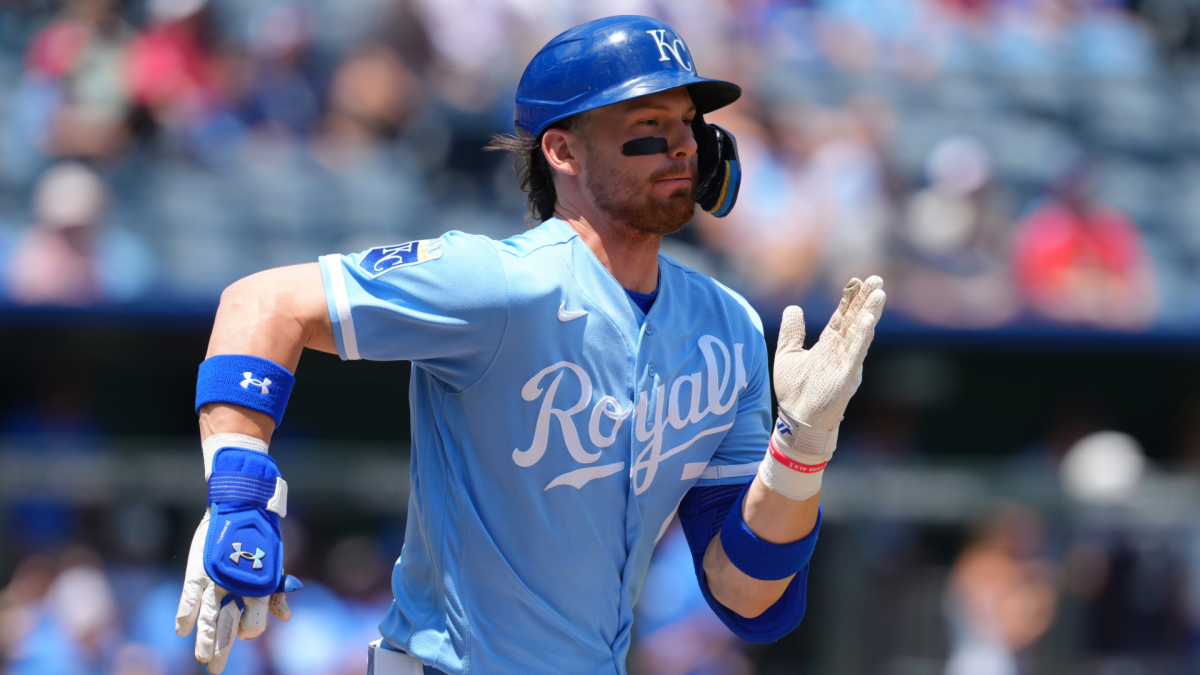
The Kansas City Royals scored in all eight innings they batted Monday, becoming only the 21st team in MLB history to accomplish the feat and the first since the White Sox in 2016. The explosion came directly against Cristopher Sánchez, the Phillies' ace and primary All-Star Game starter candidate, who surrendered six runs in the first inning and nine total in 3⅓ innings of work. The final line—KC 15, PHI 1—reads like a simulation error, but the mechanics behind it tell a story that extends well beyond this single afternoon.
The Royals sent 50 men to the plate and reached base 28 times for a .560 on-base percentage. Tyler Tolbert went 5-for-5 with a double and home run, lifting his season line from .243/.310/.243 to .333/.383/.429 in one game. Kansas City compiled 22 hits, marking the 11th time in franchise history they've reached that threshold. This wasn't a perfect storm of weak contact and sequencing luck—it was methodical, relentless plate discipline against a pitcher who entered at 2.00 ERA and left at 2.62. That 62-point jump, while modest on the surface, understates how thoroughly the Royals dismantled Sánchez's command. He threw strikes early and often; the Royals simply didn't miss.
What matters for projection is this: Sánchez's underlying metrics—strikeout rate, walk rate, hard-contact percentage—remained largely intact after the game. A 2.00 ERA pitcher who allows nine runs in three innings doesn't suddenly become vulnerable across the board. Instead, this game illustrates a narrower vulnerability: when Sánchez faces a lineup that doesn't chase, that works counts to 2-0 or 3-1, and that has practiced manufacturing early at-bats against breaking stuff, his fastball-heavy approach becomes an invitation rather than a weapon. The Royals, sitting at 37-54, weren't supposed to execute this plan. They did anyway, which signals less about Sánchez's decline and more about the gap between his ERA (elite) and the contact-rate dynamics he's facing (volatile).
For betting, Sánchez's next start carries a pivotal decision point. Books will likely shade toward the under on his strikeout total and shift his team total downward, reading Monday as a correction. That reaction is mechanical rather than causal. If the opponent's next matchup features a lineup with similar plate discipline and left-handed population (Sánchez's fastball command is more exposed to same-side hitters), lean toward unders on his strikeout prop and consider fading team totals in the 4.0-4.5 range for Philadelphia in those spots. But if Philadelphia faces a team that chases—swings early, attacks first-pitch fastballs, fewer two-strike approaches—Sánchez's numbers normalize sharply. The edge isn't that Sánchez is broken; it's that certain lineups expose the gap between his ERA and his actual stuff. Royals pitchers in KC-friendly spots against similarly disciplined opponents see modest team total value in the 3.8-4.2 range for the next 10 days.
The Royals themselves, despite 37-54 record, demonstrated that offensive infrastructure exists in Kansas City. Their recent run includes this explosion and a pattern of aggressive two-strike approaches. For the next week, until the market reprices Kansas City's true offensive ceiling, Royals team totals in the 4.0-4.3 range against pitchers outside the top 15 in strikeout rate carry slight positive expected value. That edge fades as books adjust, likely by mid-week.