Royals Grab McGee For Cash: A Lottery Ticket With a Ticking Clock
By Erik Schwartz ·
Kansas City picks up a relief arm on waivers who offers modest strikeout upside but faces a shrinking runway before he runs out of minor-league options.
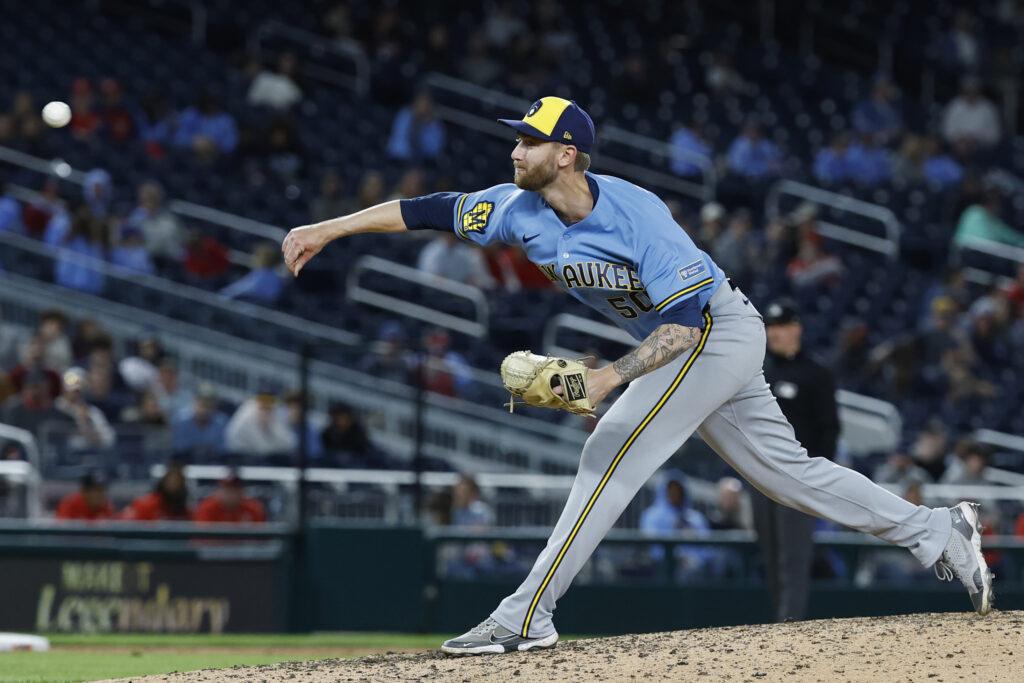
The Royals acquired right-hander Easton McGee from Milwaukee on Tuesday for cash and roster flexibility, optioning the 28-year-old to Triple-A Omaha while moving Nick Mears to the 60-day injured list to create the 40-man spot. McGee was designated for assignment by the Brewers last week after a stint that saw him throw just two scoreless innings for Milwaukee this season. This is a low-commitment depth move that costs Kansas City nothing but cap space, the kind of transaction that happens dozens of times per summer in the margins of contention races.
The mechanics of McGee's profile suggest why Milwaukee cut bait and why Kansas City might have seen a flyer worth claiming. In 26⅓ major-league innings across four seasons, he's compiled a 3.08 ERA with a walk rate (6.7%) and ground-ball rate (46.2%) both better than average—the bones of a viable relief arm. His strikeout rate (16.3%) is where the ceiling problem lives: that's well below league average for relievers, meaning he's relying on contact management and luck to keep runs off the board. Milwaukee's small sample (two frames) this year provides virtually no signal; the Brewers organization apparently decided the risk of keeping a pitcher with limited upside and one final minor-league option wasn't worth the roster spot.
McGee's velocity profile—92 mph fastball, 80 mph curveball, 87 mph cutter—sits in the soft-tossing column. Triple-A results paint a messier picture: he posted a sharp 3.59 ERA as a reliever last year in Nashville, but his 2026 campaign has been clouded by a pair of rough spot starts, including seven runs in four relief appearances spanning just 10⅔ innings. The bulk of his recent work (31 innings) sits around 4.50 ERA territory, not the kind of floor that generates confidence in a call-up scenario.
For betting purposes, McGee's arrival means almost nothing to the Royals' immediate bullpen equations or team totals; he's slated for Omaha development and figures as organizational depth rather than a near-term contributor. The narrative angle does matter later this season if injuries force his hand, or if the Royals' relief core deteriorates enough to justify promotion. Monitor Kansas City's bullpen injury list and usage patterns: any unexpected depletion could create a spot start opportunity for McGee within weeks, at which point his strikeout-rate ceiling (or floor, given the 16% mark) becomes relevant to reliever prop pricing. For now, this is a closing-time waiver claim with optionality, not a roster-mandate edge.
The clock ticks because McGee exhausts his minor-league options after this season. If the Royals believe in the contact-management floor enough to keep him in 2027, they'll need to carry him on the 40-man list or risk losing him to waivers. That sunk-cost calculus—and whether Kansas City's front office sees enough in two scoreless innings and a sub-average strikeout rate to justify the expense—will shape whether McGee becomes a bullpen fixture or a footnote by September.