Trevor Rogers Finds His Fastball—And His Strikeout Rate—in June Surge
By PropBetEdge Editorial Team ·
Three straight quality starts have erased Rogers' brutal April-May, and the mechanism driving his resurgence—elevated four-seam usage and whiff rate—explains why his strikeout props deserve fresh looks.
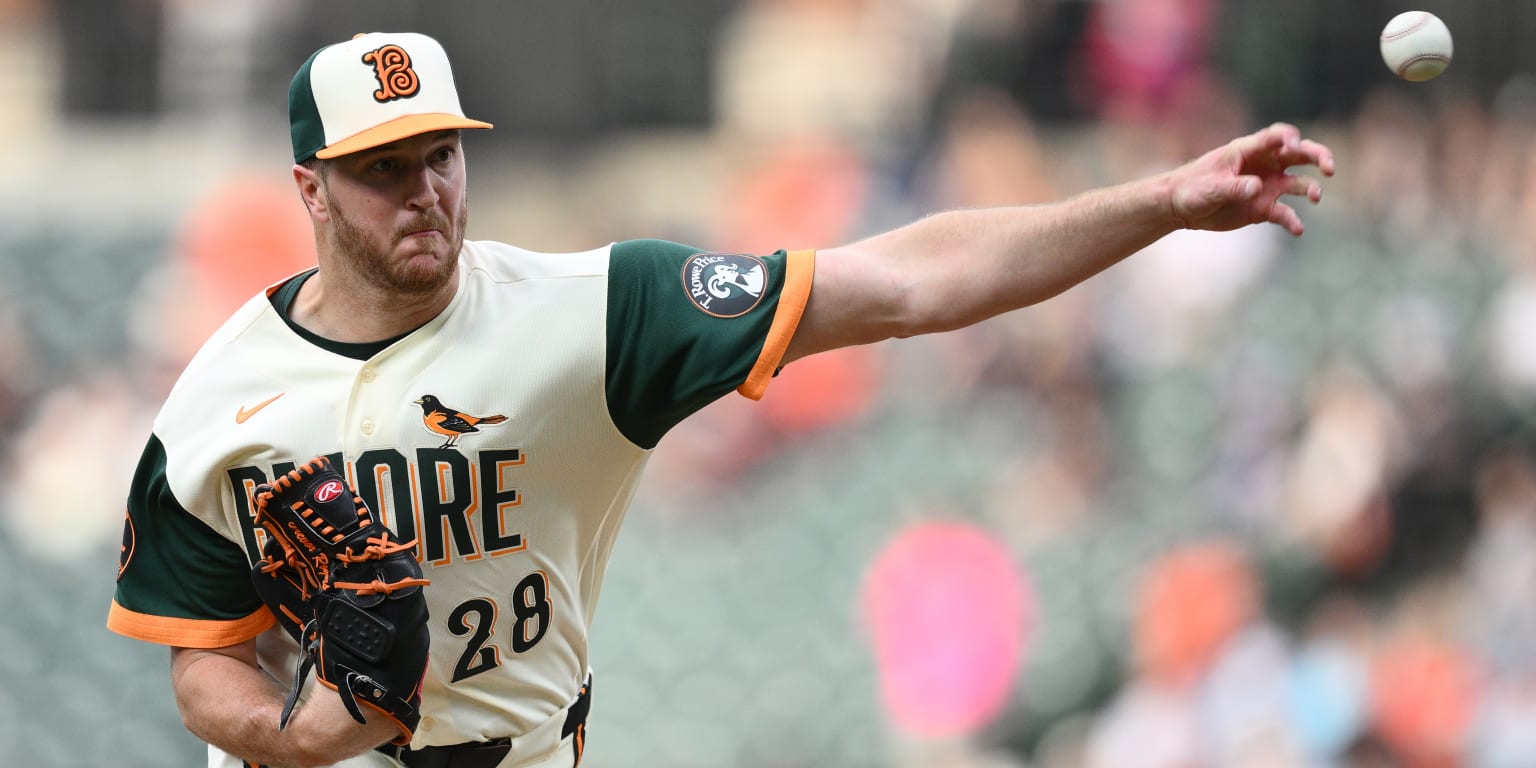
Trevor Rogers threw 6 1/3 innings of one-run ball against Washington on Friday, striking out seven without a walk to extend his June dominance to three consecutive quality starts. The Orioles' 2025 Most Valuable Player and Opening Day starter entered the month with a 4.99 ERA through 15 appearances—a disaster for a team that expected him to anchor the rotation. Over the past 12 days, though, he's become a different pitcher: a 2.05 ERA across five outings, 30 2/3 innings, and enough movement to suggest the turnaround is structural, not statistical noise.
The driver is fastball-heavy design. Against the Nationals, Rogers deployed his four-seam 52.9% of the time (87 pitches, 46 fastballs)—his third-highest rate of the season. Last Saturday in Los Angeles against the Dodgers, he hit 53.1% with 51 four-seamers among 96 pitches. That's a deliberate pivot from his early-season approach, when he was leaning on secondary stuff and getting shelled. The fastball itself is working: 13 of his 16 whiffs Friday came via the four-seamer, tying his second-most four-seam strikeouts in a single game over his seven-year career (he had 14 against Texas on June 30, 2025, and 13 against St. Louis on April 5, 2021, with Miami).
This isn't a small sample correction. Rogers has now pitched below a 5.00 ERA for just over two months (since his April 25 outing against Boston, when it sat at 4.75), but the mechanism underlying his June run—elite four-seam whiff generation paired with sustained velocity and usage—carries forward into July and beyond. When a pitcher shifts to a higher fastball rate and simultaneously improves his whiff rate on that fastball, that's a sticky skill. The strikeout prop market, which may have been slow to adjust while Rogers was hemorrhaging runs in April and May, likely undervalues his current volatility ceiling.
The caveat: Rogers threw only 87 pitches in this outing and was pulled after 6 1/3 innings, suggesting the Orioles are managing his workload carefully. That caps the raw strikeout ceiling in any single game, but it also protects him from fatigue-driven decline late in outings. For prop purposes, the question is whether sportsbooks have re-anchored his strikeout expectation to his June performance or are still pricing him as a mid-rotation arm. If his K prop line remains in the 5.5–6.5 range, there's value in overs; if it's already drifted to 7.0–7.5, the edge has likely evaporated.